


6 Tips to Get Your Kids to Go to Bed
June 04, 2026
 University Hospitals Rainbow Babies & Children'sExperts in Children's Health


Sleep plays a key role in mental, physical and emotional health, from infancy through the teen years and beyond. Here’s how to maximize it.
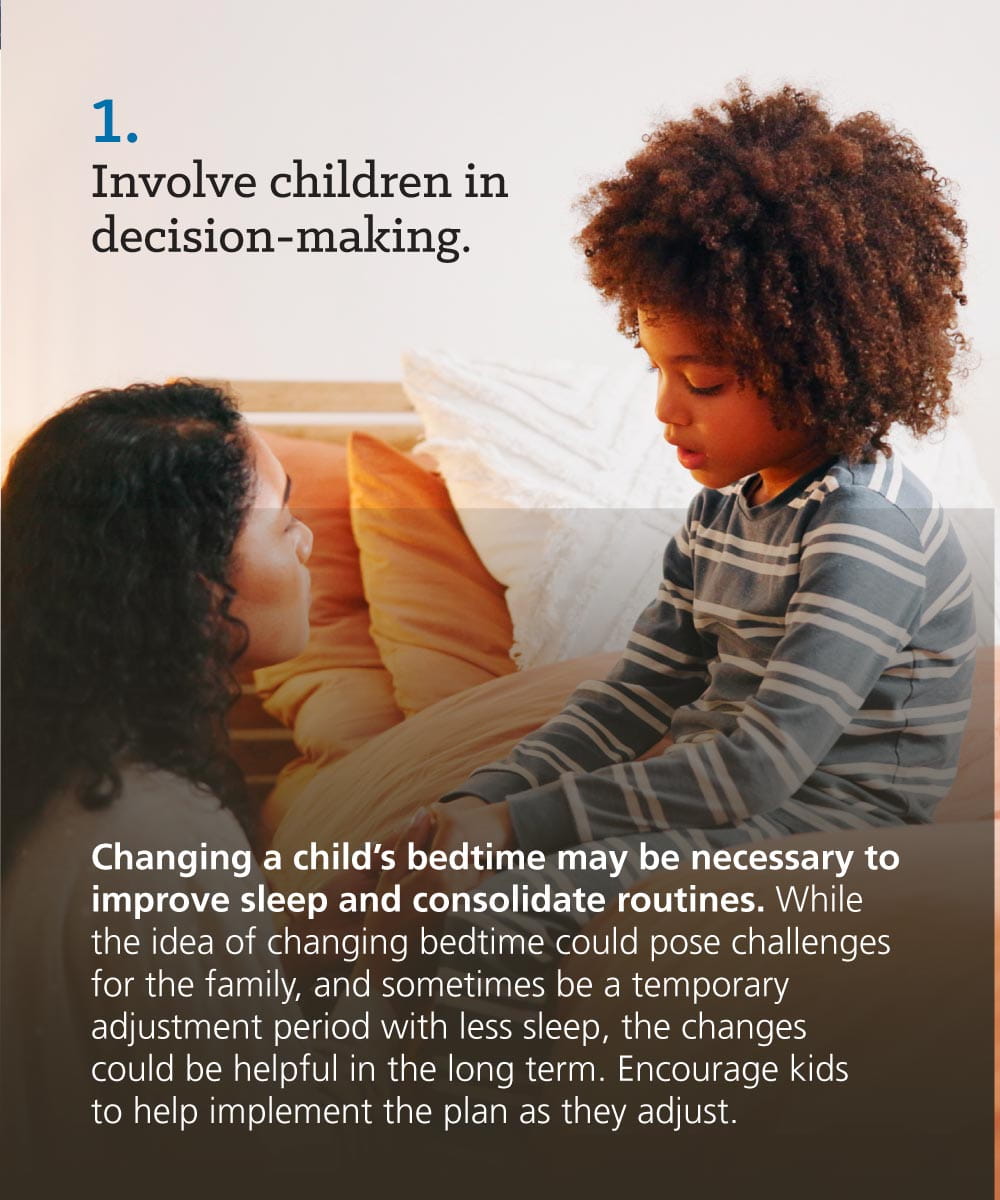
- Involve children in decision-making. Changing a child’s bedtime may be necessary to improve sleep and consolidate routines. While the idea of changing bedtime could pose challenges for the family, and sometimes be a temporary adjustment period with less sleep, the changes could be helpful in the long term. Encourage kids to help implement the plan as they adapt.
- Concentrate on wake-up time. Many parents over-focus on the bedtime despite a child taking a long time to fall asleep. It may be that the timing is off. Wake-up time will often set the stage for bedtime. So, focus on consistent wake time and work backward from that. Once a workable wake-up time is established, sleep drive will allow a regular bedtime to follow. It takes about two weeks to establish a new sleep schedule.
- Relax weekend sleep schedules. It’s okay to let them sleep in on weekends, a little, if your child isn’t having trouble falling asleep and going to school on time. But if there is trouble with getting up for school, a clock shift may be a part of the problem. Rule of thumb: Don’t shift wake-up time by more than an hour or two on weekend mornings.
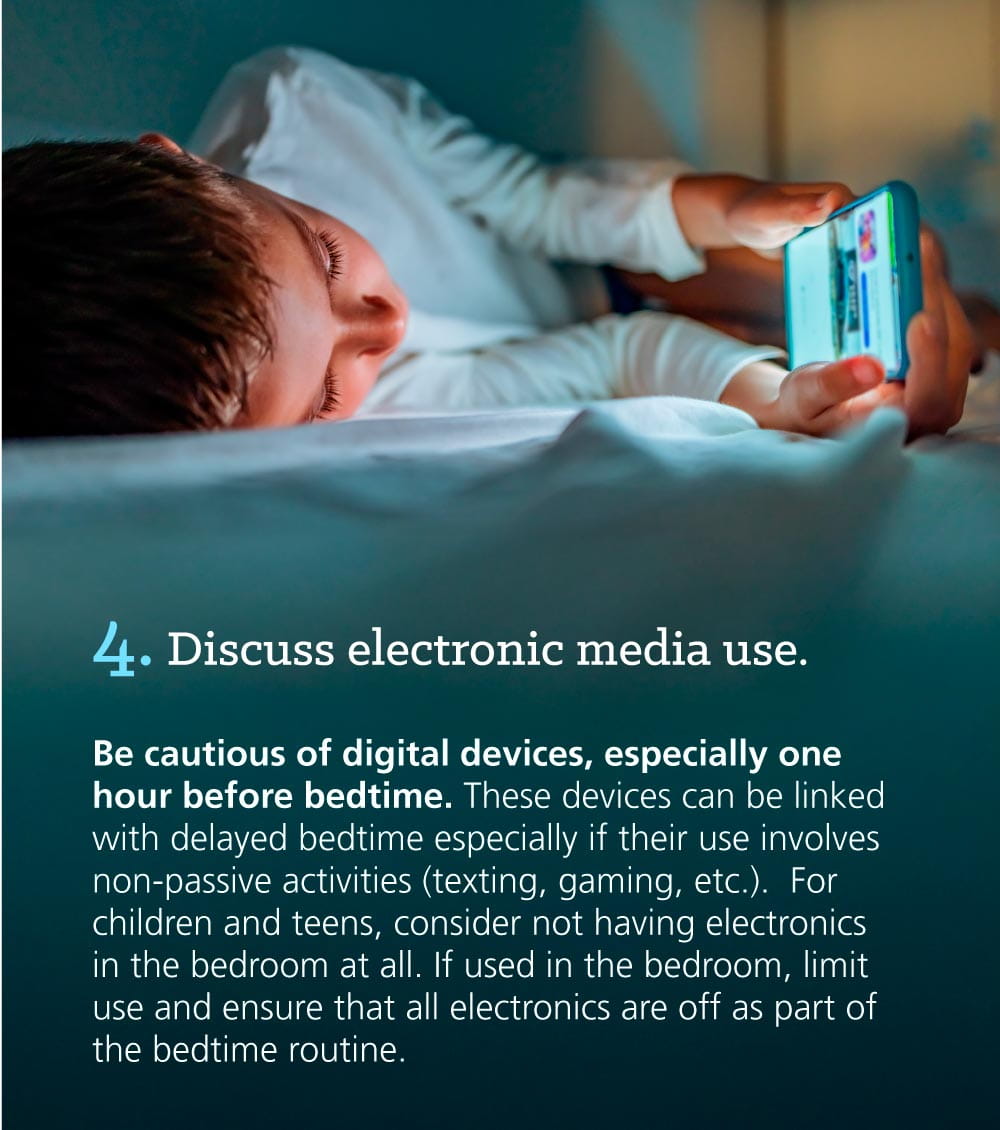
- Discuss electronic media use. Be cautious of digital devices, especially one hour before bedtime. These devices can be linked with delayed bedtime especially if their use involves non-passive activities (texting, gaming, etc.). For children and teens, consider not having electronics in the bedroom at all. If used in the bedroom, limit use and ensure that all electronics are off as part of the bedtime routine.
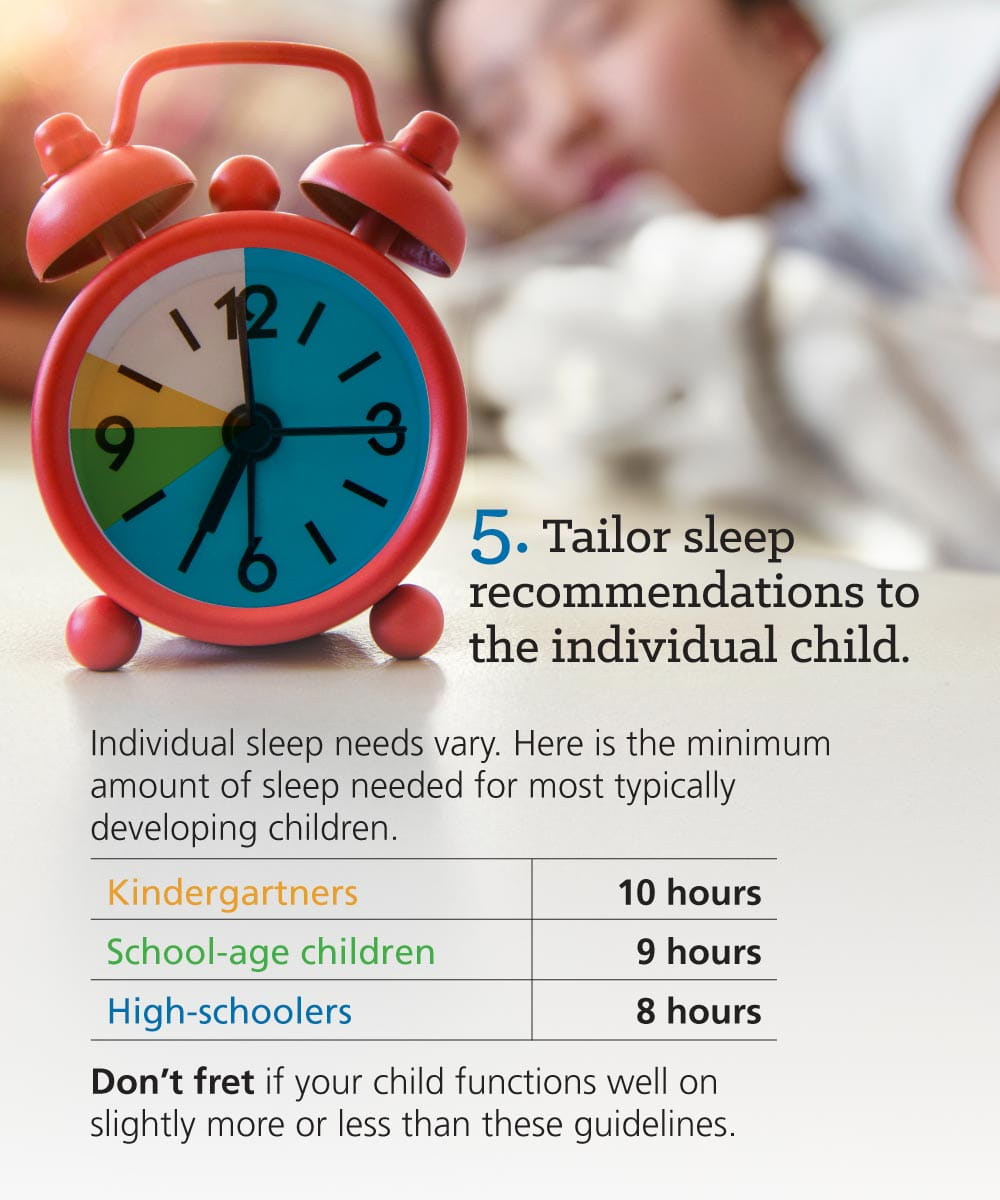
- Tailor sleep recommendations to the individual child. Individual sleep needs vary. Here is the minimum amount of sleep needed for most typically developing children.
- Kindergarteners: 10 hours
- School-age children: 9 hours
- High-schoolers: 8 hours
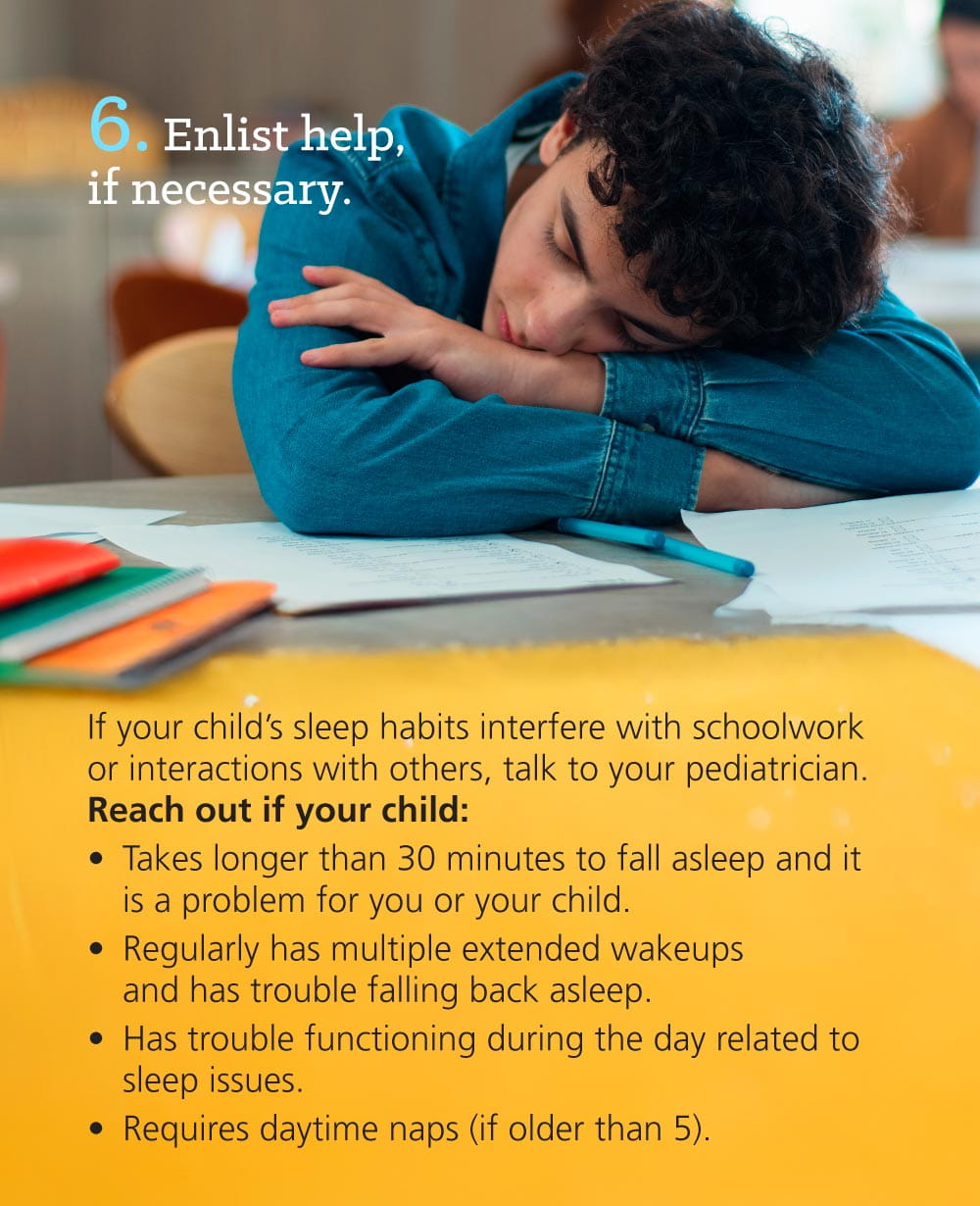
- Enlist help, if necessary. If your child's sleep habits interfere with schoolwork or interactions with others, talk to your pediatrician. Reach out if your child:
- Takes longer than 30 minutes to fall asleep and it is a problem for you or your child.
- Regularly has multiple extended wakeups and has trouble falling back asleep.
- Has trouble functioning during the day related to sleep issues.
- Requires daytime naps (if older than 5).
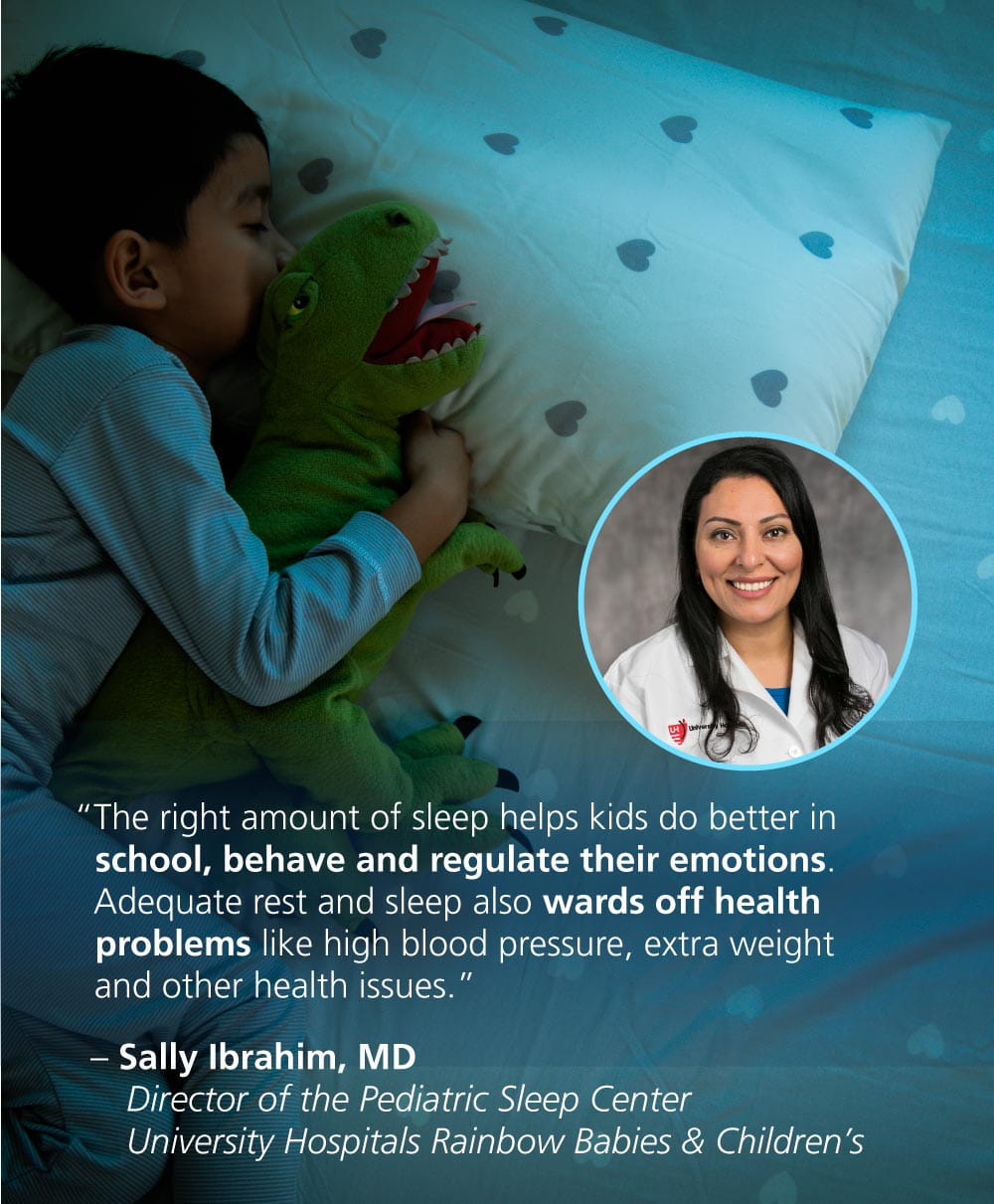
“The right amount of sleep helps kids do better in school, behave and regulate their emotions. Adequate rest also wards off health problems like high blood pressure, extra weight and other health issues.” – Sally Ibrahim, MD, Director of the Pediatric Sleep Center at University Hospitals Rainbow Babies & Children’s