


Low Vitamin D: A Hidden Cause of Fractures in Young Athletes
February 25, 2026
 University Hospitals Rainbow Babies & Children'sExperts in Children's Health

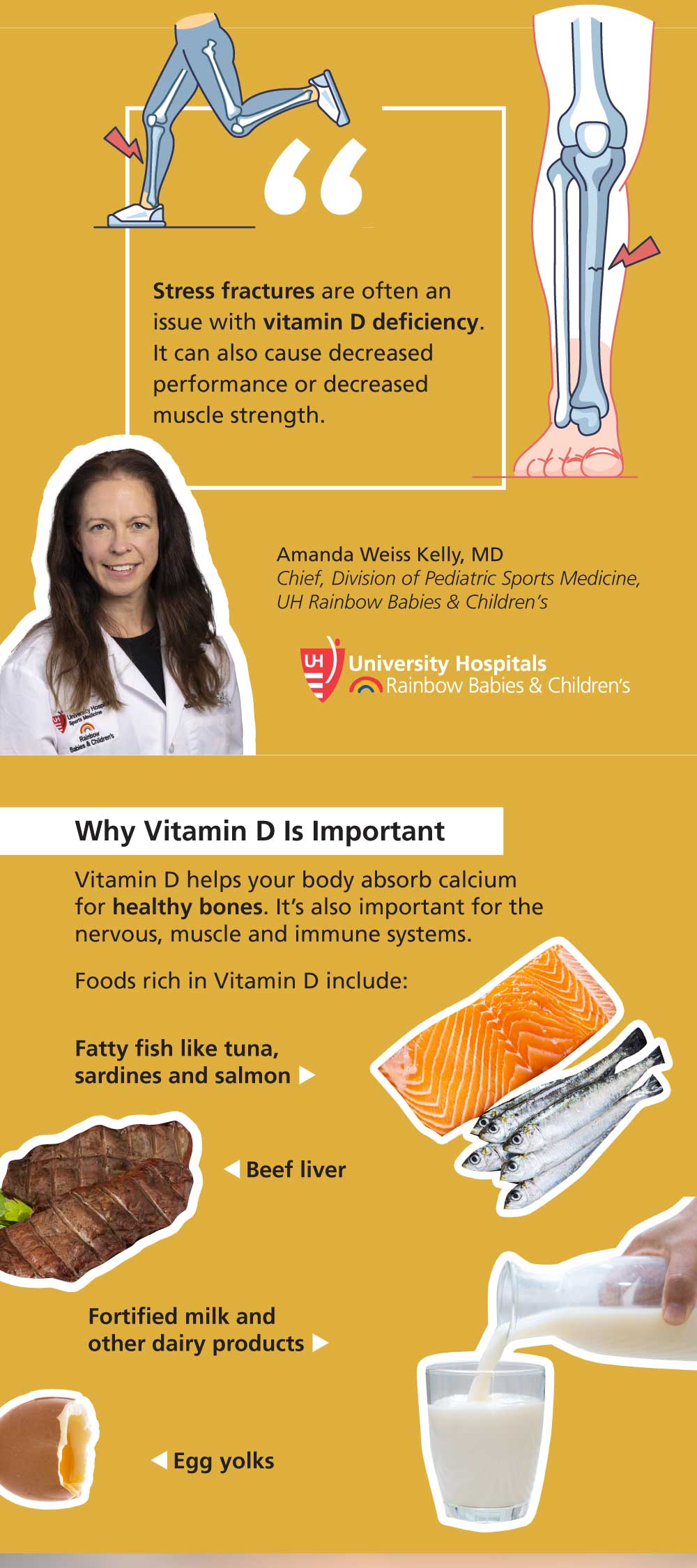



Many people have a vitamin D deficiency and don’t know it. For athletes, the telltale signs can be muscle fatigue or an injury.
“Stress fractures are often an issue with vitamin D deficiency. It can also cause decreased performance or decreased muscle strength.” – Amanda Weiss Kelly, MD, Chief, Division of Pediatric Sports Medicine, UH Rainbow Babies & Children’s
Why Vitamin D Is Important
Vitamin D helps your body absorb calcium for healthy bones. It’s also important for the nervous, muscle and immune systems.
Foods rich in Vitamin D include:
- Fatty fish like tuna, sardines and salmon
- Beef liver
- Fortified milk and other dairy products
- Egg yolks
Vitamin D and Sunlight
Vitamin D is sometimes called the “sunshine vitamin,” because ultraviolet rays from the sun trigger vitamin D production in the body.
But there’s need for caution. Sun exposure carries skin cancer risk, and vitamin D production varies by season, time of day, location and skin type. The safest way to get vitamin D is through diet and supplements. Young athletes need about 600 IU daily.
Advice for Parents
Vitamin D deficiency can be overlooked. Dr. Kelly urges parents of young athletes to make sure their child gets a yearly checkup and to be on the lookout for risks and signs of problems.
“If an athlete comes in and has performance issues or fatigue, or they have documented low bone density, checking vitamin D is really important.”
When a young athlete is deficient, providers may prescribe a supplement, typically 50,000 IU once a week for 8 weeks, followed by daily supplements.