


Taking Supplements? Watch Out for These Common Interactions
July 24, 2026
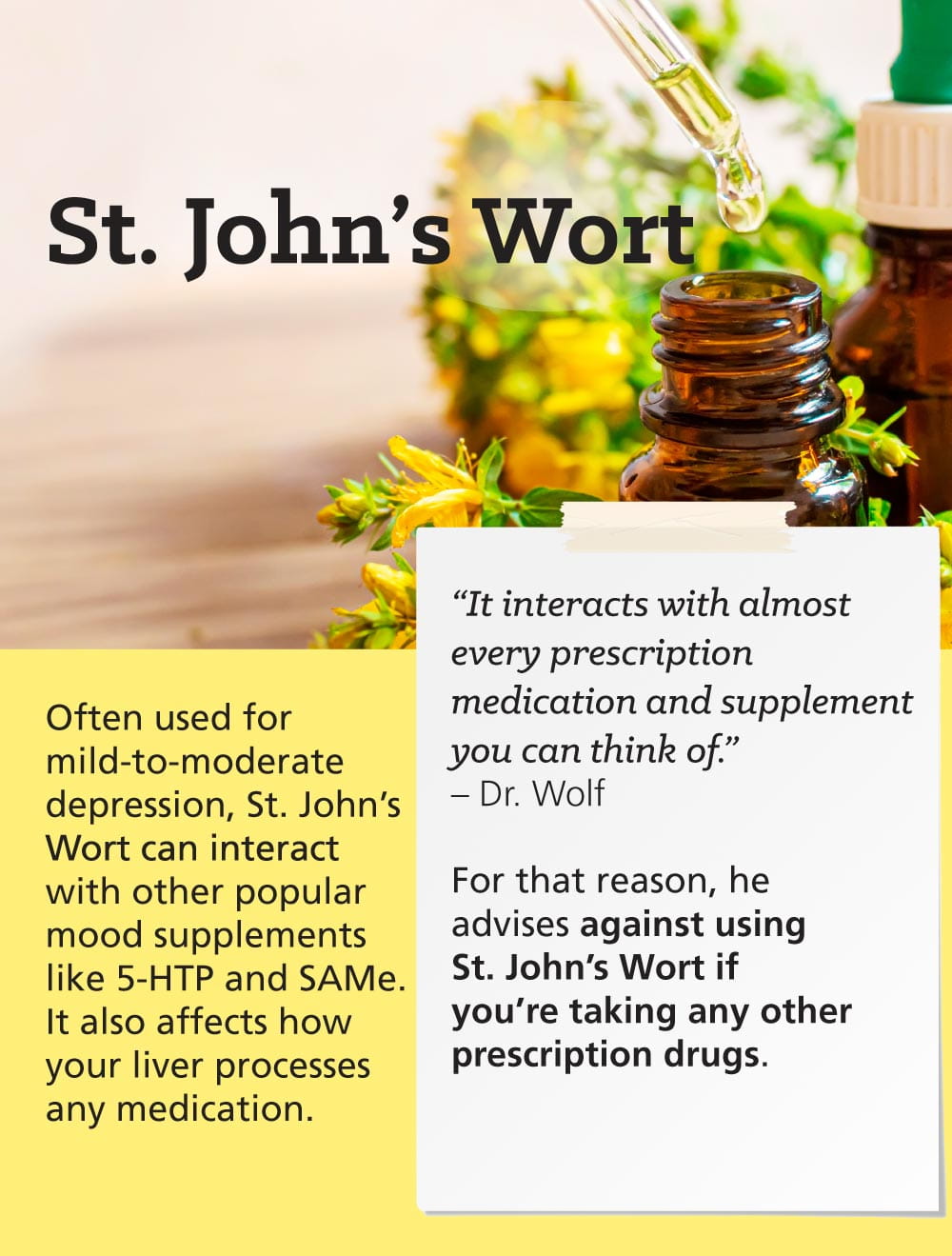
Many people don’t realize that supplements can compete for absorption in the stomach.
“It’s not a direct interaction, but if you’re taking them at the same time, you have multiple molecules competing and your body may not absorb as much.” – Jacob Wolf, ND, LAc, Naturopathic Doctor at University Hospitals Connor Whole Health
St. John’s Wort
Often used for mild-to-moderate depression, St. John’s Wort can interact with other popular mood supplements like 5-HTP and SAMe. It also affects how your liver processes any medication.
“It interacts with almost every prescription medication and supplement you can think of,” says Dr. Wolf. For that reason, he advises against using St. John’s Wort if you’re taking any other prescription drugs.
Gingko Biloba and Omega-3
Often praised for their brain-boosting and heart-healthy benefits, both supplements have mild blood-thinning effects. While not dangerous on their own, taking them together – or with prescription blood thinners or aspirin – can raise your risk of bruising or bleeding.
Before surgery, these supplements may need to be discontinued several days to a week in advance.
Collagen and Biotin
Many supplements make big promises, but the science behind them can be murky. “Collagen is a good protein source and may support gut health, but whole collagen molecules are large and don’t get absorbed directly into your joints or hair,” says Dr. Wolf. Look for collagen peptides or hydrolyzed collagen for better absorption.
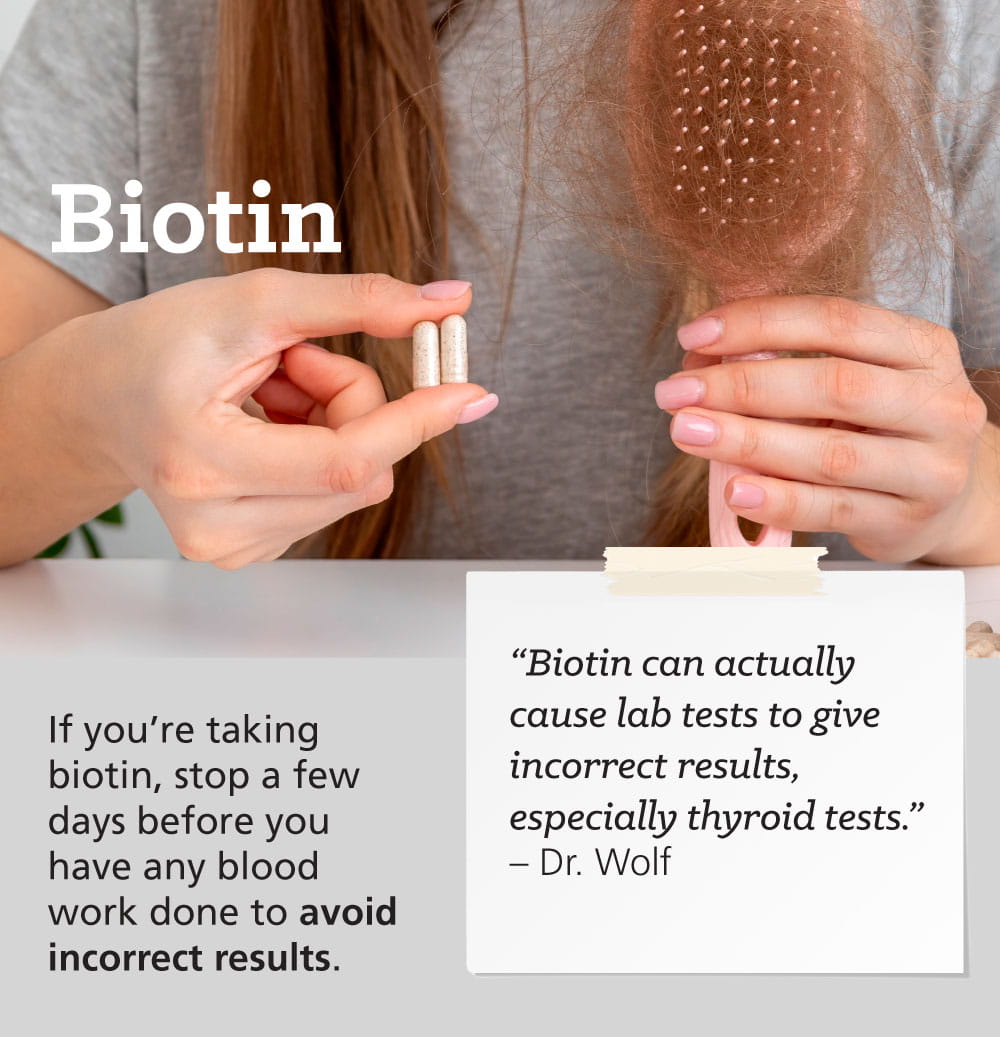
“Biotin can actually cause lab tests to give incorrect results, especially thyroid tests,” he says. If you’re taking biotin, stop a few days before you have any blood work done to avoid incorrect results.
Vitamin D
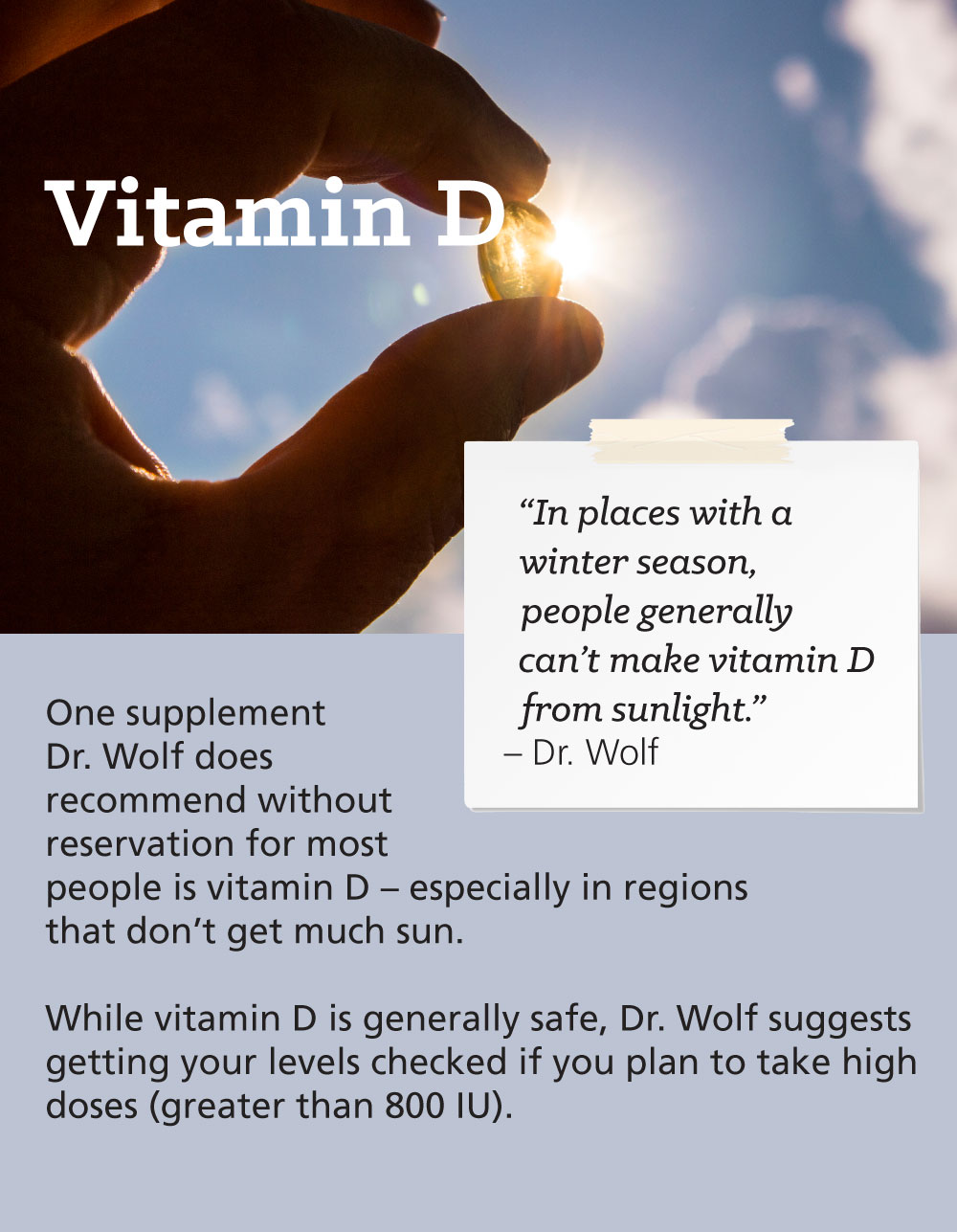
One supplement Dr. Wolf does recommend without reservation for most people is vitamin D – especially in regions that don’t get much sun. “In places with a winter season, people generally can’t make vitamin D from sunlight.”
While vitamin D is generally safe, Dr. Wolf suggests getting your levels checked if you plan to take high doses (greater than 800 IU).
The Bottom Line
- When taking supplements, check with your doctor or pharmacist for any interactions with other medications or supplements you’re taking.
- Choose high-quality, professional-grade brands with fewer fillers and binders in the ingredients.
- And keep in mind: While some supplements can be beneficial, they’re not magic bullets.
Tags: Diet and Nutrition