


9 Medications That Don’t Mix Well With Coffee
June 30, 2026








Coffee offers a variety of health benefits, but it can change how your body absorbs certain drugs, reducing their effectiveness and increasing side effects.
1. Asthma Medications
Some asthma medications work by relaxing the muscles in the airway to make breathing easier. Drinking too much coffee or other caffeinated beverages can increase the risk of side effects, including headache, nausea, restlessness and irritability.
2. Cold & Allergy Medications
Mixing coffee with some cold and allergy medications can cause restlessness, jitteriness and sleep issues. People with diabetes should be extra careful about combining pseudoephedrine and caffeine, which can raise blood sugar and body temperature.
3. Thyroid Medications
Coffee can reduce your body’s ability to absorb certain thyroid medications, including levothyroxine, making it significantly less effective. Patients are advised to wait 30 to 60 minutes before drinking coffee.
4. Blood Thinners
Since they stop blood from clotting, a common side effect of blood thinners is bleeding. Caffeine can also slow blood clotting. Drinking coffee around the time you take a blood thinner increases your risk of bleeding and bruising.
5. Blood Pressure Medicine
Millions of people take blood pressure medication, which slows the heart rate so it doesn’t have to work as hard to pump blood. Drinking coffee close to when you take your blood pressure medication can decrease its absorption, making it less effective.
6. Antidepressants & Psychiatric Medications
Drinking coffee can reduce how much psychiatric medication your body absorbs, weakening their effect. Some antidepressants share the same enzyme as caffeine, increasing caffeine-related side effects like jitters.
7. Osteoporosis Medications
Medications used to prevent and treat osteoporosis should only be taken with water. If they’re taken with coffee or any other beverage or food, their effectiveness can be greatly reduced.
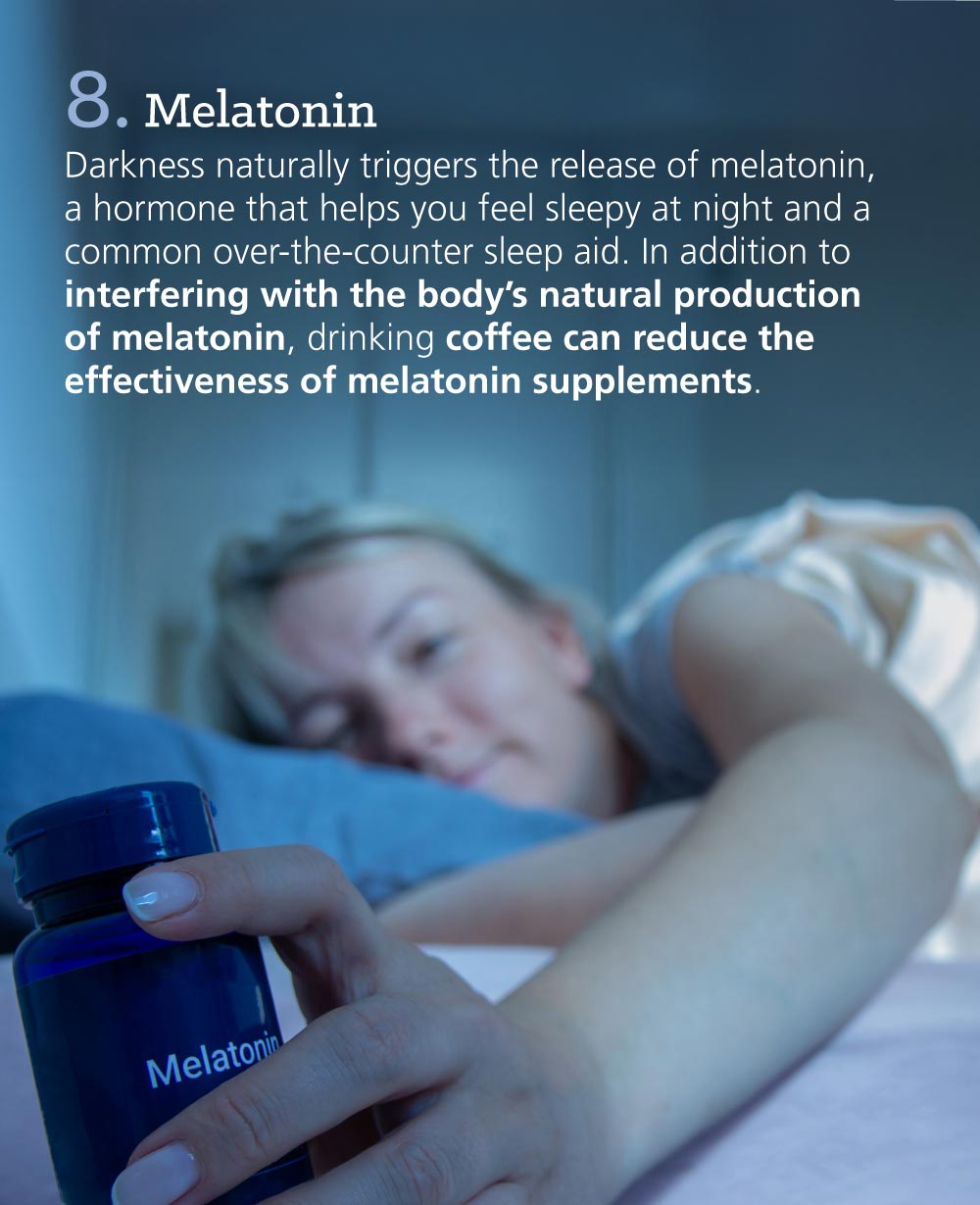
8. Melatonin
Darkness naturally triggers the release of melatonin, a hormone that helps you feel sleepy at night and a common over-the-counter sleep aid. In addition to interfering with the body’s natural production of melatonin, drinking coffee can reduce the effectiveness of melatonin supplements.
9. Alzheimer’s Medicine
The caffeine in coffee tightens the blood-brain barrier and can limit how much Alzheimer's medication reaches the brain. Consuming large amounts of coffee has been shown to reduce the effectiveness of medications that target the neurotransmitter acetylcholine.