


What Do Eye Floaters in Your Vision Mean?
May 20, 2026
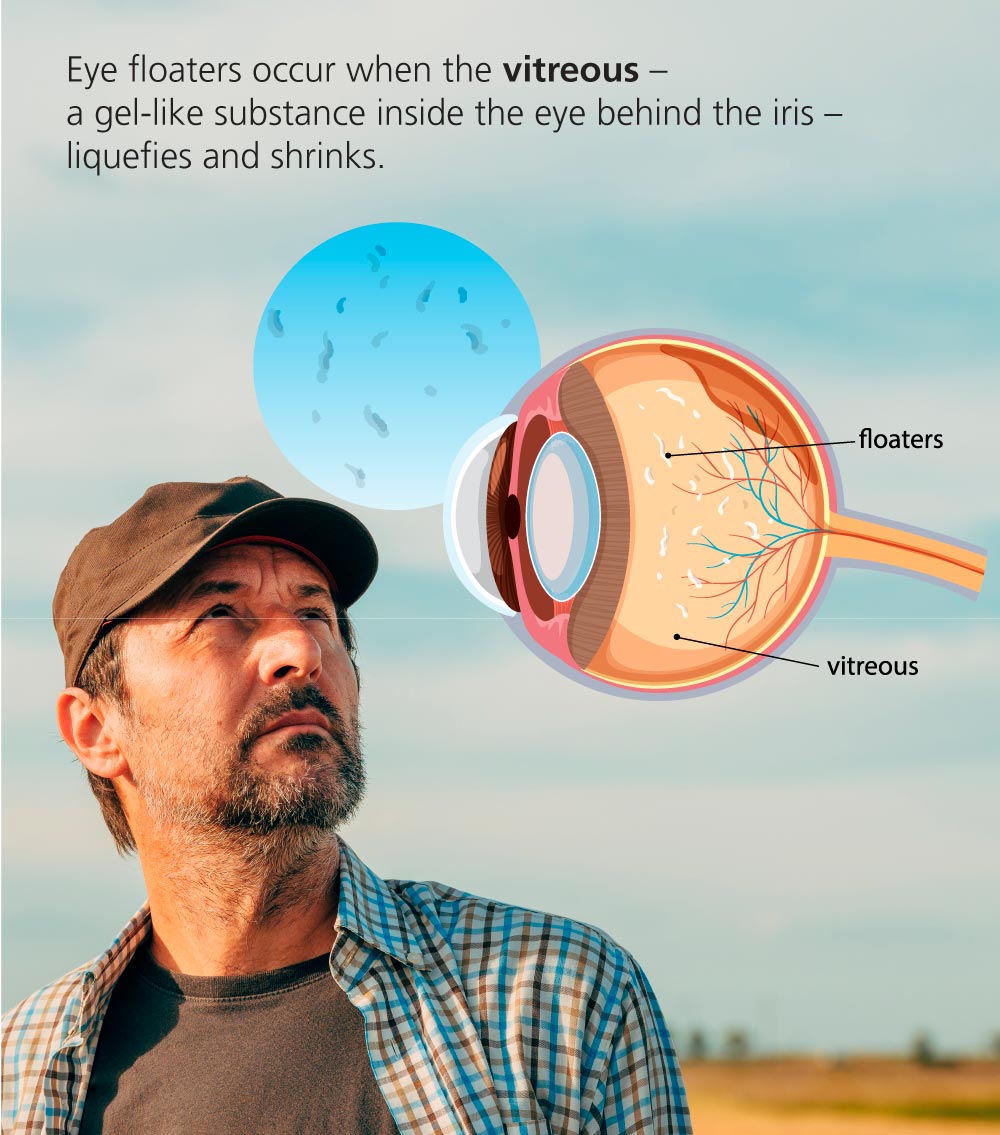
Eye floaters occur when the vitreous – a gel-like substance inside the eye behind the iris – liquefies and shrinks.
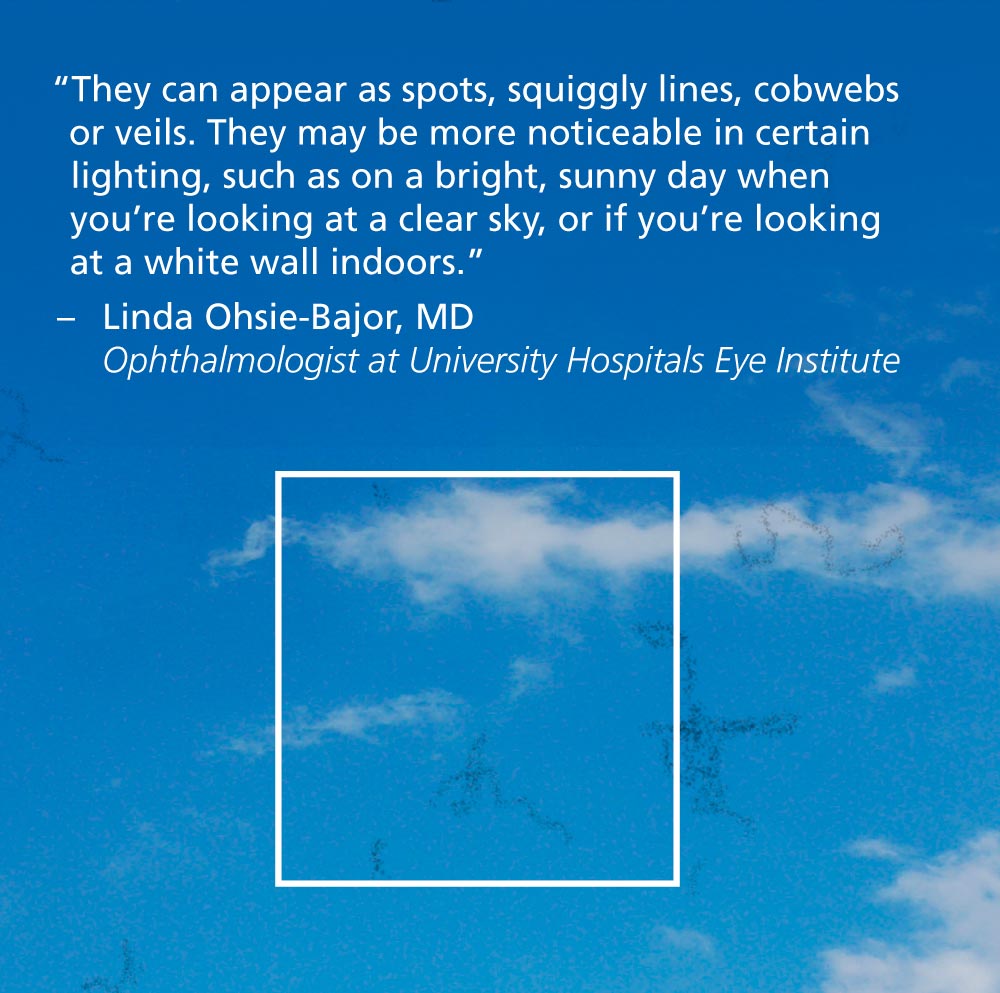
“They can appear as spots, squiggly lines, cobwebs or veils. They may be more noticeable in certain lighting, such as on a bright, sunny day when you’re looking at a clear sky, or if you’re looking at a white wall indoors.” – Linda Ohsie-Bajor, MD, ophthalmologist at University Hospitals Eye Institute
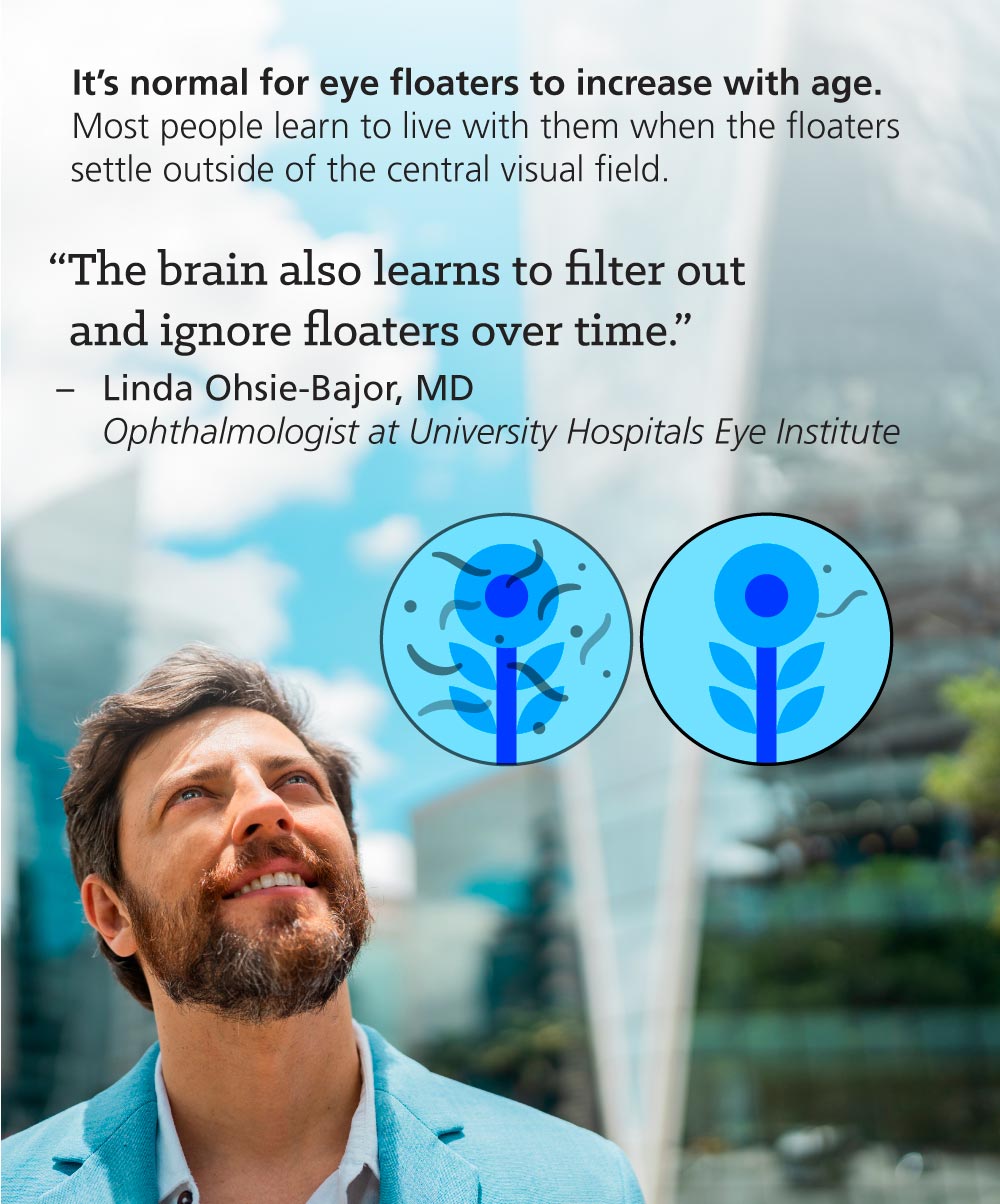
It’s normal for eye floaters to increase with age. Most people learn to live with them when the floaters settle outside of the central visual field. “The brain also learns to filter out and ignore floaters over time.”
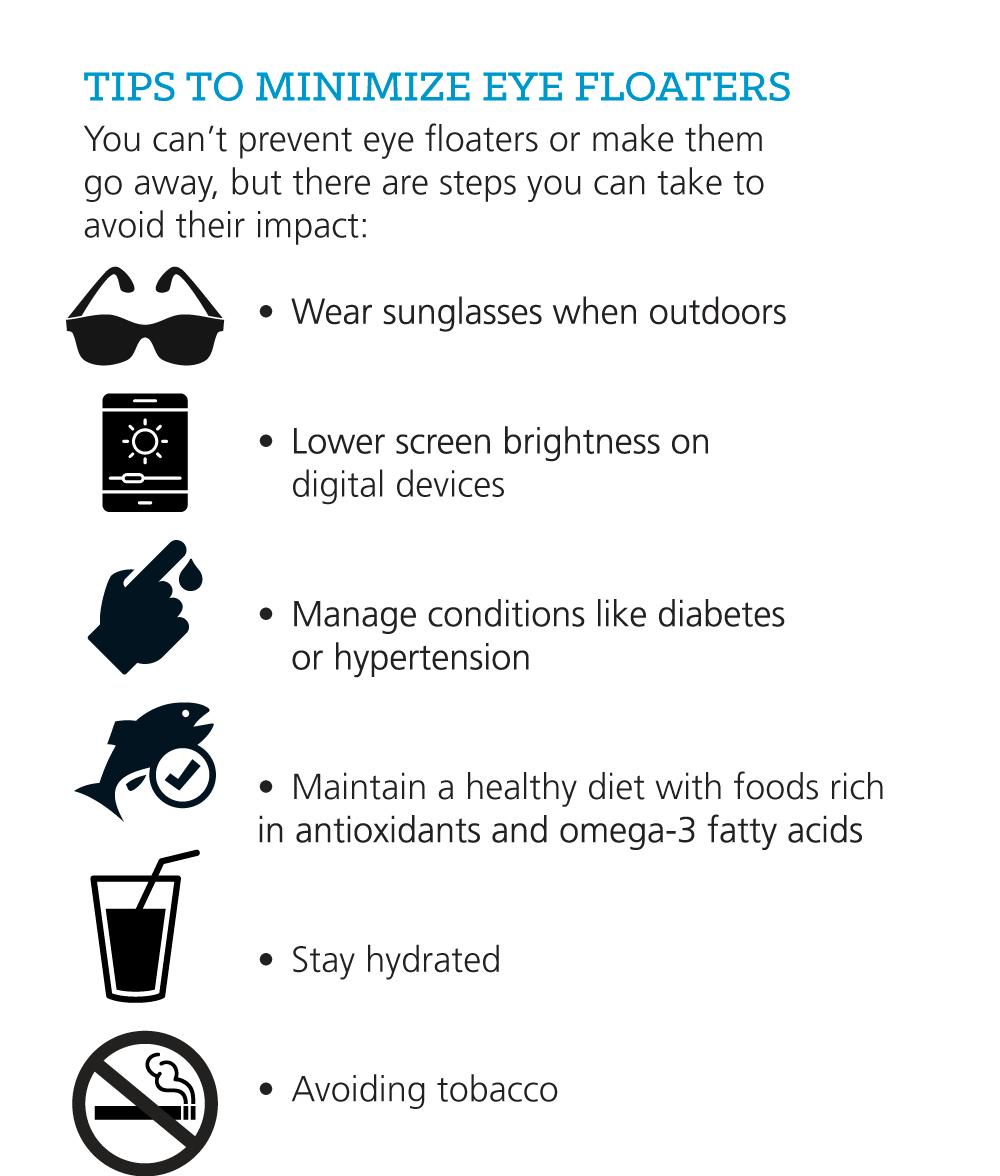
Tips to Minimize Eye Floaters
You can’t prevent eye floaters or make them go away, but there are steps you can take to minimize their impact:
- Wear sunglasses when outdoors
- Lower screen brightness on digital devices
- Manage conditions like diabetes or hypertension
- Maintain a healthy diet with foods rich in antioxidants and omega-3 fatty acids
- Stay hydrated
- Avoid tobacco
Treatment for Eye Floaters
In rare cases, such as if eye floaters significantly affect vision, treatments are available.
Laser Therapy (Vitreolysis). A YAG laser is used to target and break up floaters.
- Typically takes less than 15 minutes.
- Performed under topical anesthesia.
- It can reduce the size and number of symptomatic floaters, but will not completely eliminate them.
- Risks include: cataract formation, retinal injury, glaucoma.
Surgery (Vitrectomy). A surgical procedure removes the vitreous gel and is highly effective at reducing floaters. Risks include:
- Infection
- Cataract formation
- Glaucoma
- Bleeding
- Retinal detachment
Not every patient is a good candidate. It’s important to talk to your ophthalmologist to determine if either treatment is appropriate and safe for you.
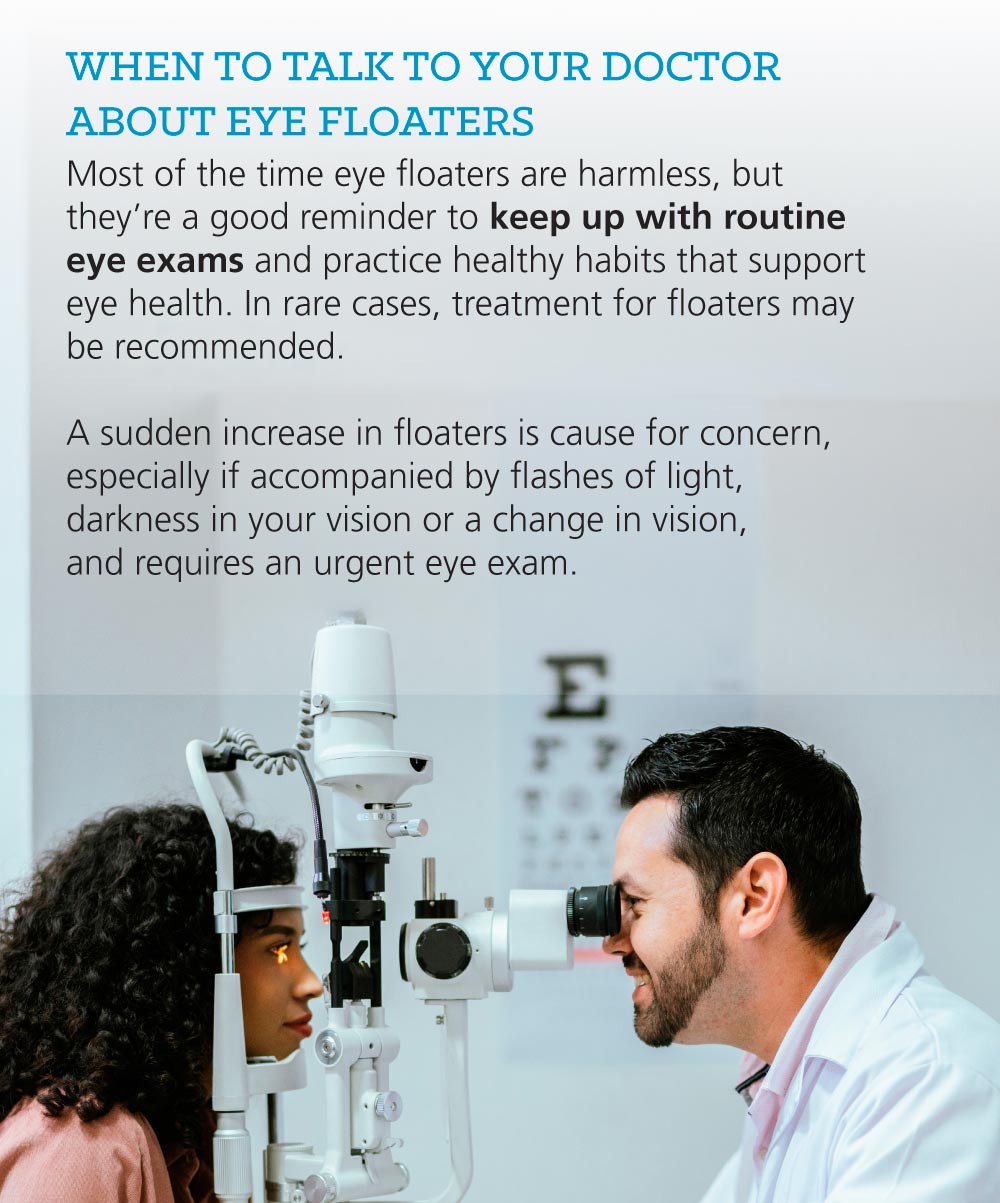
When to Talk to Your Doctor About Eye Floaters
Most of the time eye floaters are harmless, but they’re a good reminder to keep up with routine eye exams and practice healthy habits that support eye health.
A sudden increase in floaters is cause for concern, especially if accompanied by flashes of light, darkness in your vision or a change in vision, and requires an urgent eye exam.