


How Heart Rate Zone Training Can Improve Performance
March 13, 2026




Smart watches and fitness trackers have made it easy to track heart rate and maximize the effectiveness of your training. But more intensity doesn’t always mean better results. In fact, exercising at a moderate pace can offer many health and fitness benefits.
What Are Heart Rate Zones?
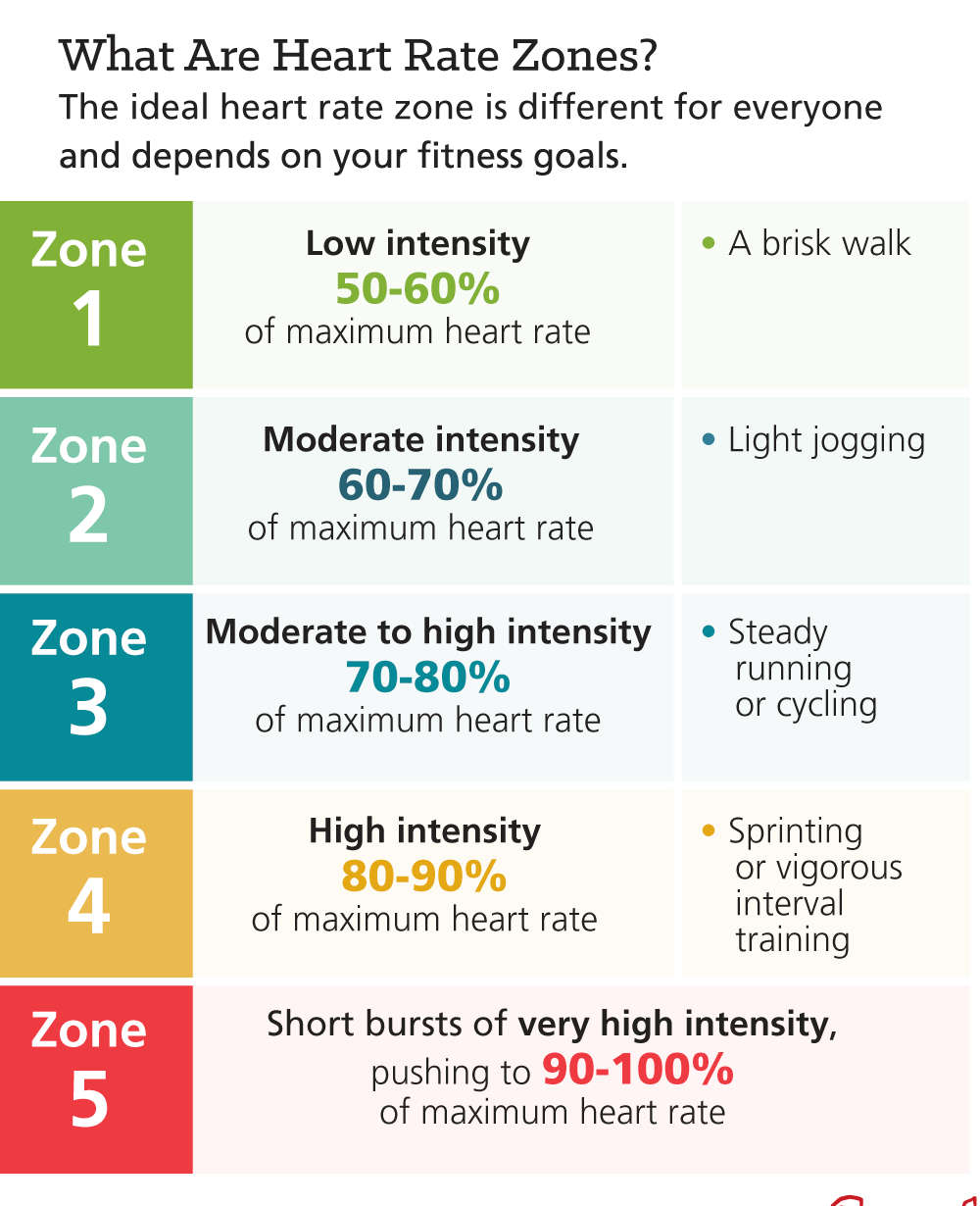
The ideal heart rate zone is different for everyone and depends on your fitness goals.
- Zone 1 is low intensity, at 50 – 60% of maximum heart rate. (A brisk walk)
- Zone 2 is moderate intensity, at 60 – 70% of maximum heart rate. (Light jogging)
- Zone 3 is moderate to high intensity, at 70 – 80% of maximum heart rate. (Steady running or cycling)
- Zone 4 is high intensity, at 80 – 90% of maximum heart rate. (Sprinting or vigorous interval training)
- Zone 5 is short bursts of very high intensity, pushing your heart to 90 – 100% of maximum rate.
The Benefits of Zone 2 Training
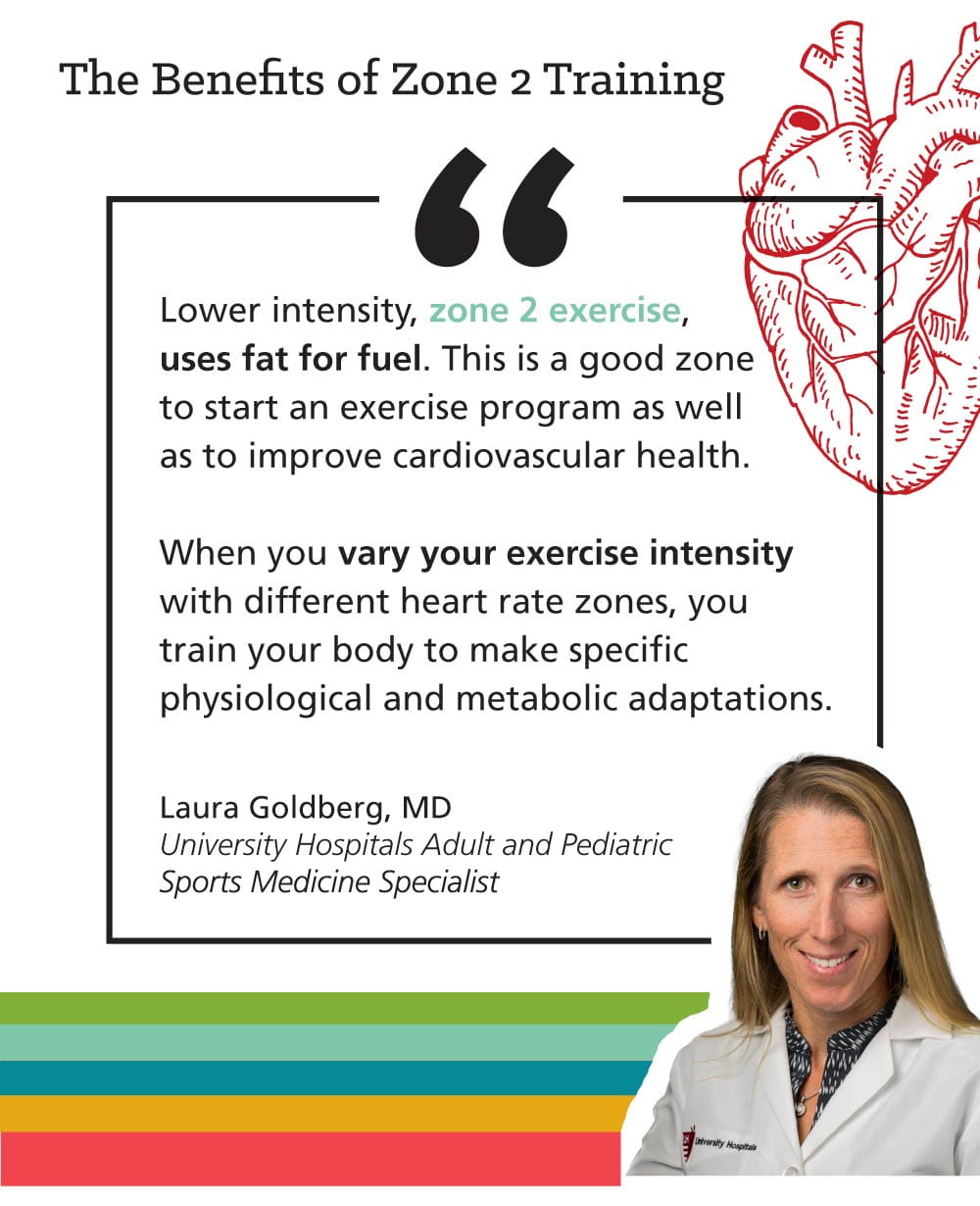
“Lower intensity, zone 2 exercise, uses fat for fuel. This is a good zone to start an exercise program as well as to improve cardiovascular health. When you vary your exercise intensity with different heart rate zones, you train your body to make specific physiological and metabolic adaptations.” – Laura Goldberg, MD, University Hospitals adult and pediatric sports medicine specialist.
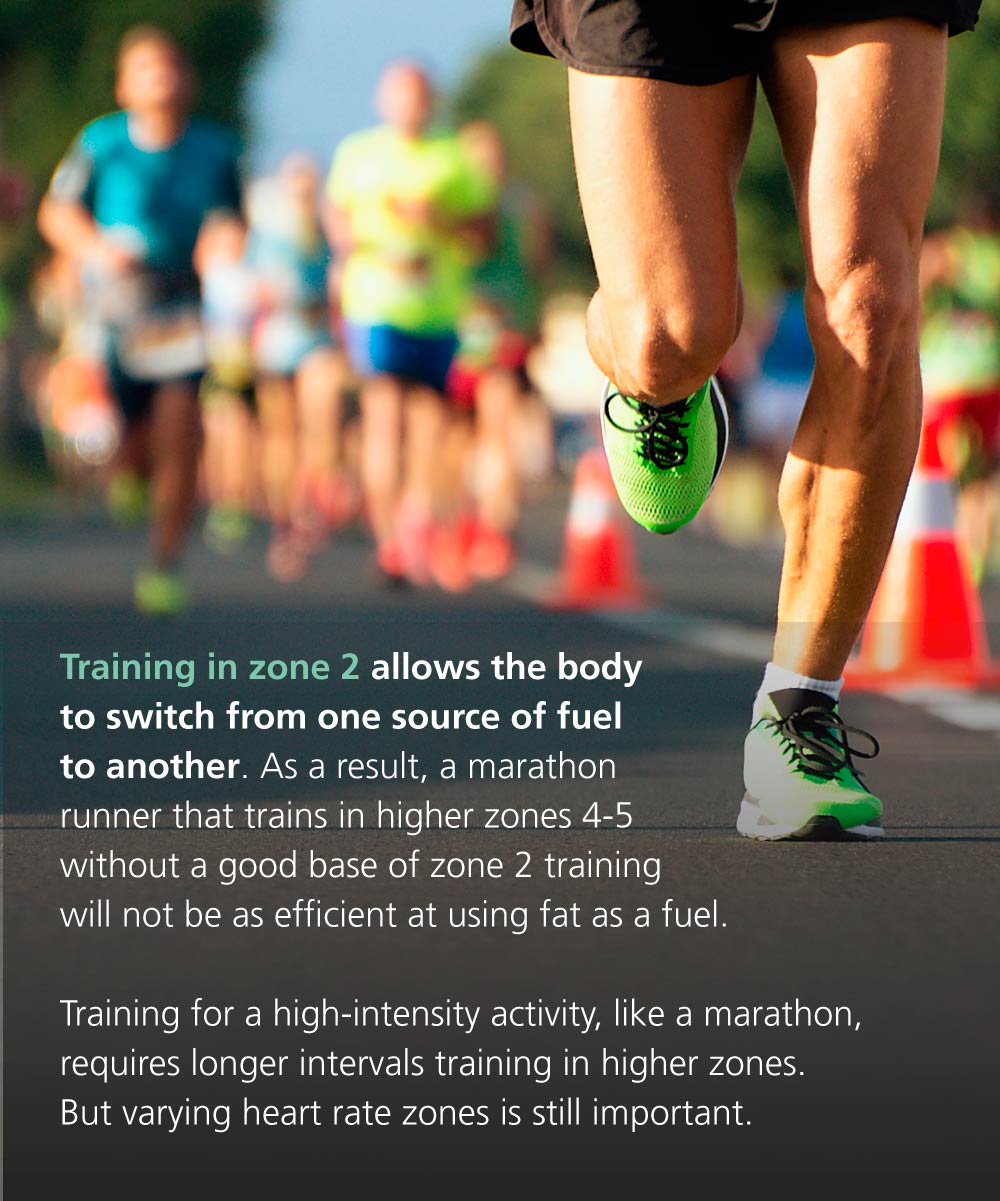
“Training in zone 2 allows the body to switch from one source of fuel to another. As a result, a marathon runner that trains in higher zones 4 – 5 without a good base of zone 2 training will not be as efficient at using fat as a fuel.”
Varying Heart Rate Zones
Training for a high-intensity activity, like a marathon, requires longer intervals training in higher zones. But varying heart rate zones is still important.
“High-intensity training uses carbohydrates as a source of fuel, which is in limited supply in our bodies, so we can’t sustain zone 5 training over long periods of time. Also, if not given appropriate recovery time, it can lead to elevated cortisol levels, which increases stress on our body and affects performance.”
How to Calculate Your Ideal Heart Rate Zone
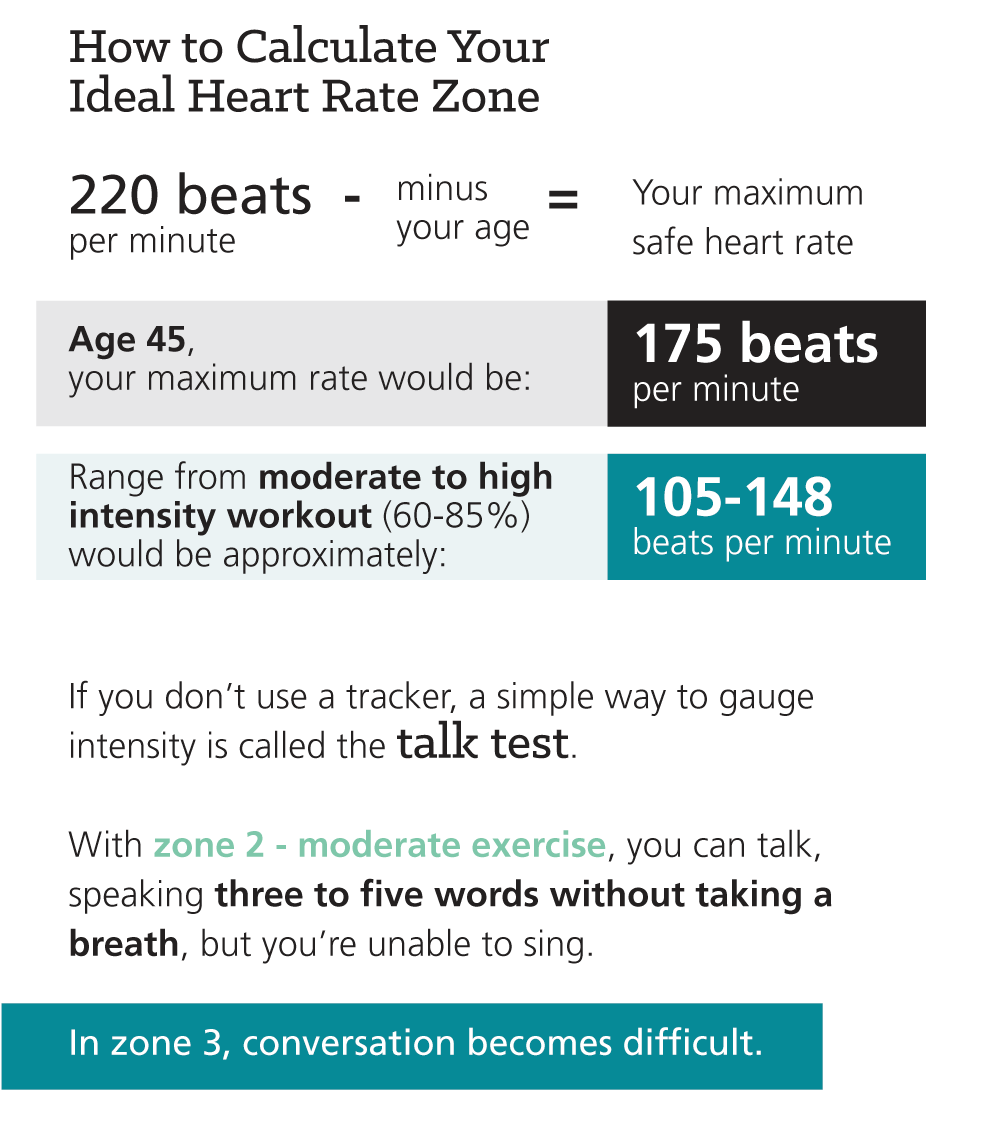
Your maximum safe heart rate is about 220 beats per minute minus your age. If you’re 45, your maximum rate would be 175 beats per minute. The range from moderate to high intensity (60 – 85%) would be approximately 105 – 148 beats per minute.
If you don’t use a tracker, a simple way to gauge intensity is called the talk test. In zone 2, you can talk, speaking three to five words without taking a breath, but you’re unable to sing. In zone 3, conversation becomes difficult.