


3 Ways to Improve Your Child’s Mental Game in Sports
March 09, 2026
 University Hospitals Rainbow Babies & Children'sExperts in Children's Health




“Youth sports are a great opportunity for kids to learn how to handle adversity and manage certain mental challenges, while developing valuable skills that go beyond the playing field.” – Vincent Caringi, MD, University Hospitals Psychiatrist and Team Behavioral Health Clinician for the Cleveland Browns.
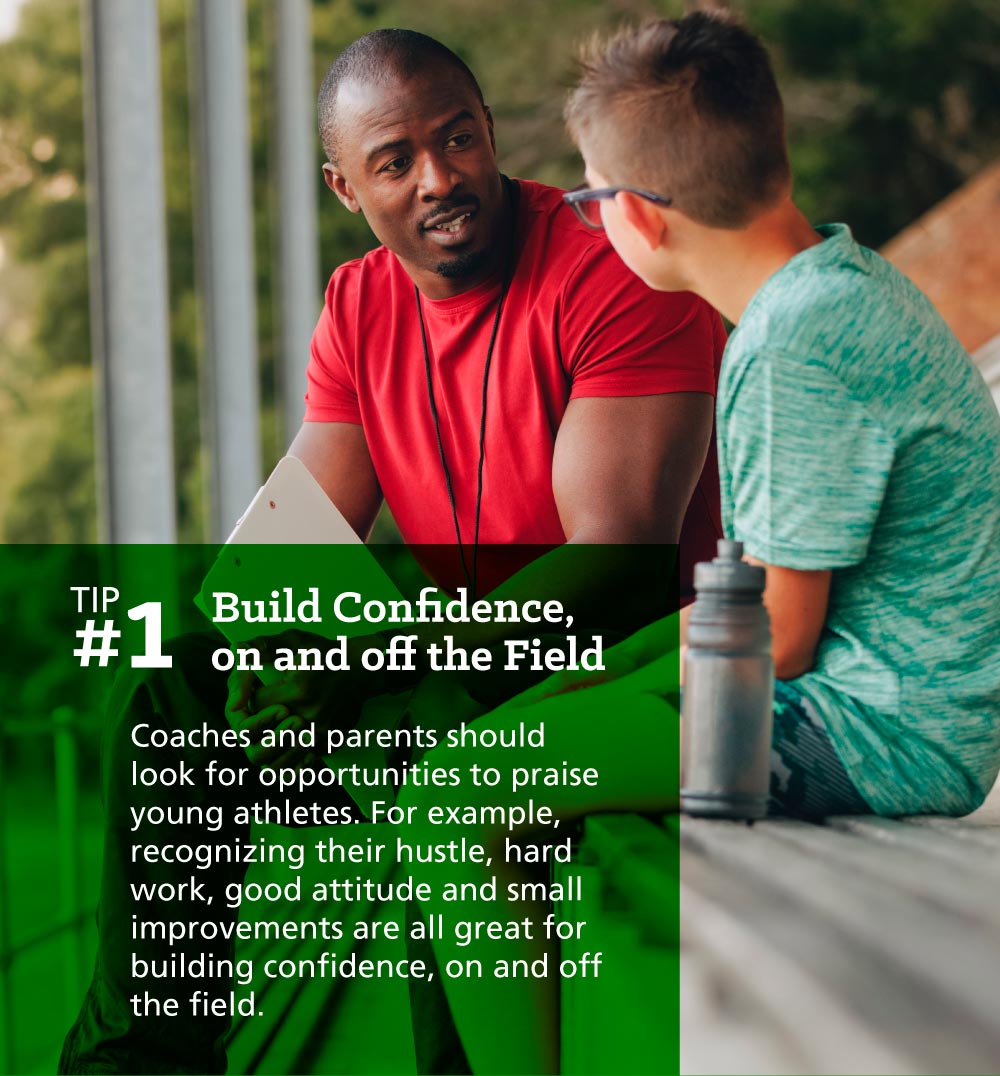
#1 – Build Confidence, on and off the Field
Coaches and parents should look for opportunities to praise young athletes. For example, recognizing their hustle, hard work, good attitude and small improvements are all great for building confidence, on and off the field.
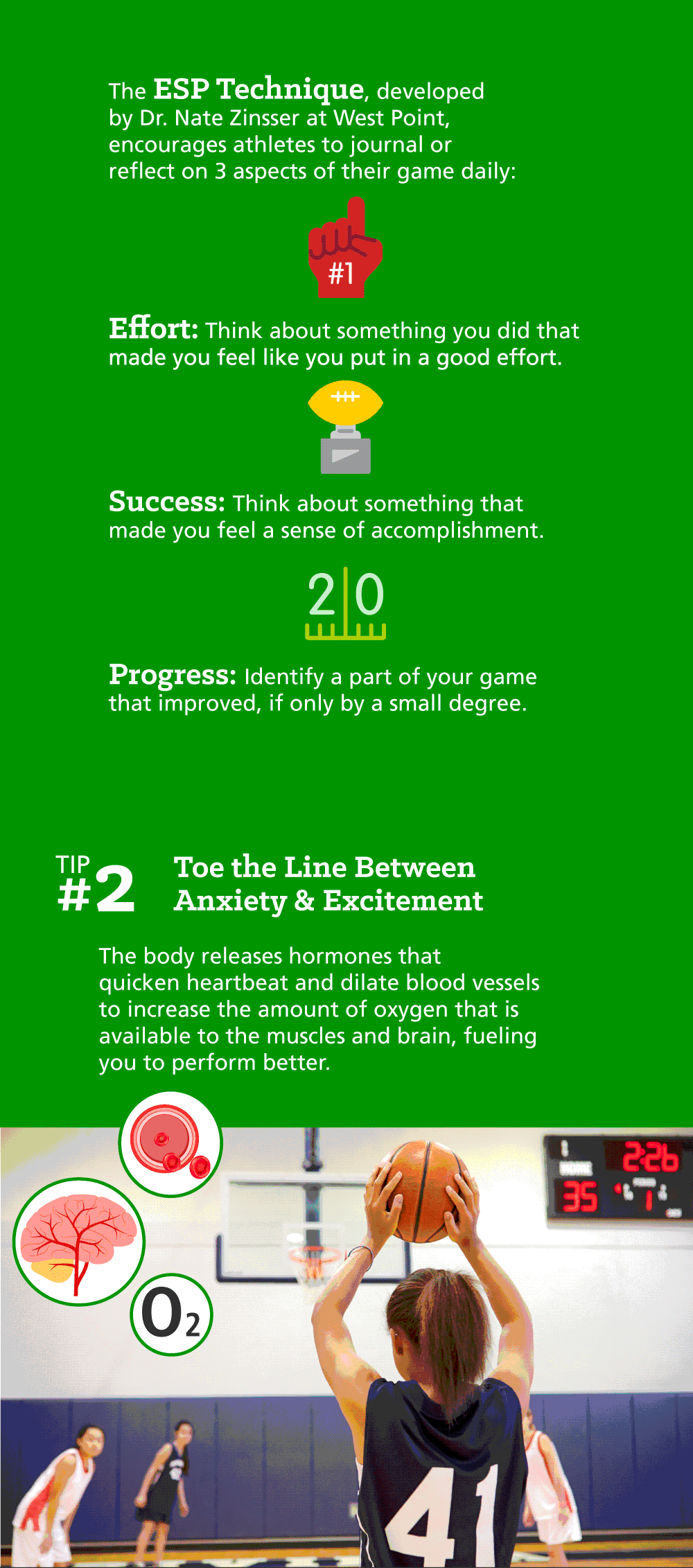
The ESP Technique, developed by Dr. Nate Zinsser at West Point, encourages athletes to journal or reflect on 3 aspects of their game daily:
- Effort: Think about something you did that made you feel like you put in a good effort.
- Success: Think about something that made you feel a sense of accomplishment.
- Progress: Identify a part of your game that improved, if only by a small degree.
#2 – Toe the Line Between Anxiety & Excitement
The body releases hormones that quicken heartbeat and dilate blood vessels to increase the amount of oxygen that is available to the muscles and brain, fueling you to perform better.
Simply educating young athletes about the close connection between feeling anxious and feeling excited can be helpful in getting them to manage their anxieties. Coaches and parents should encourage young athletes to view any pre-game anxiousness they experience as part of a positive state of preparation for the game (something to be enjoyed) rather than useless fear.
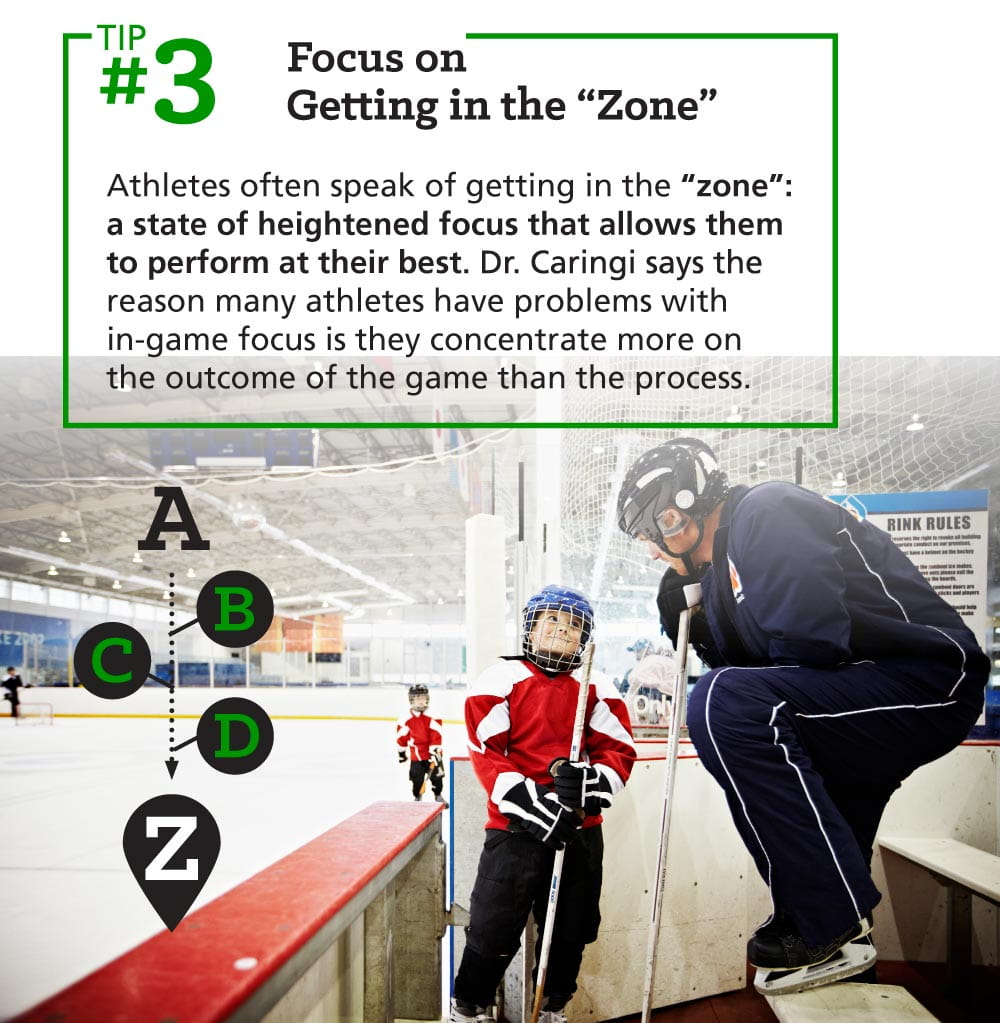
#3 – Focus on Getting in the “Zone”
Athletes often speak of getting in the “zone”: a state of heightened focus that allows them to perform at their best. Dr. Caringi says the reason many athletes have problems with in-game focus is they concentrate more on the outcome of the game than the process.
There are many distractions that can take a young athlete’s head out of the game, including self-doubt, mistakes made during the game, the opposing team scoring, and parents or coaches yelling from the sidelines. Very young players, in particular, tend to have shorter attention spans and can be easily distracted.
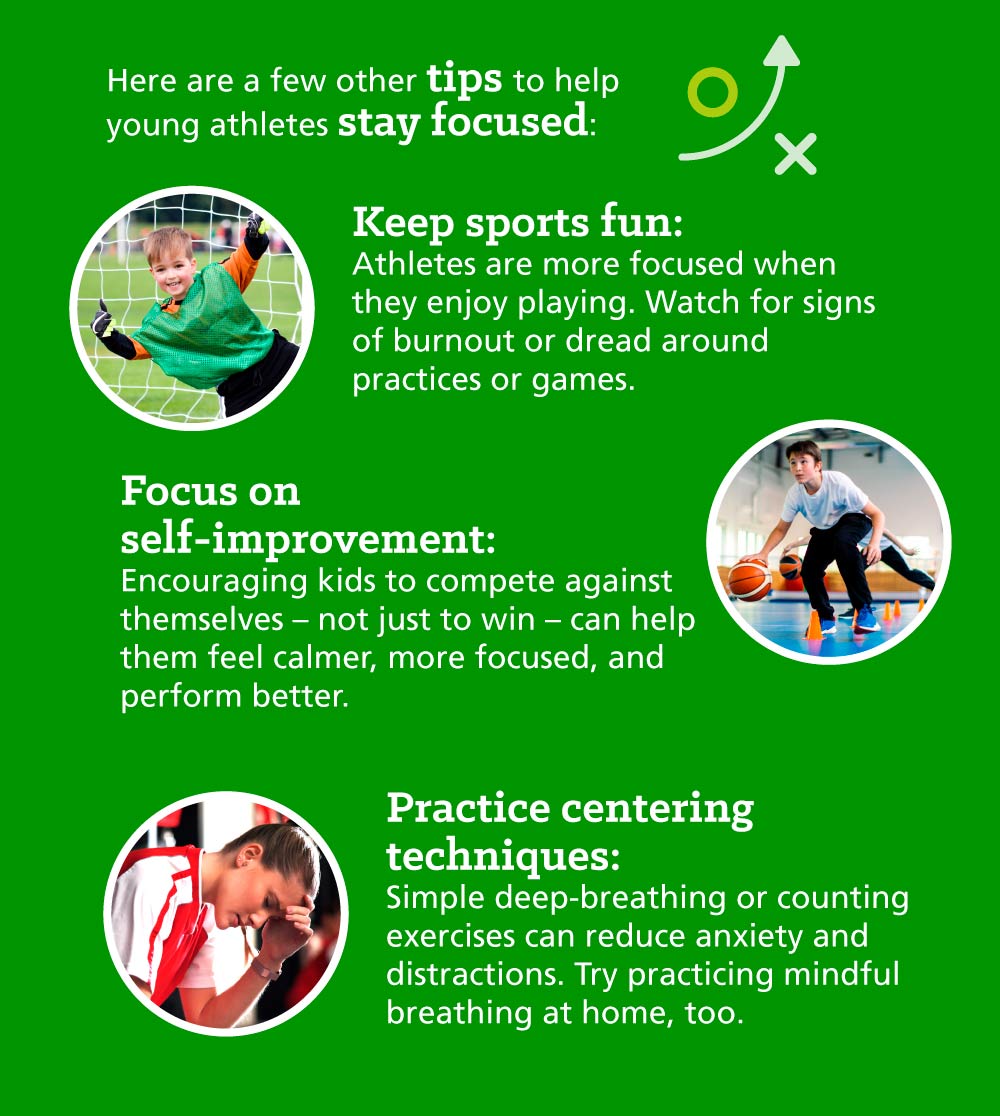
Here are a few tips to help young athletes stay focused:
- Keep sports fun: Athletes are more focused when they enjoy playing. Watch for signs of burnout or dread around practices or games.
- Focus on self-improvement: Encouraging kids to compete against themselves—not just to win—can help them feel calmer, more focused, and perform better.
- Practice centering techniques: Simple deep-breathing or counting exercises can reduce anxiety and distractions. Try practicing mindful breathing at home, too.