


Fertility Facts: Why Age Matters for Men & Women
October 06, 2026
 University Hospitals Rainbow Babies & Children'sExperts in Children's Health
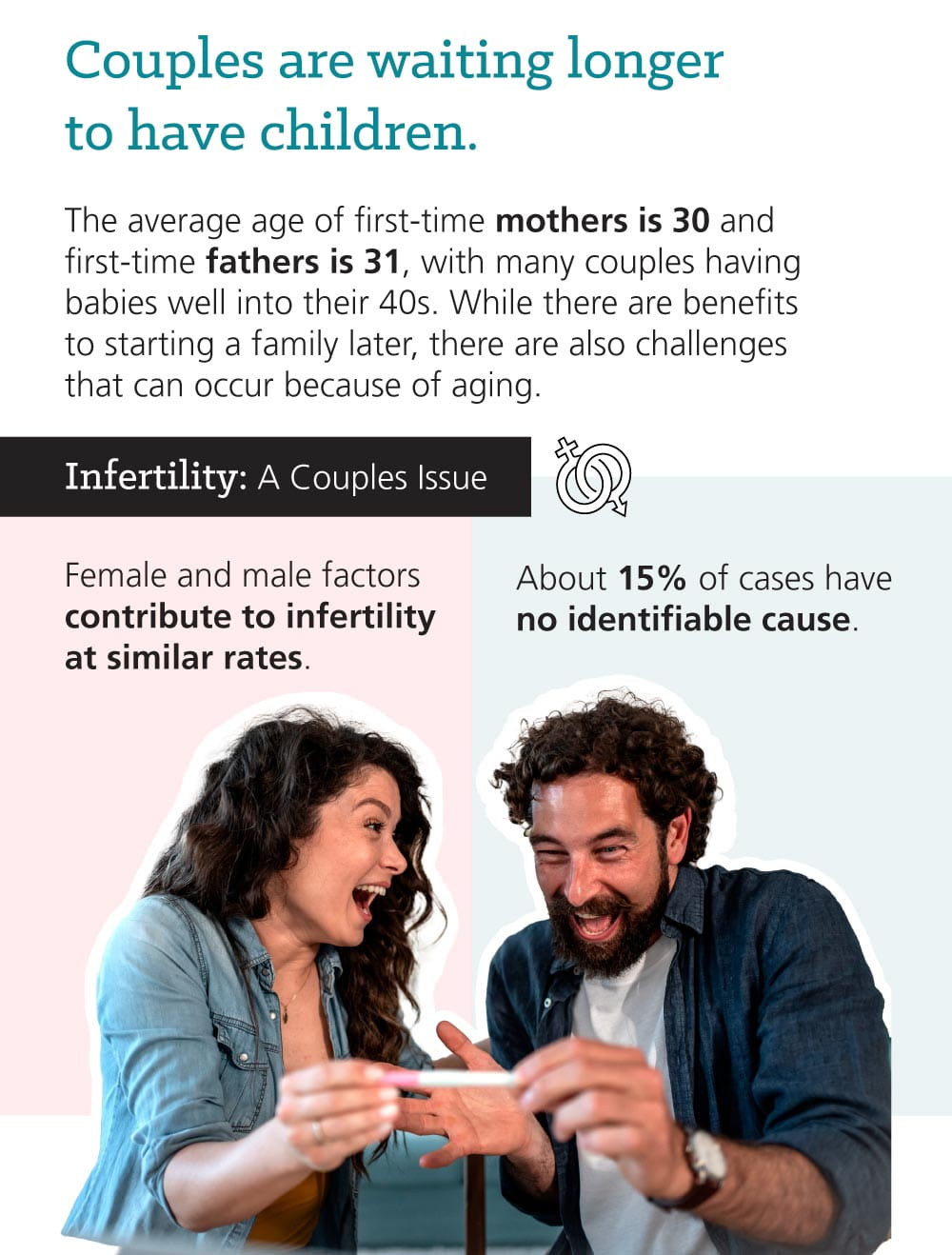
Couples are waiting longer to have children. The average age of first-time mothers is 30 and first-time fathers is 31, with many couples having babies well into their 40s. While there are benefits to starting a family later, there are also challenges that can occur because of aging.
Infertility: A Couples Issue
- Female and male factors contribute to infertility at similar rates.
- About 15% of cases have no identifiable cause.
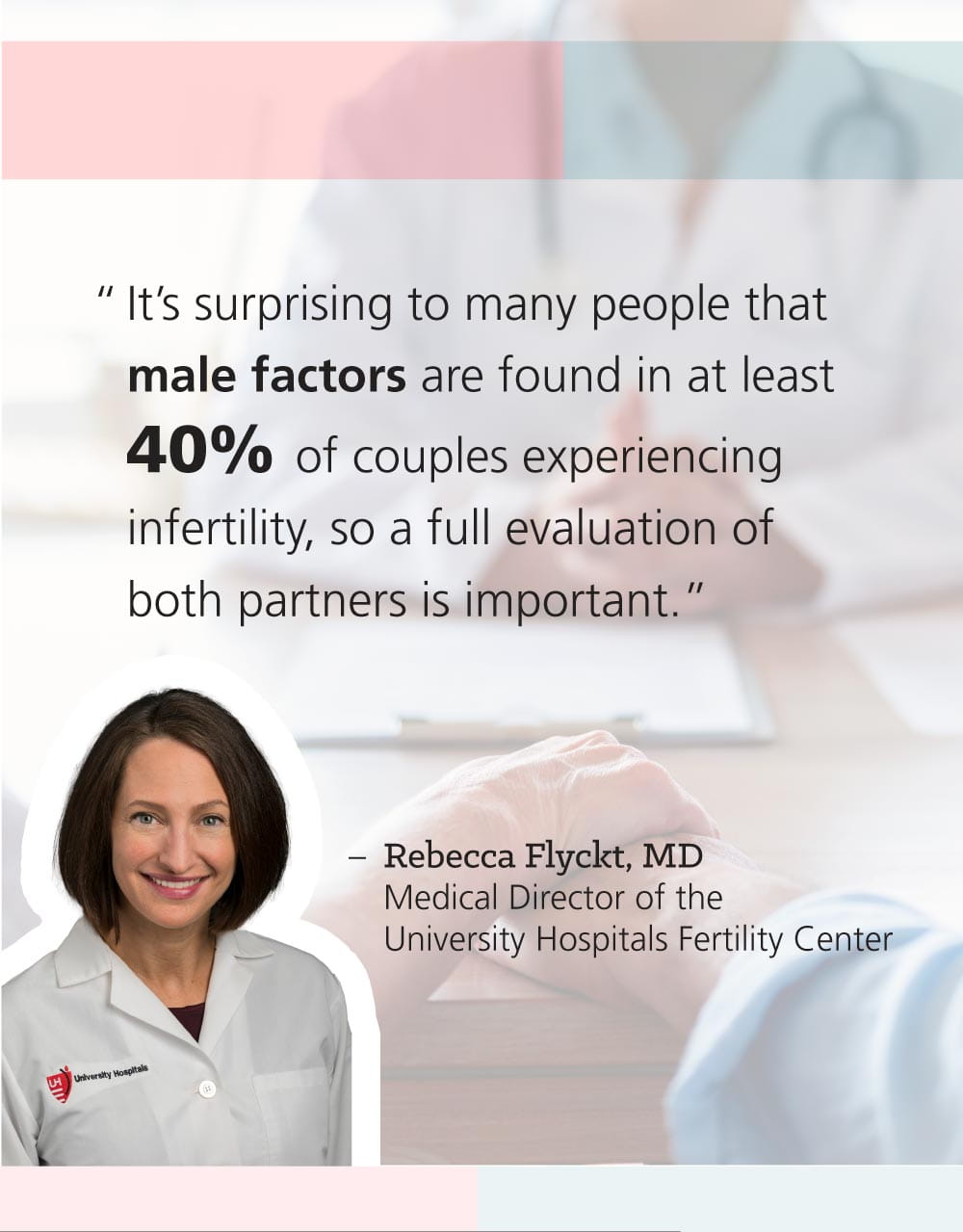
“It’s surprising to many people that male factors are found in at least 40% of couples experiencing infertility, so a full evaluation of both partners is important.” – Rebecca Flyckt, MD, Medical Director of the University Hospitals Fertility Center
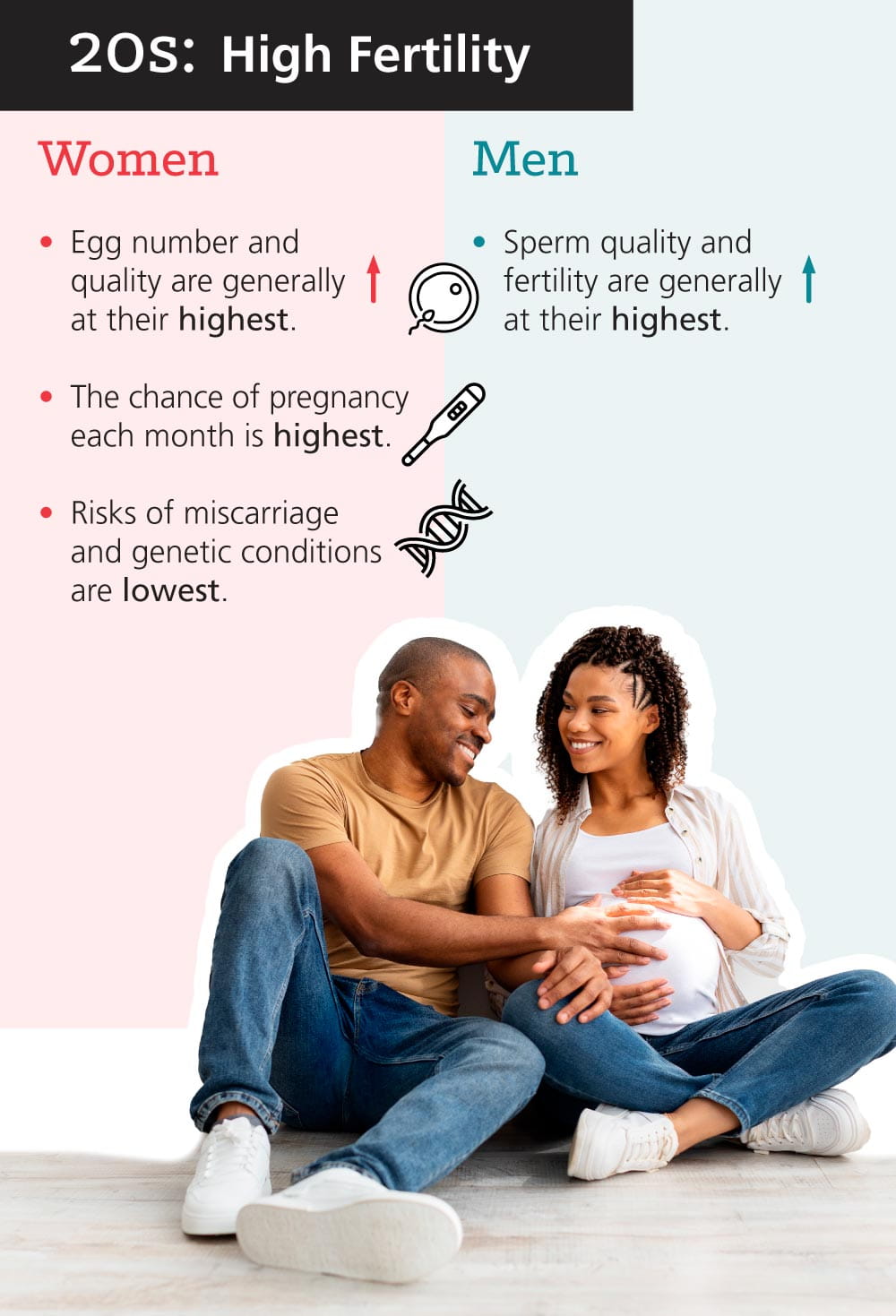
20s: High Fertility
Women
- Egg number and quality are generally at their highest.
- The chance of pregnancy each month is highest.
- Risks of miscarriage and genetic conditions are lowest.
Men
- Sperm quality and fertility are generally at their highest.
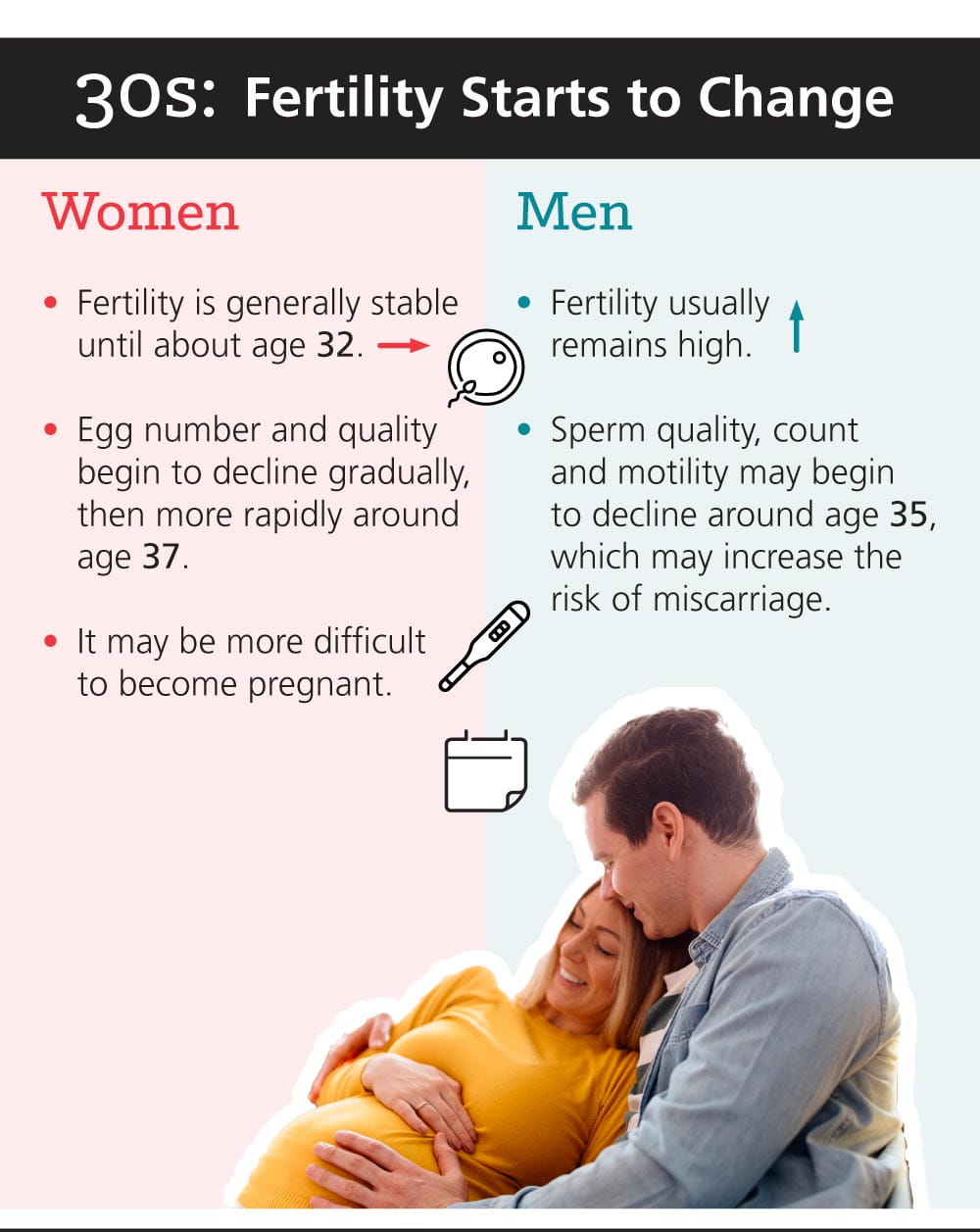
30s: Fertility Starts to Change
Women
- Fertility is generally stable until about age 32.
- Egg number and quality begin to decline gradually, then more rapidly around age 37.
- Pregnancy may take longer.
Men
- Fertility usually remains high.
- Sperm quality, count and motility may begin to decline around age 35, which may increase the risk of miscarriage.
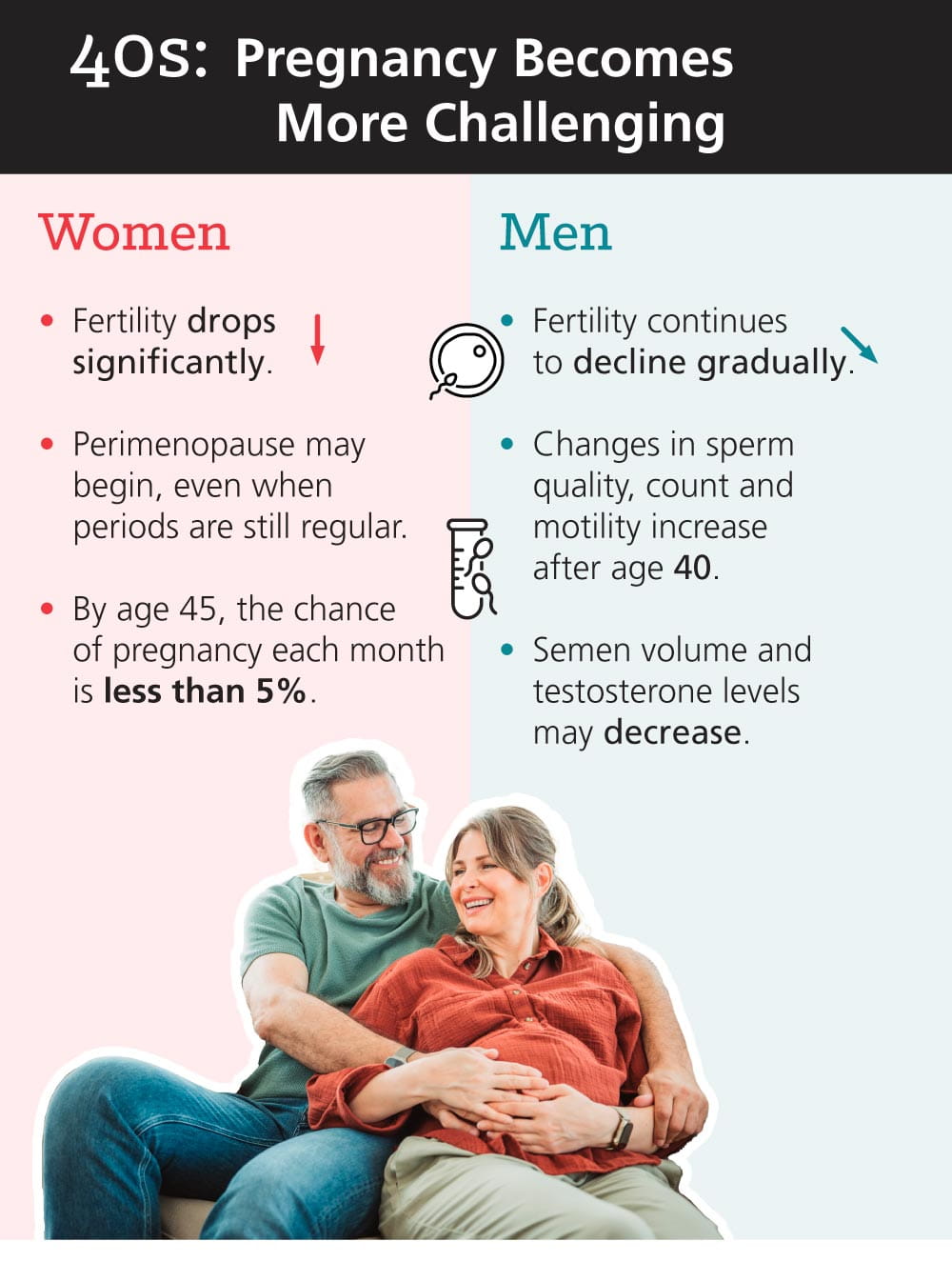
40s: Pregnancy Becomes More Challenging
Women
- Fertility drops significantly.
- Perimenopause may begin, even when periods are still regular.
- By age 45, the chance of pregnancy each month is less than 5%.
Men
- Fertility continues to decline gradually.
- Changes in sperm quality, count and motility increase after age 40.
- Semen volume and testosterone levels may decrease.
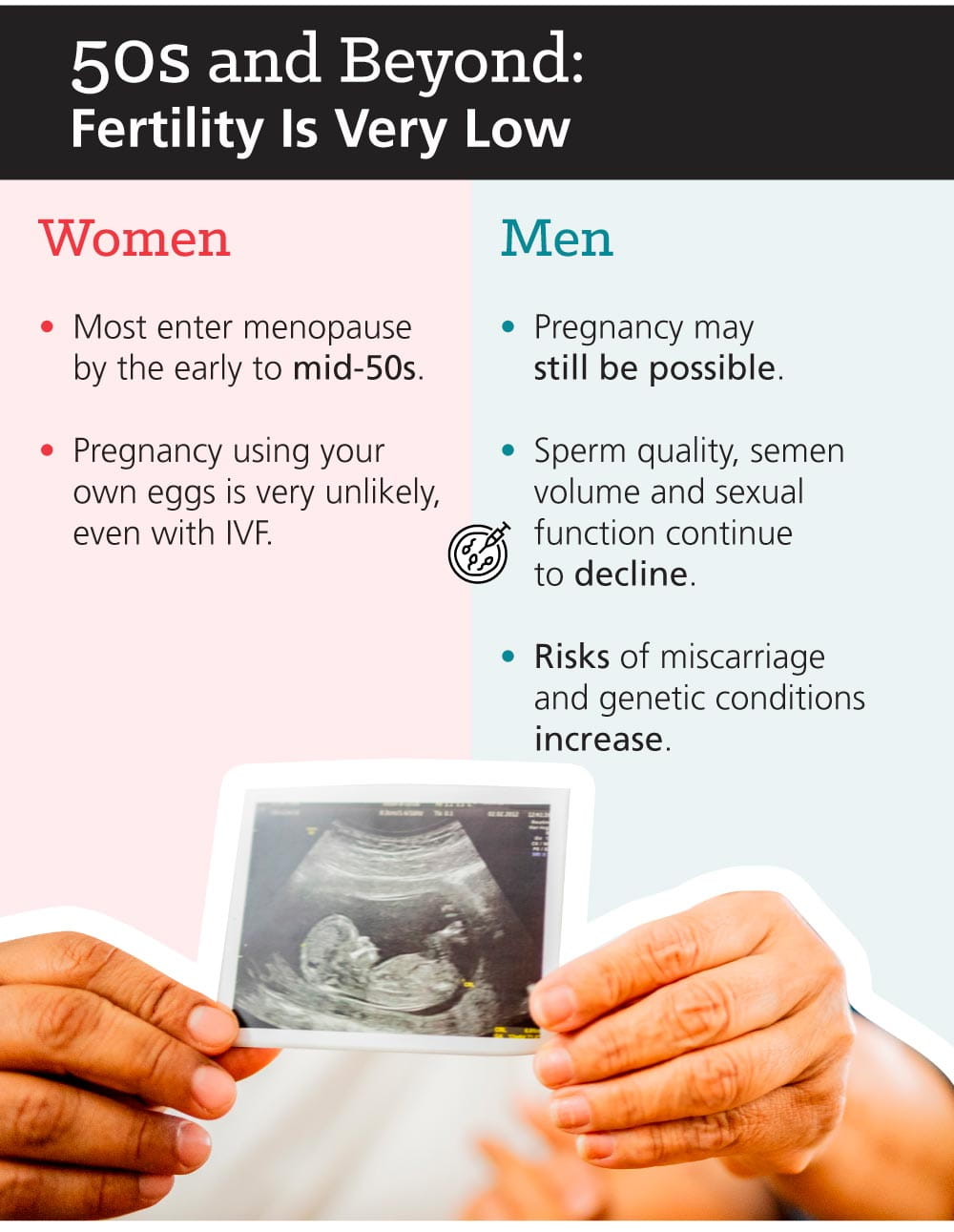
50s and Beyond: Fertility Is Very Low
Women
- Most enter menopause by the early to mid-50s.
- Pregnancy using your own eggs is very unlikely, even with IVF.
Men
- Pregnancy may still be possible.
- Sperm quality, semen volume and sexual function continue to decline.
- Risks of miscarriage and genetic conditions increase.
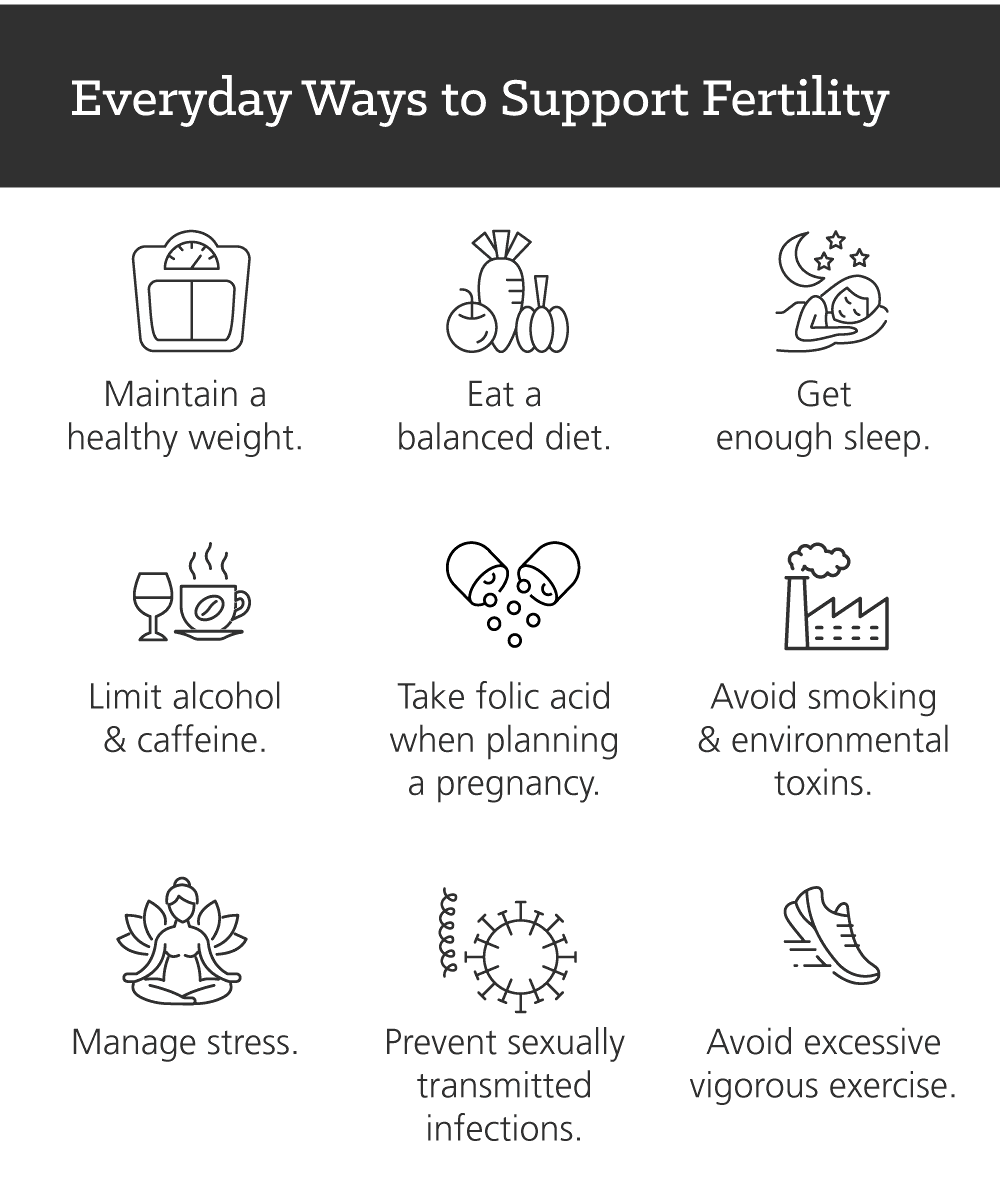
Everyday Ways to Support Fertility
- Maintain a healthy weight.
- Avoid smoking & environmental toxins.
- Limit alcohol & caffeine.
- Eat a balanced diet.
- Take folic acid when planning a pregnancy.
- Prevent sexually transmitted infections.
- Get enough sleep.
- Manage stress.
- Avoid excessive vigorous exercise.
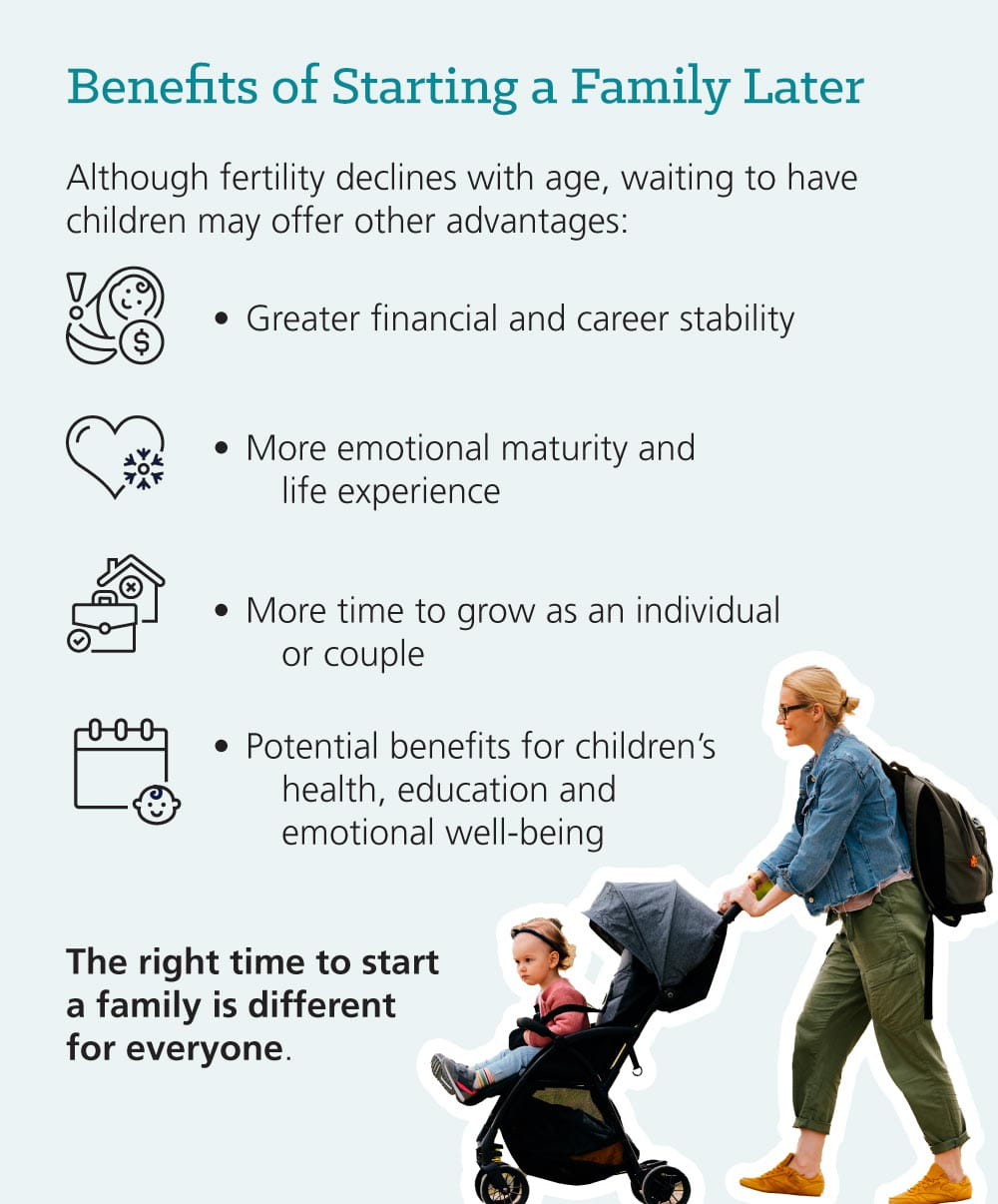
Benefits of Starting a Family Later
Although fertility declines with age, waiting to have children may offer other advantages:
- Greater financial and career stability
- More emotional maturity and life experience
- More time to grow as an individual or couple
- Potential benefits for children’s health, education and emotional well-being
The right time to start a family is different for everyone.
Source
University Hospitals: What to Know About Fertility at Every Age