


Pediatric Gastroenterologist Quarterbacks Ongoing Care for Kids with Challenging Diagnosis
August 17, 2026
Ali Khalili, MD, decided he wanted to work with kids after his first pediatric rotation in medical school.
“I enjoy hanging out with kids,” he says. “To me, it's one of those most rewarding parts of the business.”
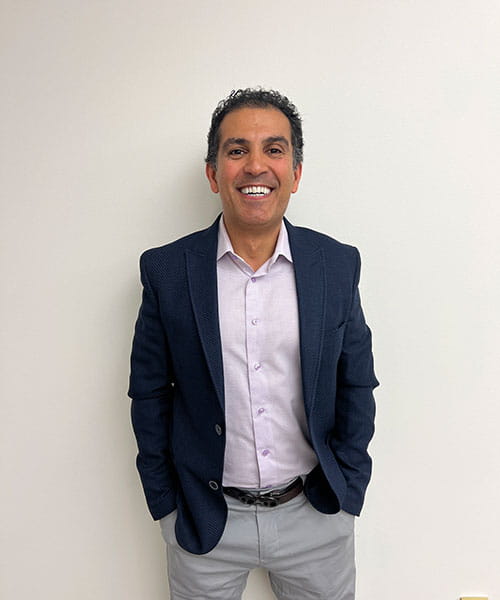 Ali Khalili, MD
So after completing residency training in pediatrics at Tulane University Hospital and Clinic, where he was chief resident, Dr. Khalili had another decision to make. The appeal of a hands-on, procedure-based specialty, he says, led him to choose pediatric gastroenterology – and UH Rainbow Babies & Children’s for his fellowship training.
Now 15 years after his arrival in Cleveland, Dr. Khalili has become a trusted colleague and mentor for the entire department. Colleagues say he is the pediatric gastroenterologist at UH Rainbow Babies & Children’s to whom the other pediatric gastroenterologists within the Division turn to for patient care advice, second opinions and assistance with complex endoscopic procedures, while demonstrating a depth of knowledge that allows him to claim expertise in all aspects of pediatric gastroenterology.
In fact, UH CEO Cliff A. Megerian, MD, FACS, Jane and Henry Meyer Chief Executive Officer Distinguished Chair, recently recognized Dr. Khalili’s professionalism and clinical excellence with a “Dinner with the Doc” honor.
What’s kept him here all this time? Not surprisingly, Dr. Khalili singles out his colleagues.
“The collegial atmosphere has kept me here,” he says. “I don't want to lose it.”
During his time at UH Rainbow, Dr. Khalili has become the go-to member of his Division for advanced endoscopy procedures. Working with colleagues in the UH Rainbow Aerodigestive Center, Dr. Khalili and his team can dilate a child’s esophagus that has become narrowed. And a new transnasal endoscopy option allows pediatric patients to be scoped – without the need for anesthesia.
But perhaps Dr. Khalili’s most significant clinical role is as primary caregiver and expert in treating babies and children with what’s known as short bowel syndrome and intestinal failure. As its name implies, this condition occurs when the small intestine is too short or damaged, preventing proper absorption of water and nutrients. For babies and kids, it can mean diarrhea, malnutrition, dehydration and poor growth, often requiring specialized IV nutrition and complex, labor-intensive management.
Although the condition can occur spontaneously in some kids, it’s often a consequence of preterm birth, Dr. Khalili says.
“The majority of this patient population have these issues with their intestines from the time that they are born,” he says. “Quite often they're in the NICU. They're premature babies.”
Treatment involves what is often exclusive IV nutrition, which needs to be prescribed anew by Dr. Khalili and a dietitian each week. However, he says, research is providing more options. A new medication given under the skin, for example, promotes growth of vital structures in the small intestine.
“That tends to grow the villi, those finger-like macroscopic structures inside the small intestine,” Dr. Khalili says. “The more villi you have, the more absorption of nutrients you'll have.”
Despite the challenges, it’s working with these children with short bowel syndrome that gives him the most satisfaction, Dr. Khalili says. He’s treated many since the time they were patients in the UH Rainbow NICU or patients on a Rainbow floor.
“You start these patients from the time that they're born, or shortly after they're born, and you grow up with them,” he says. “I do have patients that are in their teens, or some that are in their 20s, who I've known them ever since I've been here. It’s a patient relationship unlike any other.”
Congratulations to Dr. Khalili on his “Dinner with the Doc” honor.