


University Hospitals Launches Diabetes on Demand Virtual Care Program
February 24, 2026
Innovations in Diabetes & Endocrinology | Spring 2026
In January, the University Hospitals Diabetes & Metabolic Care Center launched its pioneering Diabetes on Demand virtual care program. Designed to supplement routine diabetes appointments, the program offers same-day virtual visits to individuals 18 and older with pre-existing diabetes who need acute support.
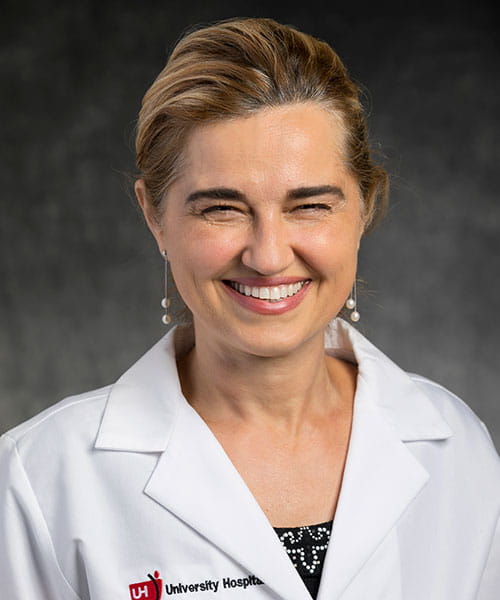 Betul Hatipoglu, MD
 Claudia Lewis, PA-C
According to the 2026 update to the National Diabetes Statistics Report, released by the U.S. Centers for Disease Control and Prevention, more than 30 million people in the U.S. have been diagnosed with diabetes, and an additional 10 million remain undiagnosed. Moreover, there are fewer than 10,000 practicing endocrinologists, resulting in delayed treatment and an unsustainable burden on health care resources nationwide.
“It takes time to provide proper care, and we are not able to keep up with demand nationally,” says Betul Hatipoglu, MD, Chief of Endocrinology and the Mary B. Lee Chair in Adult Endocrinology at University Hospitals Cleveland Medical Center and Medical Director of the University Hospitals Diabetes & Metabolic Care Center. “We have to think outside the box to adopt novel models for care delivery.”
The UH Diabetes on Demand program is the brainchild of Dr. Hatipoglu. Claudia Lewis, PA-C, an Associate Physician Assistant at the UH Diabetes & Metabolic Care Center, leads its administration.
“We needed someone to execute this idea, and Claudia volunteered to be at the forefront of implementing the program,” Dr. Hatipoglu says. “She is so passionate about patient care and is already helping provide safe, accessible care to our patients through the UH Diabetes on Demand platform.”
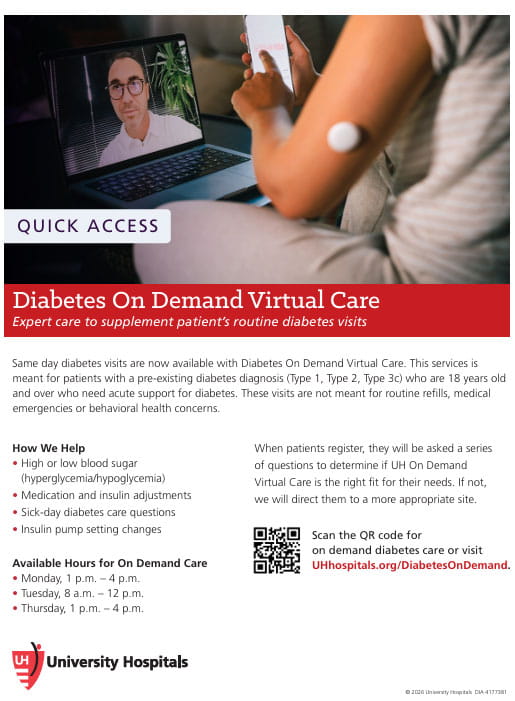
The virtual program is currently offered during three half-day sessions each week, with plans to add additional days — and eventually weekends — to meet growing patient demand. The platform is available to all University Hospital patients 18 and over diagnosed with Type 1, Type 2 or Type 3c diabetes.
“Rather than relying on the emergency department or urgent care if they cannot see their primary care provider or endocrinologist, we want to be that point of quick access,” Lewis says. “We are able to help patients with hyperglycemia or hypoglycemia, medication and insulin adjustments, insulin pump settings and sick-day diabetes care during the virtual visits.”
The program is not intended for routine refills, medical emergencies or behavioral health concerns. Additionally, patients with prediabetes, gestational diabetes, diabetes insipidus and maturity-onset diabetes of the young are not able to utilize the UH Diabetes on Demand program at this time.
No prior appointment is required to access the UH Diabetes on Demand portal. During available hours, patients can log in to their UH MyChart and answer a series of questions to determine whether the program is the right fit for their needs. If so, they receive a link to join the virtual waiting room queue. If not, they are redirected to a more appropriate site.
Early feedback has been positive, with patients appreciating the program’s ease of use and the ability to have their diabetes medication regimen adjusted promptly. Patients have even been able to prevent an ED visit with this service.” Another benefit of the virtual program is that it can provide touchpoints for geographically remote patients. Many patients travel long distances to receive care. The UH Diabetes on Demand program is licensed to treat any eligible UH patient located within the State of Ohio.
Measuring and Improving Long-term Diabetes Outcomes
“When people with diabetes have high or low blood sugar that goes unmanaged, they are at much higher risk for worse outcomes, whether that is diabetes complications, hospital admissions or delayed healing,” Lewis says. “If we can connect them to a provider quickly and address medication regimens or other concerns in the moment, we can prevent many downstream effects of diabetes and reduce unnecessary utilization of emergency rooms or inpatient admissions.”
As UH Diabetes on Demand virtual care continues to grow, data collection will provide valuable insight into the program’s effectiveness.
“Some of the questions we hope to answer include how patients are referred to us, program volume, patient diagnoses and demographics, emergency department utilization rates following virtual visits, and whether patients are routed to primary care versus endocrinology,” Lewis says. “As the number of people with diabetes continues to rise, providing access to best-practice care will require tremendous partnership and trust between primary care and endocrinology. This virtual program is a major bridge to improve both care access and the quality of disease management for patients with diabetes.”
For more information about the Diabetes on Demand program, visit UHhospitals.org/DiabetesOnDemand.
Contributing Experts:
Betul Hatipoglu, MD
Chief, Division of Endocrinology
Director, UH Diabetes & Metabolic Care Center
Mary B. Lee Chair in Adult Endocrinology
University Hospitals Cleveland Medical Center
Professor
Case Western Reserve University School of Medicine
Claudia Lewis, PA-C
Associate Physician Assistant
University Hospitals Diabetes & Metabolic Care Center
University Hospitals Cleveland Medical Center
Adjunct Assistant Professor
Case Western Reserve University School of Medicine