


University Hospitals Is the First Ohio Site to Offer Breakthough Lantidra Treatment for Type 1 Diabetes
February 24, 2026

Innovations in Diabetes & Endocrinology | Spring 2026
University Hospitals is the first site in Ohio and the second nationally to offer Lantidra (donislecel), a breakthrough islet cell therapy approved by the U.S. Food & Drug Administration for selected patients with Type 1 Diabetes (T1D) who are unable to achieve target blood glucose levels due to recurrent, severe hypoglycemia.
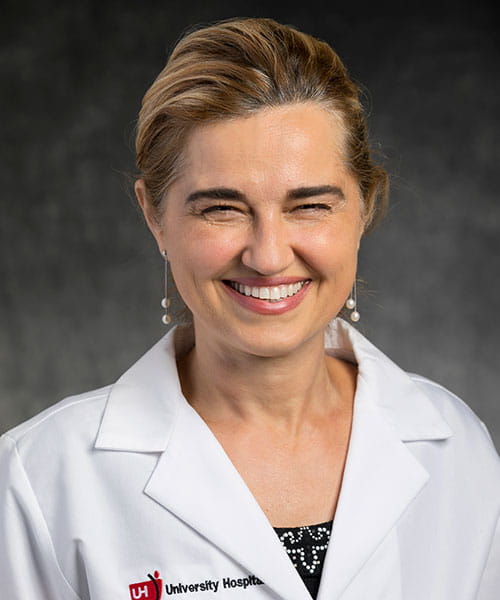 Betul Hatipoglu, MD
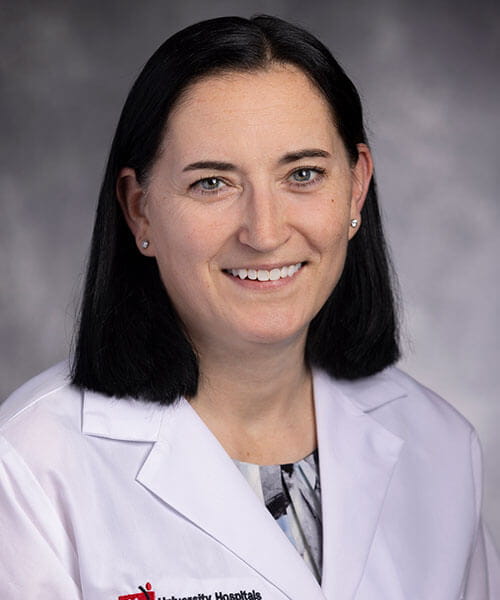 Zoe Stewart-Lewis, MD, PhD, MPH
“Lantidra is the most effective and lasting FDA-approved cell therapy treatment available for T1D, and we are so excited to receive approval to offer infusions to eligible patients,” says Betul Hatipoglu, MD, Chief of Endocrinology and the Mary B. Lee Chair in Adult Endocrinology at University Hospitals Cleveland Medical Center and Medical Director of the University Hospitals Diabetes & Metabolic Care Center. “This therapy is not a cure for every person with T1D, but we already have individuals lined up to see if they would be good candidates.”
The first U.S. site to offer Landitra was the University of Illinois Health in Chicago, following years of research and development of the treatment. Dr. Hatipoglu was one of the original researchers in islet cell therapy, previously serving as Medical Director of the UI Health Pancreas and Islet Cell Transplant Program and remained involved with the project after joining University Hospitals.
Lantidra received FDA approval in 2023 for adults with T1D who experience repeated episodes of severe hypoglycemia despite intensive management and education. Early patient outcomes have been encouraging. In the clinical trial, 70 percent of patients achieved full insulin independence at one year post-infusion. At five years, 34 percent of patients remained insulin independent.
“In successful cases, the infused islet cells can produce enough insulin to free patients from injections or an insulin pump,” Dr. Hatipoglu says. “For so long, people thought cell therapy for T1D would remain experimental. With the sudden reality that this is available, we are seeing a lot of enthusiasm.”
Systemwide Collaboration
T1D is a lifelong autoimmune disease with no known cure that affects an estimated 2 million people in the U.S. Clusters of islet cells in the pancreas produce hormones crucial to blood sugar regulation. In T1D, the immune system attacks and destroys insulin-producing beta cells within the pancreas, leading to chronic insulin deficiency and severe glucose dysregulation.
“Without well-regulated external insulin replacement, patients can experience hyperglycemia or life-threatening diabetic ketoacidosis,” says Dr. Hatipoglu. “Individuals who require insulin therapy are also at risk of hypoglycemia, which can result in severe health risks or death.”
Broadly speaking, there are three treatment options for T1D patients:
- Continued insulin therapy with careful medical management
- Solid-organ pancreas transplant
- Islet cell therapy
“T1D is a disease of deficiency because patients lose their islet cells due to autoimmune destruction,” says Zoe Stewart Lewis, MD, PhD, MPH, Chief of Transplant and Hepatobiliary Surgery and the James A. Schulak, MD, and Endowed Director of the University Hospitals Transplant Institute. “Lantidra works by infusing deceased donor-derived pancreatic islet cells, which are administered via the hepatic portal vein to restore insulin production.”
To become an approved Lantidra site, University Hospital had to meet FDA and United Network for Organ Sharing (UNOS) requirements. Eligible patients must undergo extensive screening by both the UH Diabetes & Metabolic Care Center and the UH Transplant Institute to confirm their suitability as candidates and ensure they have no contraindications to immunosuppressive therapy.
Preparing patients for infusion is a highly collaborative effort among UH Endocrine, Transplant and Interventional Radiology specialists. Lantidra patients undergo the same processes required to receive a solid-organ pancreas transplant.
“All of the same matching occurs through our national system, with confirmation of blood type and histocompatibility, so it is still a transplant in the truest sense because the cells are coming from a deceased donor,” Dr. Stewart Lewis. says “This is a great example of the strength of University Hospitals, bringing people from different disciplines together to deliver the best in care for patients.”
Once a donor pancreas is identified, the islet cells are isolated and delivered within a very short timeframe. The cells are delivered directly to the liver through a small catheter by UH Interventional Radiologist Christopher Sutter, MD, and Assistant Professor at Case Western Reserve University School of Medicine.
Looking Ahead
Although Lantidra is currently available to only a subset of T1D patients, Dr. Hatipoglu is hopeful about the potential for insulin independence for more people in the future.
“Patients with T1D are living longer, healthier lives,” she says. “In the next five years, I am expecting research to provide greater options for individuals beyond their current medical therapy.”
For more information, contact Betul Hatipoglu, MD, at Betul.Hatipoglu@UHhospitals.org or Dr. Stewart Lewis at Zoe.StewartLewis@UHhospitals.org.
Contributing Experts:
Betul Hatipoglu, MD
Chief, Division of Endocrinology
Director, UH Diabetes & Metabolic Care Center
Mary B. Lee Chair in Adult Endocrinology
University Hospitals Cleveland Medical Center
Professor
Case Western Reserve University School of Medicine
Zoe Stewart Lewis, MD, PhD, MPH
Chief, Transplant and Hepatobiliary Surgery
James A. Schulak, MD, Endowed Director, Transplant Institute
Surgical Director, Liver/Pancreas/Pediatric Kidney Transplant Programs
University Hospitals Cleveland Medical Center
Professor of Surgery
Case Western Reserve University School of Medicine