


Addressing National Shortage of Endocrinologists Requires Next-Generation Care Models
November 10, 2026
Innovations in Diabetes & Endocrinology | Fall 2026
America is facing an alarming shortage of specialized endocrine care, leaving 70 percent of U.S. counties without a practicing endocrinologist. Many other medical specialties face similar challenges as the population ages, the burden of chronic disease increases and physician numbers decline. Addressing this access disparity will require significant innovations in care delivery.
 Igho Ofotokun, MD, MSc
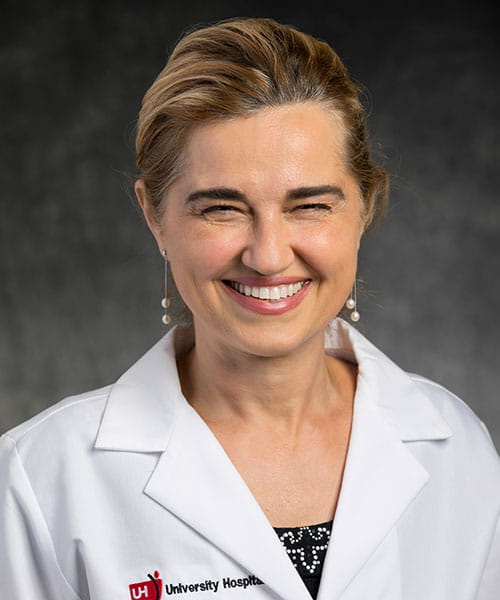 Betul Hatipoglu, MD
“To continue caring for everyone who comes through our doors, we need to develop a care model that optimizes physician capacity, leverages physician extenders and technology, bridging community providers and specialists in managing complex conditions,” says Igho Ofotokun, MD, MSc, Chair of the Department of Medicine, Physician-in-Chief and the John H. Hord Professor, Steris Chair of Excellence in Medicine at University Hospitals Cleveland Medical Center and Chair of the Department of Medicine at Case Western Reserve University School of Medicine. “While some form of collaboration between primary and specialty care exists, the goal is to bring them together in a more coordinated fashion to expand access to care.”
In his leadership role, Dr. Ofotokun is overseeing the strategic implementation and clinical vision for the UH Advanced Primary Care model, a multidisciplinary, patient-centered framework that serves as an accessible gateway for proactive chronic disease management. “Patients are often stabilized by specialty care but too complicated to return to their community doctor,” he says. “We need to quickly wrap our heads and hands around this emerging middle layer to enhance our capacity while still providing cost-effective, patient-centered care.”
A Burgeoning Challenge
According to the Centers for Disease Control and Prevention, more than 40 million Americans have diabetes, and an additional 150 million have prediabetes.
“Those numbers are expected to rise over the coming decade, making the need to reevaluate endocrine care delivery even more dire,” says Betul Hatipoglu, MD, Chief of Endocrinology and the Mary B. Lee Chair in Adult Endocrinology at University Hospitals Cleveland Medical Center, Medical Director of the University Hospitals Diabetes & Metabolic Care Center and a Professor at the School of Medicine. “Additionally, diabetes is not the only disease we treat — endocrine specialists also treat thyroid and pituitary diseases, metabolic and hormonal disorders and osteoporosis, which often require ongoing follow-up.”
There are nearly 9,000 practicing endocrinologists nationwide, leaving vast endocrinology deserts that affect both rural and urban communities. People with endocrine-related conditions are 12 percent more likely to die when they lack access to the specialized care they need.
“In Cleveland, we are fortunate to have endocrine practitioners across our region’s health care institutions,” Dr. Hatipoglu says. However, even where specialists are available, the average wait time for a new patient to see an endocrinologist is three to eight months nationally
Identifying Provider Shortage Challenges
One simple answer seems to be a national initiative to train more doctors, but the reality is more nuanced. “Over the past 20 years, the number of ACGME-accredited fellowships for adult endocrinology has increased from 220 to about 380, and the fill rate is about 98 percent,” Dr. Hatipoglu says, referring to the Accreditation Council for Graduate Medical Education. “However, despite priority given to U.S. citizens, 70 percent of these slots are currently filled by foreign medical graduates who might not be interested or able to stay and practice in this country.”
Insurance plays a role in why U.S. medical students might choose other specialties. “This specialty that I love is not as high paying, yet the clinical demand is quite heavy,” Dr. Hatipoglu says. “While both require tremendous intellectual capacity, endocrinology is a cognitive specialty that is not generally reimbursed at the rates of procedural specialties.”
One encouraging reason for higher patient census numbers is that individuals with metabolic conditions are living longer. “Today, we have improved diagnostics, medications and tools to manage patients,” Dr. Hatipoglu says. “Next-generation therapies, including GLP-1s and Lantidra islet therapy, along with advanced monitoring technologies, are improving quality of life and lifespan and even reversing diabetes in some individuals.”
Despite the national shortage of endocrinologists, the UH Diabetes & Metabolic Care Center remains an attractive workplace for providers. The center has already implemented many strategies outlined in the Advanced Primary Care model, including a coordinated, multidisciplinary approach that brings together endocrinologists, advanced practice providers, specialized pharmacists, dietitians and nurse educators.
“While we continue to do the vital work of creating and refining an intermediary bridge between primary and specialty care,” Dr. Hatipoglu says, “we are excited about the many ways we are advancing metabolic care for our patients in Northeast Ohio and beyond.”