


High-Volume HCM Center at University Hospitals Harrington Heart & Vascular Institute Expands and Attracts National Attention to Offer Patients Cutting-Edge Care
October 13, 2026
Innovations in Cardiovascular Medicine & Surgery | October 2026
A highly personalized, team-based approach to care, combined with access to the latest clinical trials, therapies and AI technology, has made the Hypertrophic Cardiomyopathy (HCM) Center at University Hospitals Harrington Heart & Vascular Institute a valued treatment destination for a growing number of HCM patients.
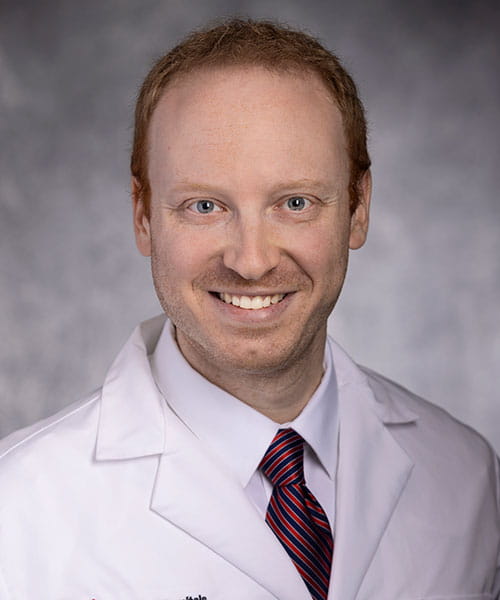 Bradley Lander, MD
“We've had tremendous growth,” says Bradley Lander, MD, Director of the HCM Center and Director of the Sports Cardiology Center at UH Harrington Heart & Vascular Institute, and Assistant Professor at Case Western Reserve University School of Medicine. “We've had patients coming from all over Ohio, even from other states, for HCM care. Part of the reason is we spend a lot of time with each patient, educating them about the disease, prognosis and treatment. We have two amazing nurse navigators who basically provide concierge care for each patient. We provide a direct phone line so they’re easy to reach and responsive. That allows us to know our patients really well. In the end, it’s much more than just a relationship with me or with my physician colleagues. It’s with our whole team.”
The HCM Center’s multidisciplinary HCM Board is also an important source of its success, Dr. Lander says. “In any situation that's not 100% straightforward or involves big decisions, like a defibrillator or another invasive procedure such as surgery or alcohol septal ablation, we discuss the best option for the patient among our multidisciplinary HCM Board,” he says. “Patients have the comfort of knowing it's not just one person's opinion, rather it's the consensus of 10 to 15 experts.”
Patients who come to University Hospitals for HCM care have access to essentially every treatment currently available – including those being studied in clinical trials, Dr. Lander says. Options include septal myectomy, alcohol septal ablation, defibrillators and pacemakers for select patients, genetic testing and the latest medications.
Importantly, patients of the HCM Center have access to the cardiac myosin inhibitors mavacamten and the recently approved aficamten.
“We successfully demonstrated to Bristol Myers Squibb and Cytokinetics, the companies behind mavacamten and aficamten, respectively, our high-level care and capabilities and were one of the few programs to be added to the Limited Distribution Network for mavacamten and aficamten, enabling our UH Specialty Pharmacy to dispense to select patients,” Dr. Lander says. “Because our Specialty Pharmacy is distributing it, the process is so much smoother. It really allows significantly improved coordination of care for patients.”
“In addition, we have continued active participation in the ACACIA trial evaluating aficamten for non-obstructive HCM,” he adds. “We’re also participating in Edgewise’s CIRRUS-HCM EDG7500 clinical trial of its novel HCM therapy. Our reputation has gotten out, and companies are coming to us saying, ‘We know you have a high-level HCM Center, would you be interested in partnering with us for this clinical trial?’”
Beyond treatment, the HCM Center at UH Harrington Heart & Vascular Institute is also using AI technology to assist with early diagnosis of HCM. “The Viz.AI platform reviews all EKGs done at most UH locations and essentially flags those which are deemed to be high-risk or probable HCM,” Dr. Lander says.
First, a nurse navigator reviews the ECG, followed by a cardiology fellow and finally by an HCM specialist. “We determine whether it potentially looks like HCM or definitely looks like HCM,” Dr. Lander says. “And then we will contact them to try and link them to expert care. This whole process has led to new diagnoses of HCM being caught before they would have otherwise been caught -- if they would have ever been caught.”
Another diagnostic effort underway in the HCM Center is to provide the equipment necessary for the goal-directed Valsalva maneuver across the UH system. The current method of asking patients to “bear down” to measure their obstruction has great variability, both in the instructions given and how the patient can follow those instructions. Goal-directed Valsalva, in contrast, uses plastic tubing, a mouthpiece and a syringe so the patient can blow into the syringe and attain a pressure of 40 millimeters of mercury,
“It brings out obstruction more often than the usual technique,” Dr. Lander says. “It’s a new, objective, standardized way to see if somebody has obstruction with their HCM, which would allow them to qualify for certain treatment. We’re in the final process right now of getting all the pieces and materials to roll it out system wide.”
“This initiative reflects our desire to be at the cutting edge of testing and treatment for HCM in coordination with the most recent guidelines,” he adds. “It’s a hallmark of a high-level HCM Center. And now, with the degree of complexity of HCM, the guidelines really recommend that every patient with HCM be seen in an expert HCM center like we have here at UH.”
Contributing Expert: Bradley Lander, MD