


Engineering the Future of Cellular Therapy Beyond Cancer
October 15, 2026

UH Research & Education Institute
From faster manufacturing to autoimmune disease and in vivo engineering, researchers are exploring how CAR technology could evolve from cancer treatment into a broader therapeutic platform.
Chimeric antigen receptor (CAR) T-cell therapy has transformed the treatment landscape for several hematologic malignancies. Now researchers at University Hospitals and Case Western Reserve University (CWRU) are exploring how advances in cell engineering, manufacturing and target selection could extend CAR-based therapies to a much broader range of diseases.
At its core, CAR T-cell therapy is built around a powerful concept: genetically programming immune cells to recognize and attack specific targets. As researchers gain greater control over which cells are engineered, what they recognize and how they respond, that same principle could potentially be applied to diseases beyond cancer.
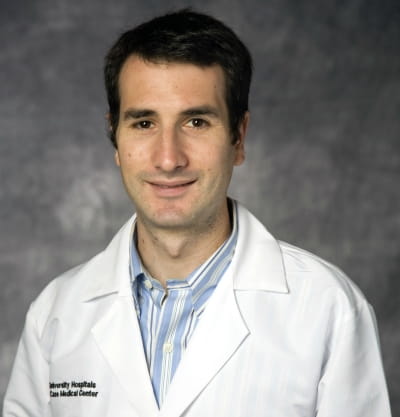 David Wald, MD, PhD
 Reshmi Parameswaran, MS, PhD
At UH and CWRU, David Wald, MD, PhD, John Crissman and Francis Drake Professor of Pathology, CWRU School of Medicine; Co-Director Immune Oncology Program, Case Comprehensive Cancer Center, Director of Histocompatibility and Immunogenetics Lab University Hospitals Cleveland Medical Center, and Reshmi Parameswaran, MS, PhD, Scientist, Division of Hematology and Oncology, UH Seidman Cancer Center and Associate Professor, Case Western Reserve University School of Medicine, are approaching this evolution from complementary directions. Their work encompasses rapid CAR T-cell manufacturing, ligand-based and multitarget CARs, solid tumors, CAR-NK cells and engineered immune cells for autoimmune disease.
Together, those efforts point toward a larger possibility of transforming CAR technology from a treatment strategy for certain cancers into a more versatile therapeutic platform.
Expanding CAR T-Cells Toward Autoimmune Disease
Autoimmune diseases provide one of the clearest examples of how CAR-based therapies could move beyond oncology.
In B-cell malignancies, CAR T cells can be engineered to recognize antigens on malignant B cells. In autoimmune disease, a similar strategy could target autoreactive B cells responsible for producing disease-causing antibodies.
Dr. Parameswaran’s laboratory has investigated this possibility using B-cell activating factor (BAFF), whose receptors are expressed on normal, malignant and autoreactive B cells. Her team developed a CAR that uses the naturally occurring BAFF ligand as its recognition domain rather than the antibody-derived sequence conventionally used in many CARs. After demonstrating activity against B-cell cancers, the investigators evaluated BAFF CAR T cells in mouse models of systemic lupus erythematosus.
“We are seeing actually very good efficacy of these BAFF CAR T-cells killing the autoreactive B cells,” says Dr. Parameswaran.
The treatment reduced autoantibody production and improved disease manifestation in preclinical models. The BAFF CAR T-cell strategy has since entered clinical investigation for lupus outside UH, while Dr. Parameswaran’s laboratory continues to explore potential applications in rheumatoid arthritis, type 1 diabetes and scleroderma.
The work illustrates an important conceptual shift in thinking about cellular therapy. The target of an engineered immune cell does not have to be cancerous. CARs could potentially be designed to recognize cell populations central to other diseases.
Engineering CARs to Recognize Multiple Targets
As CAR T-cell therapies have matured, researchers have gained a deeper understanding of the biological challenges that can contribute to treatment resistance. One is antigen escape, in which cancer cells lose or reduce expression of the antigen recognized by engineered immune cells, allowing them to evade destruction and potentially drive relapses.
“Antigen escape is a big problem in the field of CAR T therapy,” Dr. Parameswaran says. “If you rely on a single target, the cancer may be able to escape by losing that target. But if the CAR can recognize more than one receptor, you’re giving the cancer fewer ways to hide.”
Her BAFF-based CAR puts that principle into practice. Because B-cell activating factor naturally binds multiple receptors, the ligand-based CAR can recognize two receptors found on multiple myeloma cells. That broader recognition could make it more difficult for malignant cells to escape treatment by reducing or losing a single target.
The implications extend beyond finding new ways to attack cancer. Approaches such as these demonstrate the growing ability to engineer immune cells to recognize a wider range of biological targets. As that control becomes more sophisticated, researchers may be able to adapt CAR technology to an increasingly diverse range of diseases.
Targeting the Solid-Tumor Microenvironment
Despite remarkable success in hematologic malignancies, solid tumors present particularly difficult challenges for CAR T-cell therapy. Engineered cells must successfully reach the tumor, penetrate physical barriers and remain functional despite immunosuppressive signals within the tumor microenvironment.
“Tumors are very smart,” says Dr. Wald. “They try to evade the immune system.”
To address those challenges, Dr. Parameswaran’s laboratory is investigating whether CARs can attack not only malignant cells but also components of the surrounding environment that supports tumor growth.
Her group identified receptors for oncostatin M (OSM) on osteosarcoma cells and developed an OSM ligand-based CAR T-cell to recognize them. In mouse models the results were striking. Dr. Parameswaran says, “tumors disappeared in a matter of four days.”
The investigators subsequently found that the engineered cells could also target cancer-associated fibroblasts, cells that help shape the tumor microenvironment and can help impede immune-cell infiltration.
“We are not only targeting tumor cells, but we are also targeting the microenvironment as well,” says Dr. Parameswaran.
The findings remain preclinical, and whether the approach will translate to human disease is unknown. But the research raises another possibility for engineered cellular therapy: designing immune cells not only to eliminate pathogen cells, but also to disrupt the environments that help sustain them.
Making CAR T-Cell Therapy Faster
Expanding the reach of cellular therapy will require more than finding new biological targets. Manufacturing will also need to evolve.
Conventional autologous CAR T-cell therapy requires collecting a patient’s T cells, genetically modifying them and expanding them outside the body before they are returned to the patient, a process that can take weeks.
Dr. Wald and colleagues at UH are developing a rapid manufacturing approach designed to substantially shorten that timeline.
“What we’ve been working on is trying to shorten that process and trying to prove that you don’t actually need as many cells to get good outcomes,” he says.
At UH, the approach has shortened manufacturing to approximately one week for quality control and release. Limiting expansion outside the body may also preserve a less differentiated T-cell population with greater capacity to proliferate after infusion.
In parallel, Dr. Wald’s group has conducted UH trials using universal-donor, off-the-shelf natural killer (NK) cells. Such therapies could potentially reduce manufacturing time and cost and improve accessibility, although the ability of NK cells to expand and persist in the body remains a challenge.
Engineering CARs Inside the Patient
If rapid manufacturing represents an evolution of current approaches, in vivo CAR engineering may represent a more fundamental shift.
Rather than collecting cells and engineering them in specialized facilities, investigators are exploring methods for delivering genetic instructions directly to immune cells inside the patient. Technologies such as messenger RNA and lipids nanoparticles could potentially allow cellular engineering to occur inside the body itself.
“The next era is all about in vivo CAR,” says Dr. Parameswaran.
If successful, in vivo CAR generation could reduce treatment delays, manufacturing complexity and cost, important considerations if engineered cellular therapies are to reach broader patient populations and disease areas.
“We are now in a fourth-generation CAR T era, and a fifth generation is going to come,” says Dr. Parameswaran.
Beyond Oncology
Cancer has established that immune cells can be genetically programmed to recognize and destroy defined cell populations. The work underway at UH and CWRU is exploring how much further that principle can be taken.
Investigators are developing cells that can recognize multiple targets, navigate complex tissue environments and potentially attack the cellular drivers of diseases beyond cancer. At the same time, advances in rapid manufacturing, off-the-shelf cells and in vivo engineering could change how those therapies are produced and delivered.
Taken together, those efforts reflect a broader transformation in cellular immunotherapy, based on the possibility that engineered immune cells could become not simply a treatment modality for cancers, but a programmable therapeutic platform.
The question, then, is becoming larger than how to build a better CAR T-cell for cancer. It is what else can an immune cell be engineered to recognize, and what diseases can it ultimately be programmed to treat.