


Competitive Grants Support Novel Research of Acquired Hearing Loss
March 06, 2026

Innovations in Ear, Nose & Throat | Spring 2026
Ruben Stepanyan, PhD, an Associate Professor in the Department of Otolaryngology – Head and Neck Surgery at University Hospitals Cleveland Medical Center and Case Western Reserve University School of Medicine, is the recipient of Department of Defense (DoD) and National Institutes of Health grants that support his novel, multi-institutional research on acquired hearing loss (AHL).
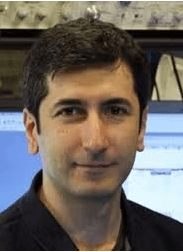 Ruben Stepanyan, PhD
Previously, the National Institute on Deafness and Other Communications Disorders awarded researchers at Case Western Reserve University and the Massachusetts Eye and Ear Institute, a teaching hospital of Harvard Medical School, a five-year, $3.2 million grant to seek new ways to protect against AHL, with Dr. Stepanyan serving as Principal Investigator. He also received a Discovery Research Grant from the United Kingdom’s distinguished Royal National Institute for Deaf People.
The funding is advancing Dr. Stepanyan’s efforts to combat AHL, a condition that affects millions worldwide. There is no cure for AHL, the third most common condition among the aging population, after heart disease and arthritis. “Our knowledge of the underlying mechanisms of hearing loss is not yet sufficient to develop robust treatment strategies,” he says.
Dr. Stepanyan is collaborating with Artur Indzhykulian, MD, PhD, an investigator in the Eaton-Peabody Laboratories at Massachusetts Eye and Ear Institute. Dr. Indzhykulian’s laboratory uses state-of-the-art electrophysiology, optical microscopy and electron microscopy to better understand how proteins function in bundles of cochlear hair cells — sensory cells of the inner ear — called stereocilia.
“Dr. Indzhykulian studies the most basic cellular mechanism to better understand how calcium overload causes damage,” Dr. Stepanyan says.
Together with their research teams, the two scientists are investigating the role of mitochondria in cochlear hair cells using innovative research models that alter mitochondrial function. Specifically, the team is altering mitochondrial calcium uptake. Mitochondria in cochlear hair cells perform vital cellular functions that modulate calcium uptake.
“We hypothesize that acoustic overexposure leads to mitochondrial calcium overload, which contributes to hair cell vulnerability,” Dr. Stepanyan says. “By reducing calcium uptake, we hope to learn whether hearing organs may become more resilient in the face of damage such as noise exposure or ototoxicity.”
Using a second set of models, the researchers are reversing the experiment to increase mitochondrial calcium overload to determine whether hearing organs become more susceptible.
“We are conducting trials and analyzing data to try to prove our hypothesis from the opposite angle,” Dr. Stepanyan says. “Linking the damaging effects of acoustic overstimulation to mitochondrial calcium homeostasis will hopefully provide a mechanistic understanding of the process and help us identify novel clinical strategies to mitigate noise-induced hearing loss.”
Potential Hearing-protective Pharmaceuticals
The team recently completed a DoD-funded study to identify U.S. Food and Drug Administration-approved drugs that may protect hearing against noise exposure. “Last year, we received a separate NIH grant similar to the DoD grant, except we looked at FDA-approved drugs that can be applied locally,” Dr. Stepanyan says.
DoD and NIH grants are extremely competitive, with the agencies awarding small R21 grants for exploratory research and larger amounts for more translational projects.
“The DoD allocates only three or four grants each year for hearing research,” Dr. Stepanyan says. “We are fortunate to receive funding from both the DoD and NIH.” He is currently entering his second year of NIH R01 funding to seek new ways to protect against AHL and his first year of NIH R21 funding for the locally applied pharmaceutical study.
Institutional Support
Thanks to the academic medicine resources at University Hospitals and Case Western Reserve University, Dr. Stepanyan partners with peers who form an accomplished hearing research group.
“Dr. Kumar Alagramam, our Chair for Research and Education, and Dr. Nicole Maronian, the Director of the UH Ear, Nose & Throat Institute, and Chair of the Department of Otolaryngology – Head and Neck Surgery, have been extremely supportive,” Dr. Stepanyan says. “I cannot stress enough how motivating it is to conduct research in such a highly collaborative environment.”
For more information, contact Dr. Stepanyan at rxs690@case.edu.
Contributing Expert:
Ruben Stepanyan, PhD
Associate Professor of Otolaryngology – Head and Neck Surgery
University Hospitals Ear, Nose & Throat Institute
University Hospitals Cleveland Medical Center
Case Western Reserve University School of Medicine