


University Hospitals Health Services Research Center Awards Career Advancement Grants to Accelerate Transformative Research and Foster Long-Term Scientific Careers
February 23, 2026
UH Research & Education Update
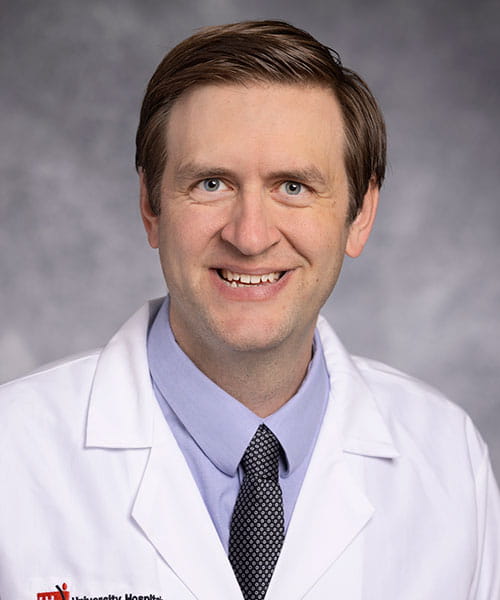 Joseph Kohne, MD
 Molly McVoy, MD
University Hospitals Health Services Research Center (HSRC) has awarded its 2025 Career Advancement Grants to Joseph Kohne, MD, MSc, of the Department of Pediatrics, UH Rainbow Babies & Children's Hospital and Molly McVoy, MD, of the Department of Psychiatry at University Hospitals Health System. Each award provides $50,000 for 12 months, with the possibility of an additional $50,000 in year two, contingent on meeting self-defined renewal milestones.
Created to address today’s increasingly competitive research funding environment, the HSRC Career Advancement Grant program offers targeted, high-impact support to mid‑career faculty and early-career faculty transitioning out of early-career awards. The program is designed to accelerate promising research, strengthen investigators’ competitiveness for major external funding and ensure long-term scientific career advancement through structured mentorship and institutional support.
“Grants like these, awarded at a pivotal career stage, offer researchers a unique opportunity to advance their science while also building a sustainable career trajectory,” says Samudragupta Bora, PhD, Founding Director of HSRC. “This program is an intentional investment in both the people and their projects. We want our health services research faculty to know that HSRC stands behind them and that we are committed to their success when it matters most.”
Enhancing Self-Management Strategies to Improve Outcomes for Youth with Epilepsy
With this grant, Dr. McVoy, a child and adolescent psychiatry physician and health services researcher, will expand her work on epilepsy self-management to improve patient outcomes and quality of life. Epilepsy self-management is a comprehensive, patient-centered model that empowers individuals with epilepsy to take an active role in reducing seizures, managing treatment and improving their overall well-being.
Dr. McVoy and her team developed SMART (Self-management for people with epilepsy and a history of negative health events), a community-informed, group-based program co-led by nurses and trained peer educators and delivered via videoconference. Prior research has shown that SMART reduces emergency room visits, improves health outcomes and increases patient self-efficacy among adults with epilepsy.
With HSRC support, Dr. McVoy will now adapt and pilot SMART for adolescents ages 14 to 17, incorporating interactive remote delivery and peer modeling to address the developmental, social and practical needs of teenagers with epilepsy.
“Given the high burden of epilepsy in youth and the need for scalable interventions, the potential population health impact is substantial,” says Dr. McVoy. “This funding allows us to build on strong adult data and thoughtfully adapt SMART to meet the needs of adolescents.”
“For me, personally, this grant is invaluable,” says Dr. McVoy. “I am at the stage where I am too advanced in my career to qualify for early investigator grants, but do not yet have stability in senior-level research support, especially in the current funding climate. This grant allows me to continue building a program of research during this important transition. It also creates opportunities to collaborate with early career investigators and trainees in ways that would not be possible otherwise.”
Improving Care Pathways for Children with Lower Respiratory Tract Infections
Dr. Kohne, a pediatric critical care physician and health services researcher, will use his HSRC grant to strengthen evidence-based guidelines for lower respiratory tract infections such as bronchiolitis and pneumonia. These infections are among the most common causes of hospitalization in young children.
Using a large, deidentified electronic health record registry, Dr. Kohne will model real-world care pathways to better understand how clinicians make decisions about hospital admission, ICU transfer and respiratory support. These insights can help identify opportunities to make care delivery more consistent, efficient and evidence driven.
Dr. Kohne and his team will also develop a multi-institutional research‑ready data structure, designed to reduce barriers to lower respiratory tract infections research. This will help break down barriers to more quickly identify effective approaches for improving patient care and outcomes.
“Currently, guidelines for respiratory support are often vague,” says Dr. Kohne. “While most children can manage respiratory illnesses with the help of their pediatrician at home, if they become sicker, clinicians are left with little to guide them as to when to admit a patient to the hospital, transfer them to an ICU or how to best support their respiratory needs. This can lead to significant variation between clinicians and health systems”, an issue Dr. Kohne wants to address through his research.
Likewise, Dr. Kohne highlights the HSRC support as critical for advancing his research endeavors. “As someone transitioning from a career development award stage, this grant allows me to harness institutional resources and mentorship toward a project with meaningful clinical impact. It supports my growth as an independent investigator and strengthens my ability to mentor others and help build pathways for the next generation of health services researchers.”
About the University Hospitals Health Services Research Center
Translating cutting-edge research into innovations that improve health and healthcare in Northeast Ohio and nationwide is central to University Hospitals' mission: “To Teach, To Heal, To Discover.” The HSRC advances this mission by ensuring patients receive accessible, state-of-the-art care and by accelerating the real-world impact of promising research across UH and beyond.
The HSRC drives excellence in healthcare delivery science, focusing on health disparities, health outcomes, health promotion and health technology. Its vision is to be the national and international leader in developing, evaluating and translating evidence and policy to enhance the quality, efficiency and equity of healthcare, improving well-being at both individual and population levels.
Guided by a five-year strategic plan and a portfolio exceeding $100 million in extramural funding, the HSRC partners with all clinical academic departments across the health system. Its priorities include advancing innovation through state-of-the-art infrastructure and strategic partnerships, recruiting and mentoring faculty with strong potential and commitment to health services research, expanding education to cultivate the next generation of leaders in the field, and maximizing the community and population-level impact of research. Through these efforts, the HSRC remains committed not only to advancing groundbreaking research but also to supporting the researchers themselves and ensuring they have the mentorship, resources and stability needed to build long, impactful scientific careers.