


UH Rainbow Babies & Children’s Leading National NIH Study of Type 2 Diabetes in Youth
November 09, 2026

Innovations in Pediatrics | Fall 2026
UH Rainbow Babies & Children’s is taking a leading role in a nationwide research study aimed at better understanding the dramatic rise in type 2 diabetes among youth over the past two decades -- a trend experts unfortunately expect to continue.
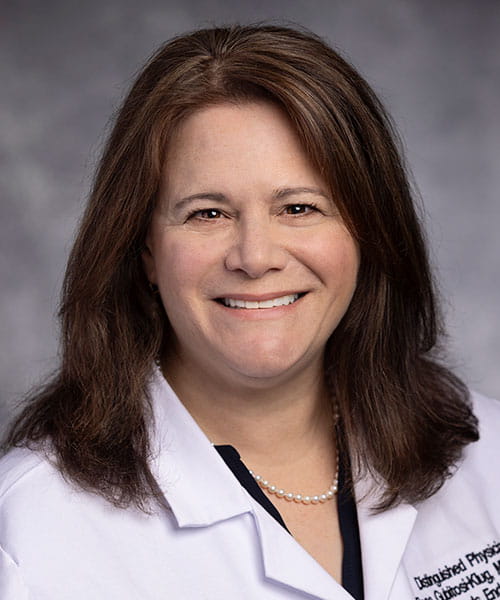 Rose Gubitosi-Klug, MD, PhD
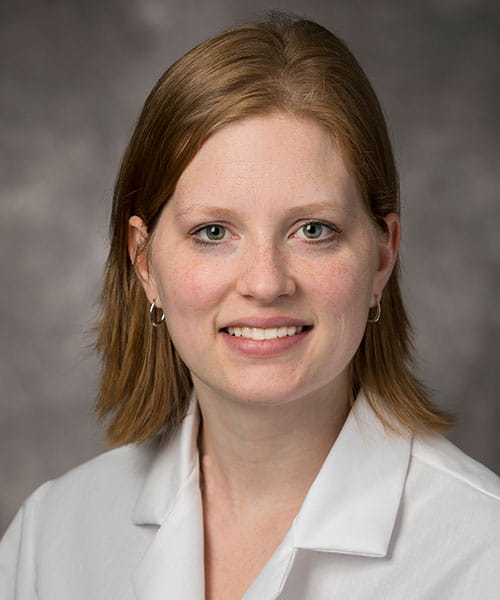 Katherine Kutney, MD
Rose Gubitosi-Klug, MD, PhD, Division Chief of Pediatric Endocrinology at UH Rainbow Babies & Children’s and William T. Dahms Chair in Pediatric Endocrinology, and Professor of Pediatrics, Case Western Reserve University School of Medicine. is lead investigator for the DISCOVERY of Risk Factors for Type 2 Diabetes in Youth Study, funded by the National Institutes of Health (NIH). Grants from the NIH are administered through our research partner Case Western Reserve University School of Medicine.
“Our children who are overweight or have obesity are at risk, but we don't know how best to identify the children who will progress to type 2 diabetes,” Dr. Gubitosi-Klug says. “We hope this study will bring us closer to our goal of prevention of type 2 diabetes in future generations of youth.”
Pediatric endocrinologist Katherine Kutney, MD, and Associate Professor of Pediatrics at the School of Medicine, is leading the study arm at UH Rainbow. She says it’s imperative that doctors and researchers better understand what’s putting young people at increased risk of type 2 diabetes – because the consequences can be so severe.
“Through the TODAY study that we participated in the beginning of the 21st century, we really learned how significant type 2 diabetes is as a diagnosis when it happens in childhood, specifically the rates of complications such as eye, kidney and nerve disease,” she says. “We've known for a long time that those are complications of diabetes, but they're actually, more aggressive in youth-onset type 2 diabetes as compared to what you see in adults with either type 1 or type 2 diabetes, or kids with type 1 diabetes. Additionally, cardiovascular risk for heart attack and stroke were also more severe in kids who were diagnosed with youth-onset type 2 diabetes.”
“Almost 10 years ago, I was a co-investigator on the TODAY study and met a lot of those young adults who had a lot of severe complications from diabetes, which is quite different than what we usually see in our pediatric patients,” Dr. Kutney adds. “It really stuck with me that is these kids are really facing a big uphill battle as they're moving into their adulthood.”
The DISCOVERY study is enrolling 3,600 participants from 19 study sites around the country – girls ages 8 to 13, boys ages 9 to 15. Participants must be considered to be at risk of developing type 2 diabetes. They must have started puberty, have a body mass index at the 85th percentile or above, have high-normal to above-normal hemoglobin A1c of 5.5 to 6.4% and be mid- pubertal at Tanner stage 2 to 4.
The goal of the observational study is to identify unique drivers of youth-onset type 2 diabetes distinguishing it from the disease in adults, which will help clinicians better understand which children will develop the disease and guide more effective, targeted prevention and intervention strategies.
“We want to identify the physiologic drivers and other determinants of progression to youth-onset type 2 diabetes by charting the course of changes in glycemia, β-cell function, insulin sensitivity, pubertal stage, psychosocial, behavioral, and social determinants of health during this critical period of maturation,” Dr. Kutney says.
UH Rainbow aims to enroll 240 participants in DISCOVERY.
“This is definitely a big number of kids to recruit, and so we're pursuing multiple avenues to reach out to the eligible patients in our network,” Dr. Kutney says. “We're doing a combination of MyChart messages, to potentially eligible participants, as well as email and phone call recruitment, and in-person recruitment, both at the primary care practices and through the pediatric endocrinology and other subspecialty clinics.”
Ultimately, Dr. Kutney says she hopes that DISCOVERY will provide the knowledge essential to preventing youth-onset type 2 diabetes.
“I'm hoping that we can more precisely identify when young people are most at risk of progressing,” she says. “When do we need to be monitoring and watching them closely? On the flip side, who doesn't require so many doctor's appointments and so much monitoring in terms of the thousands of kids who have overweight or obesity? How do we identify those who are at highest risk? Then, as we understand the physiologic changes that are happening in kids who are progressing, we would like to know whether there’s a window when treating with GLP-1s or other classes of medications can lower the insulin resistance and support the body to make insulin. Can you actually help them get on a trajectory where they're not developing type 2 diabetes? We hope the data and what we learn from DISCOVERY will help answer these questions.”
Contributing Experts: Rose Gubitosi-Klug, MD, PhD, Katherine Kutney, MD