


University Hospitals Health Services Research Center Foundations of Health Services Research Program Graduates Largest Cohort to Date
October 16, 2026
UH Research & Education Institute Update
University Hospitals continues to invest in the development of the human resources and scientific talent that will shape the future of healthcare and discovery.
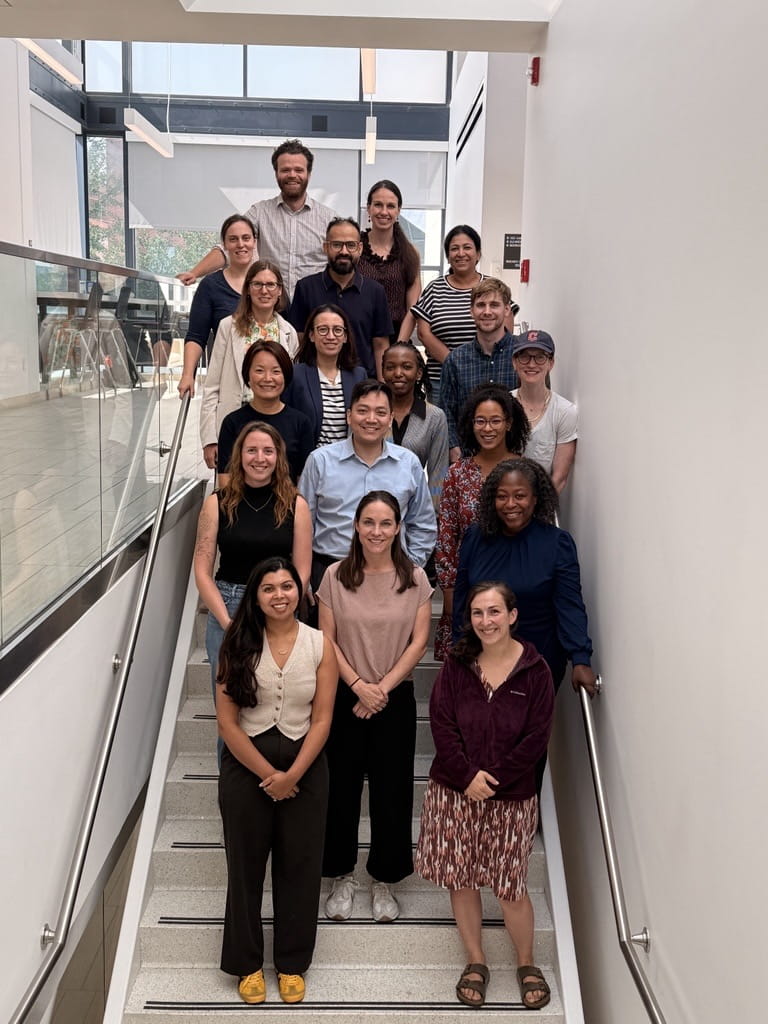 University Hospitals Health Services Research Center Foundations of Health Services Research Program 2026 Graduates.
This summer, the University Hospitals Health Services Research Center (UH HSRC) celebrated the fourth graduating cohort of its Certificate in Foundations of Health Services Research program. The program’s three-week curriculum equipped 21 residents, fellows, doctoral scholars, physicians and nurse scientists from Northeast Ohio and across the U.S., and a medical student from Brazil with foundational research methods and skills to pursue innovative, team-based health services research.
Increasingly important to the future of health care, health services research helps bridge the gap between clinical discovery and the delivery of effective, high-quality care in real-world settings. The 2026 class is the program’s largest cohort to date, marking continued growth of an initiative designed to develop the next generation of clinician-scientists and researchers.
“The Foundations program is integral to our center, advancing our education mission and commitment to nurturing well-trained, methodologically rigorous health services researchers,” says Samudragupta Bora, PhD, Program Director, Founding Director of UH HSRC and Associate Professor of Pediatrics, University Hospitals Rainbow Babies & Children’s Hospital and Case Western Reserve University School of Medicine. “We aim to empower participants to build careers as extramurally funded health services researchers who thrive in a healthcare environment that integrates research, innovation and exceptional care delivery.”
Turning Clinical Questions into Impactful Research
Designed for early-career clinicians and doctoral scholars in health-related fields, the Foundations program gives participants the methodological foundation to investigate questions that emerge from clinical practice and health care delivery, helping them define a research question, select an appropriate study design and analytic approach, evaluate the evidence and translate their findings into insights that can improve health care delivery and patient outcomes.
The curriculum establishes a foundation in biostatistics and epidemiology and extends into areas including dissemination and implementation, health care quality and safety, and health disparities and inequities. Methodology workshops address administrative data analysis, economic evaluation, mixed methods, qualitative methods, spatial analysis, and systematic review and meta-analysis. Participants apply their learning by presenting a research proposal at the conclusion of the program.
Additionally, weekly seminars led by nationally recognized faculty give participants an opportunity to learn from investigators who have successfully built extramurally funded research programs. The program’s scientific and career exposure gives participants greater insight into research opportunities and the translation of research into clinical practice.
Vicente Riberio, a medical student in Brazil who traveled to Cleveland for the Foundations program, describes it as one of the most meaningful research experiences of his medical training. He was particularly drawn to health services research and implementation science, which examines how evidence-based practices and treatments are integrated into real-world healthcare settings, an emerging field in Brazil.
“I found it fascinating to learn how research can go beyond demonstrating whether an intervention works and examine how evidence and recommendations are actually incorporated into everyday clinical practice and healthcare systems,” Riberio says. The approach is especially relevant in Brazil, he explained, where challenges involving access, resources and logistics can affect the adoption of innovative treatments.
Riberio says he returned to Brazil with new research skills and a broader understanding of how research can help bridge the gap between scientific evidence and patient care.
Building a Pathway for the Next Generation of Health Services Researchers
The program’s growing reach supports the broader goal for the HSRC of building a pathway of health services researchers trained to connect challenges observed in clinical practice with rigorous research that can improve health care delivery and patient outcomes. That mission is especially important as health services research continues to advance the translation of clinical discoveries into practice and help patients and communities benefit from improvements in care.
Bringing together an interdisciplinary cohort also creates opportunities for participants to learn alongside colleagues with different perspectives and pursue the kind of team-based research needed to address complex health care questions.
The HSRC is working to make that training accessible beyond University Hospitals as well. Limited tuition assistance may be available to qualified applicants based on financial need, helping promising investigators access the training and mentorship needed to advance their research careers.
With four cohorts now completing the program, and its largest class graduating this summer, the Foundations program continues to expand a community of investigators prepared to pursue impactful health services research.
Looking Ahead to 2027
Next year, the 2027 Certificate in Foundations of Health Services Research program will offer another group of early-career clinicians and investigators the opportunity to strengthen their research skills, learn from experienced faculty and build the methodological foundation needed to advance meaningful research.
“Each new cohort represents an investment in the future of health services research,” says Dr. Bora. “By giving emerging investigators, the skills, mentorship and methodological foundation to pursue important questions, we are building a community of health services researchers whose work has the potential to improve how care is delivered and, ultimately, improve outcomes for patients.”