


Profiles in Clinical Excellence: UH Neurological Institute
September 23, 2026
UH Clinical Update | September 2026
By Nicholas C. Bambakidis, MD
Vice President and Director, UH Neurological Institute
Harvey Huntington Brown, Jr. Chair in Neurosurgery, UH Cleveland Medical Center
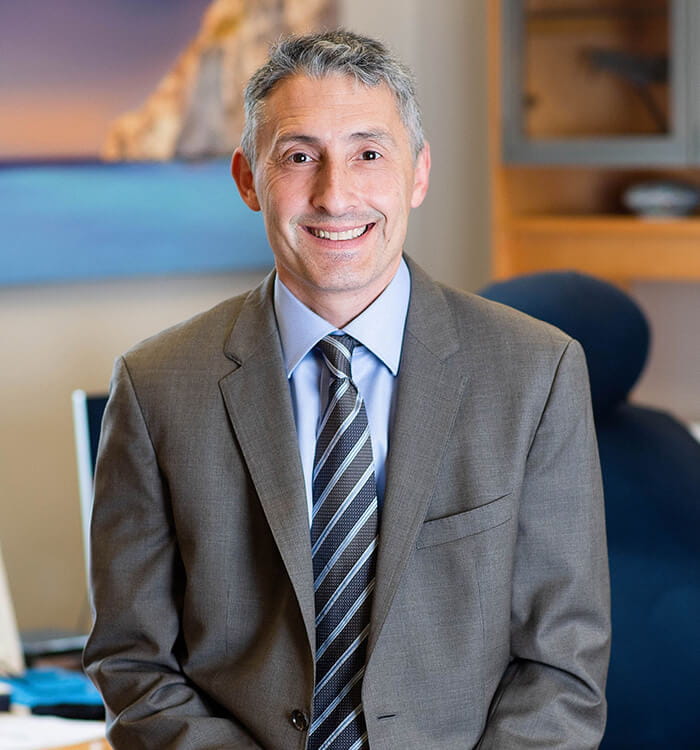 Nicholas C. Bambakidis, MD
At the UH Neurological Institute, our goal is to always embody the UH mission: To Heal. To Teach. To Discover. And I’m happy to say things are going extremely well in that regard within our Institute.
Fulfilling our crucial healing mission, we’re currently on pace this year to treat more patients than we ever have before. In Neurosurgery, we have had a 10% increase in surgical volumes in 2026, compared to 2025. For Neurology, the increase in ambulatory patient volume is at nearly 24%, year over year. These numbers would not be possible without the diligence and creativity of everyone within the UH Neurological Institute, who are laser-focused on patient access. Our pilot project with same-day access clinics for headache, memory and dizziness is a great example of what can be accomplished – and will be expanded – to better serve our patients. And our successful telestroke program, which you can read more about in this issue of UH Clinical Update, is redefining access to stroke care at our 11 UH hospitals, Western Reserve Hospital and five affiliated Aultman facilities.
We continue to invest in state-of-the-art technologies and innovative research to advance care for individuals with neurologic conditions – leveraging discovery to heal. Recent innovations include novel capabilities for robotic and endoscopic spine surgery, as well as robotic surgery for the treatment of epilepsy. In fact, UH spine surgeon Xiaofei (Sophie) Zhou, MD, recently performed the first dual port endoscopic spine surgery at UH. It’s an advancement that dramatically reduces procedure time, recovery time and pain for the patient.
Our education mission is equally important within the UH Neurological Institute – not just for our trainees here at UH, but also for attendees from around the country. We are in the process of expanding our neurosurgical residency program, which will reach a peak number of 21 residents over the next three to four years. Once maximized, it will be one of the largest neurosurgical training programs in the U.S. At the same time, our neurology residency program also has large numbers of talented trainees.
We continue to meaningfully contribute to professional education in our field. The 16th annual “Surgical Treatment of the Craniocervical Junction” and 10th annual “Skull Base Fellows” courses were hosted by the UH Department of Neurological Surgery in late August for neurosurgery residents and fellows. These courses, recognized by the Congress of Neurological Surgeons, include lectures and hands-on cadaver dissections supervised by both neurosurgeons and ENT surgeons demonstrating posterolateral transtemporal surgical approaches as well as endoscopic endonasal anatomy and surgical options. They attract faculty and participants from around the U.S., joining in the vital education mission with our distinguished and talented UH faculty.
UH Neurological Institute is also providing leadership at the national level. I am proud to say that UH neurosurgeon and department Vice-Chair, Sepideh Amin-Hanjani, MD, has been named President-Elect of the American Association of Neurological Surgeons, a leading organization with several thousand members. I am additionally honored to have been named President-Elect of Society of Neurological Surgeons, the country’s oldest neurosurgical society and the preeminent organization supporting the education of residents. You can read more about what these positions mean to us here at UH in this issue of UH Clinical Update.
With an aging U.S. population, the demand for high-quality care for patients with neurological and neurosurgical conditions will only continue to grow. We are up to the challenge. With such a strong foundation in the UH Neurological Institute, we know we have the people, tools and expertise to meet this growing need in Northeast Ohio – delivering good outcomes for our patients with skill and compassion.
Tags: