


UH Rainbow Scientist Launches Novel Study of Rare Disease, with Implications for More Common Conditions
February 24, 2026

Innovations in Pediatrics | Spring 2026
A molecular and developmental biologist at UH Rainbow Babies & Children’s is launching a unique study with a one-of-a-kind mouse model for cardiac valvular Ehlers-Danlos syndrome (cvEDS) – one of the world’s rarest diseases. The goal? Identify the specific molecular pathways at work in the condition. The hope is that these pathways can be targeted to develop desperately needed treatment for cvEDS – as well as other more common connective tissue conditions. This new groundbreaking study is funded by the Ines Mandl Research Foundation.
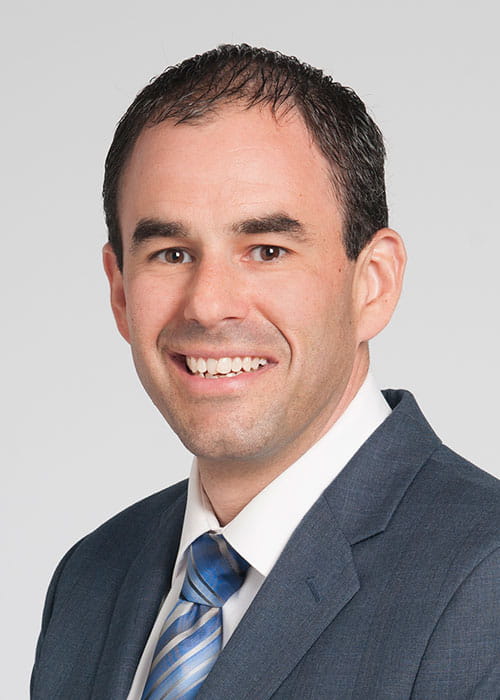 Timothy J. Mead, PhD
There is no current treatment for cvEDS beyond supportive care, says project leader Timothy J. Mead, PhD, Staff Scientist with the Department of Pediatrics, Division of Pediatric Cardiology, at UH Rainbow Babies & Children’s.
“Cardiac valvular EDS (cvEDS), is a rare, autosomal recessive EDS subtype caused by specific COL1A2 variants that lead to heart valve insufficiency, thereby affecting heart function, in addition to causing joint hypermobility and skin hyperextensibility,” he says. “There is no known treatment other than having a team of specialists, including orthopedic and cardiovascular, to manage the pain and diminished quality of life.”
Research on cvEDS has been stymied to date due to the lack of preclinical models of the condition. To remedy this, Dr. Mead collaborated with Russell Norris, PhD, from the Medical University of South Carolina to develop a new mouse model of cvEDS. Using CRISRP-Cas9 technology, the team has introduced the most common variant in COL1A2 that causes cvEDS. COL1A2 is essential for proper formation and function of connective tissue, including skin, joints and heart valves.
“Ultimately, we aim to determine the reason why this mutation manifests into cvEDS and uncover perturbed molecular pathways to propose possible therapeutic interventions,” Dr. Mead says.
Dr. Mead’s study has two broad aims: To fully characterize the phenotype of the novel mouse model of cvEDS, then determine the transcriptome and molecular mechanisms behind it.
“We're using this approach as a platform to illustrate proof of principle that we can identify a human mutation and use CRISPR-Cas9 to generate a mouse model that will phenocopy cvEDS,” Dr. Mead says. “We are monitoring the heart valves, using histology and echocardiography from birth into adulthood, to identify when issues arise. Then, we plan to identify molecular mechanisms that are changed using single cell RNA sequencing to identify potential therapeutic targets. We are hopeful that this approach will not only be used for cvEDS, but applicable for broader collagenopathies.”
Work on this ambitious project is already well underway at UH Rainbow, with the assistance of Ana Alcocer, who is a member of the UH Rainbow Babies and Children’s Research Gap Year Program, prior to starting medical school in the fall.
“We have a good amount of promising, preliminary data, and we're moving on to the second phase now, which is echocardiography to evaluate heart function, micro-CT of the limbs to examine joint mobility, and submitting single-cell RNAseq samples,” Dr. Mead says.
Dr. Mead says he’s hopeful this work will yield findings far beyond those for just cvEDS.
“It's quite interesting that different COL1A2 mutations can cause either cvEDS or osteogenesis imperfecta, a debilitating bone disease. We think our newly generated mouse model represents a transformative opportunity. This model, based on the most common COL1A2 mutation in cvEDS patients, will enable us to dissect molecular consequences, define pathogenic pathways, and advance the first mechanistic insights into cvEDS. In doing so, we aim to build a foundation that not only clarifies this rare disorder but also reshapes our broader understanding of collagen biology.”