


Emergency Medicine Physician Fulfills Childhood Dream to Help Others
December 09, 2025
UH Clinical Update | December 2025
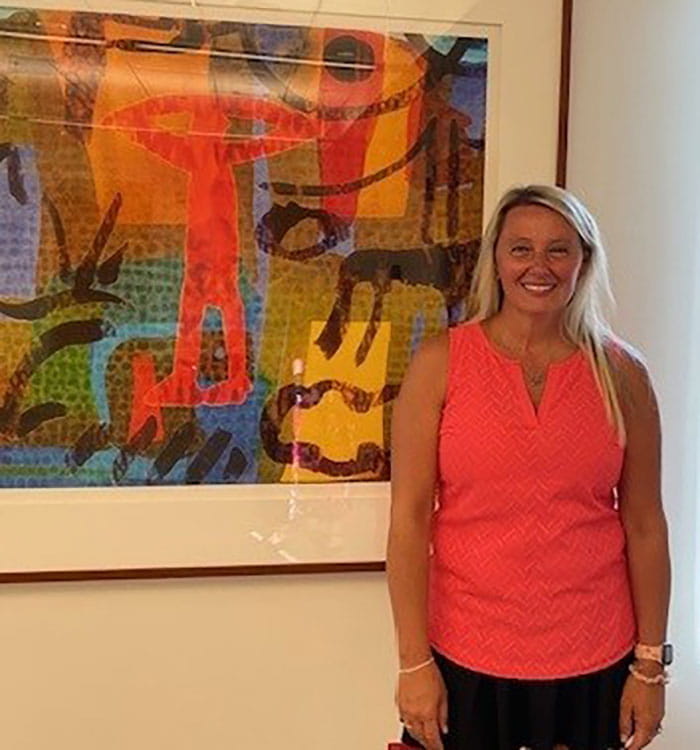 Tina Piscitelli-Shaffer, DO
Tina Piscitelli-Shaffer, DO, grew up watching her father work seven days a week in factories. He wasn’t a doctor, but his relentless drive became the model for her own career in medicine.
“There were four of us kids, and he and my mom worked all the time,” she recalls. “Seeing that shaped my study habits and my work ethic. By second grade, I was already saying I wanted to be a doctor, that I wanted to help people who were dying.”
Her Catholic school education reinforced those instincts. “We learned what it meant to volunteer and to serve others,” she says. “And my parents, who never had the chance to go to college, were so supportive of me.”
Discipline defined her childhood. After school or dance lessons — she started dancing at age three — she would finish her homework immediately, knowing the rest of the evening was hers to enjoy. “Dance was my discipline too,” she says. “I was regimented about both dance and homework.”
At Case Western Reserve University, she majored in psychology, hoping it would help her understand patients more deeply. “My favorite class was neurophysiology, because it explained why we do what we do,” she says.
Medical school at the Lake Erie College of Osteopathic Medicine gave her a holistic foundation. “I liked having the option to treat patients differently if needed, with an holistic approach, grounded in evidence-based medicine.”
Her final rotation revealed her calling: emergency medicine. “I loved the ‘master of all trades’ aspect,” she says. “It fit my personality.”
Residency immersed her in the unpredictable reality of the ED, rotating through Summa Western Reserve, Cleveland Clinic South Pointe, MetroHealth’s trauma department, LifeFlight, Akron City, and Akron Children’s hospitals.
“As a resident, you want to see everything — you don’t want to miss a case,” she says. “It’s hands-on, unpredictable, and you’re not going home on time. When it was hard, I reminded myself: this is what you signed up for, what you’ve wanted since you were seven.”
Her philosophy remains: “The more exposure you get, the stronger and smarter you’ll be. Anything after 80 hours is a free education.”
Emergency physicians inevitably face tragedy. “Part of the process is preparing mentally,” she explains. “We know what’s coming, and we want families to know we did everything possible. And when someone can’t be saved, it’s okay to cry — we’ve cried with parents and families.”
But in 2024, Dr. Piscitelli-Shaffer felt her joy slipping away. “Seeing young children die in accidents brought me close to a breaking point,” she admits. She thought back to what once made her happiest: competitive dance.
Her daughters had begun lessons at the same school where she had trained, and many of her former teachers were still there. She returned to tap dancing, rediscovering the discipline and focus it demanded.
“It’s not just tapping — it’s counting rhythms, memorizing choreography, moving with precision,” she says. “My mind can’t wander, and that brings relief. It restored my love of music, dance, and happiness — something I now share with my daughters.”
Her two teenage sons excel at baseball, and watching their games has become another source of joy for her and her husband, who works in law enforcement.
Even as she nurtures life outside the hospital, Dr. Piscitelli-Shaffer carries vivid memories of cases that tested her and her team — and brought extraordinary outcomes. At a recent UH Heart Heroes Dinner, she reunited with a patient she first treated seven years ago.
He had arrived in the ED in cardiac arrest, fading in and out of consciousness. “He had a heart rhythm incompatible with life,” she recalls. “He kissed his wife goodbye, and we shocked him 26 times — even while rolling him down to the CT lab. Someone had to jump on him.” In the cath lab, a stent was placed, and within two days he walked out of the hospital. Today, at 64, he is thriving and still stops by to visit.
“Knowing he’s someone’s dad, alive and well — that gives us so much happiness.”
On a somewhat lighter note, she remembers the case her colleagues still call the “popcorn baby.”
“One week before Christmas in 2018, a 16‑month‑old came in cardiac arrest after choking on popcorn seeds,” she says. For two and a half hours, staff from multiple departments worked together. They suctioned out nearly all the seeds, but one remained lodged in the airway. The team intubated only her right lung, hoping to shift the kernel into the left and aerate the other side. It worked. She was flown to UH Rainbow, and by the next morning she was awake, alert, extubated — and eating breakfast.
“She arrived blue and left the hospital two days later,” Dr. Piscitelli-Shaffer says. The child’s mother later asked her to share the story publicly to warn other parents about the dangers of popcorn for toddlers — a request she gladly honored.
Earlier this fall, Dr. Piscitelli-Shaffer received the “Dinner with the Doc” award, after being nominated by Emily Chau, MD, hospitalist site director at UH Geauga Medical Center.
“Dr. Piscitelli has gone above and beyond to advocate for patients and ensure things are done the right way,” says Dr. Chau.
One recent example shows that commitment. A patient arrived in the ED with an active GI bleed at a time when UH Geauga had no GI service coverage. Dr. Piscitelli-Shaffer initially sought to transfer the patient to another site, but a GI specialist at UH Cleveland Medical Center advised that the patient could remain at Geauga.
“Dr. Piscitelli and I had an in-depth conversation, and she reached out to a GI physician who wasn’t on service that day. She persuaded him to come in, scope, and stabilize the patient,” recalls Dr. Chau.
For Dr. Chau, this episode reflects a broader pattern. “She’s very compassionate and caring, and it shows in the way she takes extra steps to advocate for her patients. She works hard for the right reasons and isn’t afraid to do what’s necessary to make sure patients are treated fairly and appropriately.”
Congratulations to Dr. Piscitelli-Shaffer on her “Dinner with the Doc” honor.