


Anesthesiologist and Quality Leader Creating a Lasting Legacy at UH
December 10, 2025
UH Clinical Update | December 2025
Raymond Graber, MD, didn’t set out to go into the family business. The son of an anesthesiologist and the grandson of a general surgeon, he was pursuing a different path, enrolling instead as an engineering student at Rensselaer Polytech Institute near his hometown of Albany, New York. But summers working as a scrub tech in the operating room at St. Peter’s Hospital in Albany ultimately changed his mind, leading him to where he is today – an esteemed anesthesiologist here at University Hospitals and the third generation in his family to serve as physician.
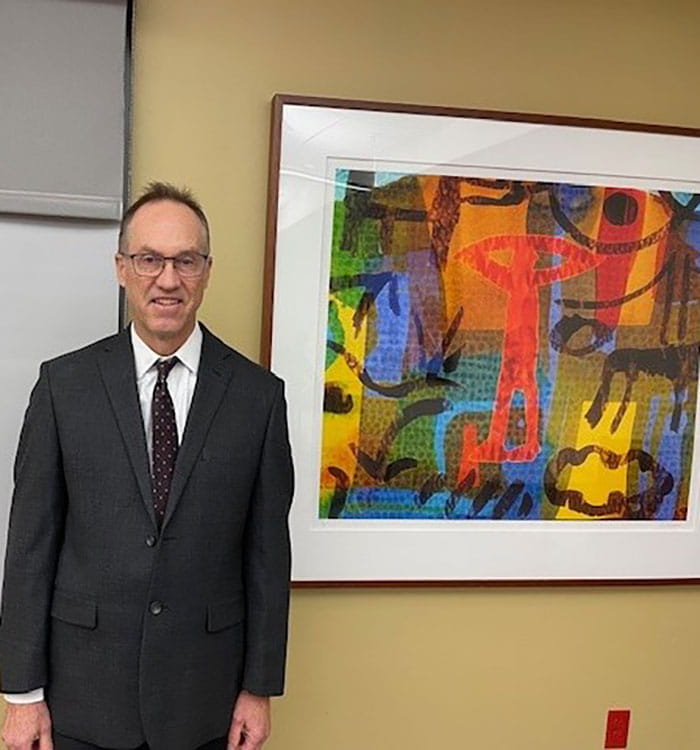 Raymond Graber, MD
In fact, the generational ties to medicine in general and anesthesiology in particular even extend outside his family, Dr. Graber says. He notes that three recent members of the UH anesthesiology residency program have a physician-parent he also trained.
“I hope not to train the grandkids,” he jokes.
After medical school at University at Buffalo Jacobs School of Medicine and Biomedical Sciences, Dr. Graber did his anesthesiology residency training at UH, followed by fellowship training both in pediatric and regional anesthesiology. He practiced for a couple of years at the Cleveland VA, then joined UH as an attending physician in 1990.
Since that time, Dr. Graber has filled three important roles at UH Cleveland Medical Center – one as a member of the cardiac anesthesiology team, another as section head of orthopedic anesthesia, and a third priority area as Vice Chair of Quality for the anesthesiology department. Dr. Graber, for example, wrote the UH conscious sedation policy in the 1990s and for many years managed its subsequent revisions.
“In the operating room, the anesthesia department handles sedation and general anesthesia,” he says. “But there's other places like the GI labs or cardiology cath labs where physicians do their own sedation. We had to come up with guidelines for non-anesthesia trained people to administer sedation.”
A more recent project was the development of perioperative guidelines for management of patients on GLP1 agonist drugs. These drugs are commonly prescribed for weight loss, but because they can slow gastric emptying, they may predispose to aspiration during either sedation or anesthesia.
“We convened a group of anesthesiologists from our system hospitals, reviewed the literature, and came up with system level recommendations for how these patients should be managed,” he says.
The explosion of minimally invasive surgery and emphasis on rapid recovery have led to the biggest changes in anesthesia practice that Dr. Graber has seen over his 35-year career at UH.
“When I started, people were staying in the hospital for five to seven days for a joint replacement,” he says. “Now it's become, in many cases, an outpatient procedure, or at most a one-day stay. I worked along with our orthopedic team for a long time to help promote rapid recovery, to the point where they got so successful, they moved the majority of our joint replacements out of our hospital at main campus to the community and outpatient settings.”
Another example: “We're doing a lot of minimally invasive cardiac surgery now, where they're doing surgery through small keyhole incisions, sometimes using a surgical robot,” he says. “As a result, the way we as anesthesiologists take care of people is necessarily different. We're trying to get people to wake up faster, get out of bed faster and into rehab faster. We focus on pain control techniques to allow people to have improved mobility and recovery.”
Dr. Graber is quick to praise the surgeons he’s worked with during his long career at UH. And they return the positive sentiment.
“Dr. Graber is an excellent anesthesiologist,” says Joseph Sabik, MD, UH Surgeon-in-Chief, Chair of the Department of Surgery at UH Cleveland Medical Center and Sally and Bob Gries Distinguished Chair in Cardiac Surgery. “But what always impresses me about Ray, and why I enjoy working with him so much, is he cares. Dr. Graber always is prepared. He thoroughly evaluates the patients preoperatively, actively contributes in the pre-op huddle discussion, and is engaged in the entire case. He is always helping to ensure our patients get the best outcome. He is the ultimate professional, providing excellent care to our patients as an anesthesiologist, and a role model for the entire surgical team.”
In fact, UH CEO Cliff A. Megerian, MD, FACS, Jane and Henry Meyer Chief Executive Officer Distinguished Chair, recently recognized Dr. Graber’s clinical excellence with a “Dinner with the Doc” honor.
As he reflects on his time at UH, Dr. Graber says he’s grateful for the professionalism and camaraderie he’s found among his colleagues.
“I’ve been blessed here to have a really excellent group of anesthesiologists, nurse anesthetists, anesthesia assistants and residents to work with,” he says.
And he says he’s also thankful for the chance over the years to reassure patients after undergoing something as consequential as surgery.
“Afterwards, especially after cardiac surgery, I like to try to visit people, just kind of go over how they did, because it's a big thing for them to go through,” Dr. Graber says. “It’s important that they feel reassured that everything went well, that their outcome was good.”
Congratulations to Dr. Graber on his “Dinner with the Doc” honor.