


Jennifer Villwock, MD, Advances Alzheimer's Research Through the Science of Scent
November 16, 2026
UH Research & Education Institute
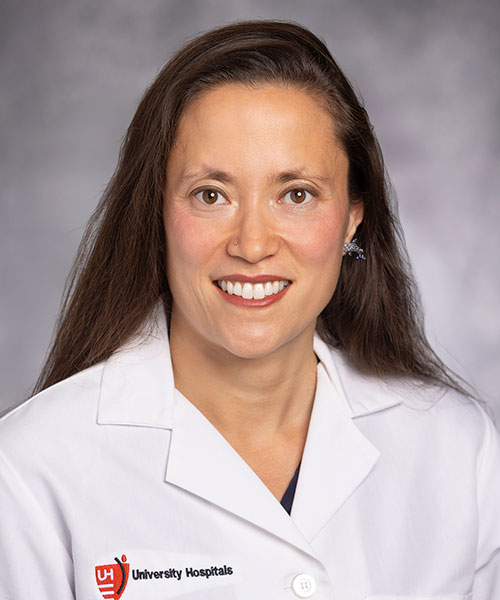 Jennifer Villwock, MD
From investigating how smell may reveal early signs of Alzheimer's disease to championing mentorship and physician well-being, Jennifer Villwock, MD, is advancing research that could transform patient care.
A fellowship-trained rhinologist and anterior skull base surgeon, Dr. Villwock joined University Hospitals in September 2025, as the inaugural Vice Chair of Research for the University Hospitals Ear, Nose & Throat Institute. She also serves as Professor of Otolaryngology - Head and Neck Surgery at Case Western Reserve University School of Medicine. Her research, supported by grants from the National Institutes of Health and Department of Defense, explores how changes in sensory function may provide important insights into neurological disease.
Central to Dr. Villwock's research is the development of a simple, noninvasive smell test known as AROMA, could help identify individuals at risk for cognitive decline, potentially making neurological screening more accessible and effective. The project reflects her longstanding curiosity about unanswered clinical questions and her determination to translate scientific discoveries into meaningful improvements in patient care.
An Unconventional Path to Medicine
Dr. Villwock's journey into medicine was not predetermined.
Her family immigrated from Belgium to the United States when she was a toddler, and she spent her formative years growing up in locations ranging from Flint, MI to rural Pennsylvania to Muskogee, OK. Watching her father, a cardiologist, navigate demanding professional and family responsibilities initially made her question whether medicine was right for her.
At the University of Michigan, where she earned a Bachelor of Science degree in Cellular and Molecular Biology, Dr. Villwock discovered a passion for scientific investigation while conducting neuroblastoma research under Valerie Opipari, MD, formerly Valerie Castle, a pediatric oncologist and physician-scientist at the University of Michigan Medical School.
Dr. Opipari became an influential mentor, nurturing Dr. Villwock’s scientific curiosity and demonstrating that clinical excellence, research leadership and motherhood could coexist.
Still uncertain about medical school, Dr. Villwock briefly pursued marketing after graduation. The experience ultimately clarified her desire for meaningful work combining science, human connection and service.
Dr. Villwock earned her medical degree from Michigan State University College of Human Medicine in 2011, where she initially considered a career in family medicine. However, a preceptor introduced her to surgical procedures, sparking an unexpected interest in surgery. Exposure to the intricate anatomy and technical precision of head and neck procedures ultimately drew her to otolaryngology.
Her scientific interests grew from the same curiosity that attracted her to medicine: a desire to explore unanswered clinical questions and find better ways to help patients.
"Most of my research endeavors are rooted in a desire to find better explanations or solutions when it seems like there should be a better way,” she says. “We need to stay curious and pursue high impact areas of investigation so we can transform the lives of our patients through discovery.”
What Smell Reveals About Brain Health
One of Dr. Villwock's most promising research initiatives explores whether changes in olfactory function can identify individuals at risk for Alzheimer's disease before noticeable cognitive symptoms develop.
Her team developed the Affordable, Rapid, Olfactory Measurement Array (AROMA), a novel test designed to make smell assessment affordable, practical and accessible.
Using familiar scents such as lavender, peppermint, citrus and cinnamon, researchers examine patterns of performance across different odors and concentrations.
Rather than simply identifying smell loss, Dr. Villwock investigates whether distinct olfactory patterns correlate with cognitive impairment, Alzheimer's disease blood biomarkers and structural changes in the brain.
“What excites me most is the possibility of taking something we often overlook in clinical care and turning it into a meaningful tool for improving patients' lives, says Dr. Villwock. “As a surgeon-scientist, I want our discoveries to move beyond the laboratory and make a real difference in how we care for patients.”
Her research extends beyond smell. Department of Defense-funded investigations examine whether combined assessments of olfaction, hearing and vestibular function can help predict traumatic brain injury severity and long-term recovery, potentially guiding targeted rehabilitation.
Building a Research Program at UH
Dr. Villwock joined UH from the University of Kansas Medical Center, where she served as Vice Chair of Research and Innovation, bringing an established research portfolio and experience developing scientific programs.
“I enjoy building programs,” she said when announcing her move to Cleveland. “There are tremendous opportunities and enthusiasm for collaborative, patient-impacting programs.”
That vision is taking shape.
In 2026, Dr. Villwock and her collaborators received fundings through a joint University Hospitals–Case Western Reserve University pilot award and an NIH-funded Clinical and Translational Science Collaborative award to investigate the potential role of mitochondrial dysfunction in Alzheimer's disease.
The research could uncover new disease mechanisms, identify potential biomarkers for earlier detection and inform the development of innovative treatments, including intranasal therapies.
“Understanding the ‘why’ is critical to developing novel therapies and treatment approaches,” says Dr. Villwock.
Through interdisciplinary collaboration and research mentorship, she is helping strengthen UH's capacity to translate scientific discoveries into improved patient care.
The Power of Vulnerability and Mentorship
Dr. Villwock's commitment to physician well-being is deeply personal.
In March 2019, while on the faculty at the University of Kansas Medical Center, she delivered a TEDxUMKC talk titled The Black Hole, discussing her experiences with depression, imposter syndrome and the emotional pressures of medical training.
Her reflections also addressed the loss of a medical school colleague, and the isolation physicians can experience when professional expectations discourage vulnerability. By publicly sharing her struggles, she challenged the perception that physicians must always appear resilient and self-sufficient.
Her advocacy emphasizes the importance of psychological safety, supportive relationships and honest conversations about mental health.
“Creating an environment where people feel comfortable talking openly about their challenges is essential to their well-being and professional growth,” says Dr. Villwock. “When we support one another and recognize that vulnerability is part of being human, we build stronger teams and a culture where everyone has the opportunity to thrive.”
Mentorship remains central to that philosophy. Dr. Opipari's example helped her envision a fulfilling academic career, while supportive colleagues reinforced the importance of sponsorship and creating opportunities for others.
“Intentional sponsorship is critical,” Dr. Villwock has emphasized.
Those experiences also inform the kind of research environment she hopes to cultivate at UH, one that encourages intellectual curiosity, welcomes diverse perspectives and recognizes that scientific achievement depends on supporting the people behind the discoveries.
“I've been fortunate to have mentors who believed in me, sometimes before I believed in myself,” says Dr. Villwock. “I've also learned that being vulnerable doesn't make us less capable as physicians or scientists. It makes us human.”
As she builds the research program at UH, Dr. Villwock hopes to cultivate an environment where people feel supported and empowered to ask questions and take risks. She envisions a culture that celebrates not only scientific discoveries but also the growth and success of the people behind them.
Discovery With Purpose
For Dr. Villwock, joining UH also represented a homecoming, bringing her closer to an extensive family network in Northeast Ohio.
Her experiences as a surgeon, scientist, mentor, wife and mother of a young daughter reinforce her belief that professional success and personal well-being need not be mutually exclusive.
Whether developing accessible diagnostic tools, investigating Alzheimer's disease or mentoring emerging investigators, Dr. Villwock remains guided by curiosity and a commitment to translating scientific discoveries into meaningful improvements in patients' lives.
Tags: Research & Education, Research