


Growing an Idea: How a UH Rainbow Resident Turned Experience into Community Impact
August 28, 2026

UH Research & Education Update
What began as an idea inspired by experiences in medical school has grown into a community resource helping Midtown families explore nutrition, healthy eating and fresh produce. Monica Sun, DO, a second-year pediatric resident at University Hospitals Rainbow Babies & Children's, saw an opportunity to address food insecurity while creating a new way for patients to engage with healthy habits.
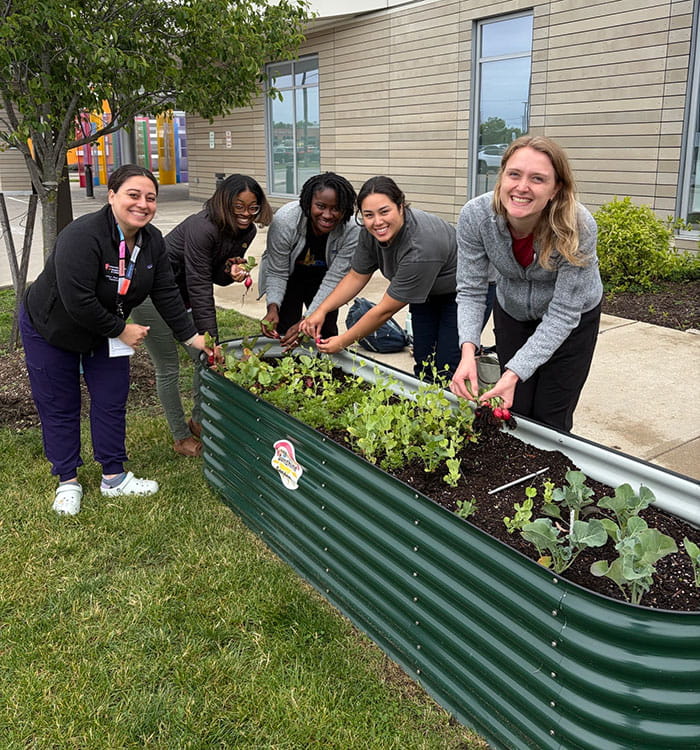
Located outside the UH Rainbow Center for Women & Children Midtown Clinic, the garden helps address a challenge faced by many Cleveland families. Food insecurity and limited access to fresh produce can make it difficult for children and caregivers to establish healthy eating habits. Dr. Sun envisioned a space where patients could not only learn about nutrition but also experience firsthand how healthy food is grown.
Dr. Sun drew on experiences from medical school at Michigan State University College of Osteopathic Medicine, where she became involved with the university's student organic farm and later worked on additional farms. The experience combined her love of the outdoors and cooking with her interest in nutrition and health
After beginning her residency and caring for children and families at the Ahuja Women & Children's Health Center in Cleveland's Midtown neighborhood, Dr. Sun saw the effects of food insecurity among many of her patients. Knowing that one in four Cleveland children experiences food insecurity, she began to wonder whether a community garden similar to those she had encountered in Michigan could help address the needs she was seeing firsthand.
“I saw that very prevalently with the patients that I helped take care of at Midtown,” she says.
From Idea to Implementation
Rather than simply imagining the possibility, Dr. Sun pursued it.
She applied for a Belcher-Weir Innovation Day grant with a proposal to establish a community garden outside the Midtown clinic. Her vision extended beyond growing vegetables. She hoped the garden would spark children's curiosity about healthy foods, give families an opportunity to try unfamiliar vegetables without first having to purchase them and engage patients in growing and harvesting their own food.
After receiving grant funding, Dr. Sun worked with staff and facilities personnel to determine where the garden would be located and how it would be maintained. In April, she and a team of volunteers built four raised garden beds outside the clinic. What started as a resident-led project quickly became a collaborative effort.
Community partners joined the initiative. Rust Belt Riders/Tilth Soil donated soil, Baker Creek Seeds supported the purchase of vegetable seeds, and Sodexo provided supplemental ingredients for cooking activities. Within UH, Genevie Birkby, Program Manager, Social Needs Navigation, and Kathryn Wesolowski, Director, Women & Children's Community Outreach, and Melissa Vajas, RD, a Community Outreach Dietitian at Sodexo, helped organize programming and patient engagement efforts. Dr. Sun's family and friends, specifically Jack Canaday, and several pediatric resident colleagues helped water and maintain the garden throughout the growing season.
This network of support has been critical as Dr. Sun balances the project with the demands of residency. When she is at Midtown, she often spends part of her lunch break checking and watering the garden. During inpatient rotations and overnight shifts, colleagues, volunteers, fellow residents and family members help ensure the garden continues to thrive.
“It definitely takes a lot of different people to help this project grow and succeed,” Dr. Sun says.
Connecting the Garden to Patient Care
The garden has become an extension of conversations taking place inside the clinic.
Picky eating is a common concern among families, while rising food costs can make experimenting with unfamiliar vegetables difficult. The garden gives children a chance to try something new before their families invest in buying it.
“Especially with the rising cost of food, the garden provides a space where patients and their families can try different vegetables and not have to invest in going to the grocery store and spending a lot of money on different vegetables that their child may or may not like,” Dr. Sun says. “It eliminates the worry of spending money on vegetables kids have not tried before.”
The garden also makes nutrition counseling more tangible. When providers discuss healthy eating habits or increasing fiber intake, they can point to vegetables growing just outside the clinic. Harvested produce is made available for families and staff to take home, along with recipes and information about the vegetables' nutritional benefits.
Throughout the summer, the garden became part of Midtown's Grow and Create programming for children ages 5 to 12 and their caregivers. Participants helped harvest, weed, water and plant before using available produce to prepare a healthy lunch with guidance from nutritionists. The Cleveland Botanical Garden provided additional activities, while caregivers participated in educational discussions focused on wellness and nutrition.
Attendance has been strong, and many families have returned throughout the season. According to Dr. Sun, returning participants develop a sense of ownership as they watch vegetables progress from seeds into food they can harvest and eat. They remember nutritional lessons and eagerly talk about vegetables they have tried.
Learning From the Results
The project has also created an opportunity to evaluate how the garden is serving participating families.
Along with fellow residents Anna Swenson, MD, and Jessica Williams, MD, under the supervision of Sarah Ronis, MD, Dr. Sun is participating in a quality improvement project designed to better understand the garden's impact and identify opportunities for growth. The initiative gives the team valuable insight into how the garden is helping families while informing future programming and community engagement efforts.
Early feedback has been encouraging. Children are retaining information about nutrition, trying new vegetables and returning to participate in additional activities. The project team hopes to use that feedback to continue refining and expanding the program.
Growing as a Physician Leader
For Dr. Sun, one of the most rewarding aspects of pediatrics is the opportunity to influence healthy habits beyond the individual patient.
“The thing that I love about pediatrics is that if you're able to help implement healthy and positive change in the pediatric patient, it spreads through their family,” she says. “That was my hope, too, by getting the kids involved, that it would also rub off on their caregivers or their family members that also participate.”
The project also highlights how UH residents are encouraged to identify community needs, build partnerships and develop solutions that extend beyond traditional clinical care. By securing funding, engaging stakeholders, organizing volunteers and creating a sustainable educational program, Dr. Sun has developed skills in leadership, program development, community engagement and quality improvement alongside her clinical training.
Planting for the Future
As the garden completes its first growing season, Dr. Sun and her collaborators are already looking for ways to expand its reach. After successfully engaging children ages 5 to 12, they hope to involve more adolescents through programming that connects gardening, nutrition and practical life skills such as budgeting for healthy groceries. Dr. Sun plans to continue the garden next year, pursue additional grant funding and offer expanded programming for patients and families.
For Dr. Sun, gardening brings together many of the healthy behaviors she discusses with patients every day.
“When I'm counseling parents and kids about limiting screen time, eating more nutritiously, spending time outside and exercising, the garden kind of incorporates all of that in one activity, which is amazing,” she says.
The vegetables may be the garden's most visible harvest, but its broader impact extends much further. What began as one resident's idea has become a growing example of how innovation, collaboration and community engagement can improve health outcomes while creating meaningful opportunities for physicians in training to lead.