


From Training to Funded Research: Turning Clinical Insight into Patient Impact
June 10, 2026

UH Research & Education Institute
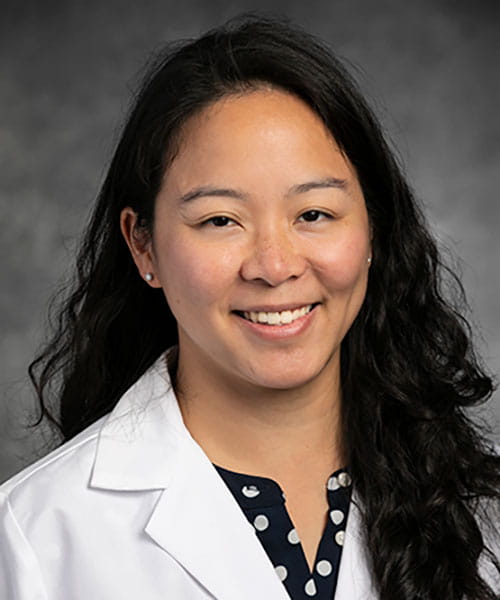 Melinda Hsu, MD
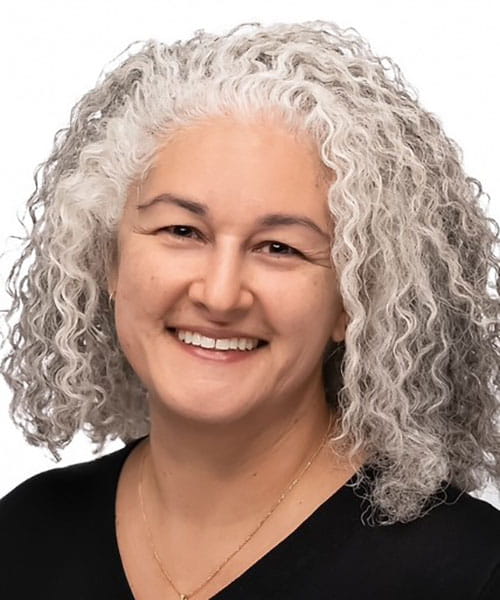 Mary Gabriel, MD, MSc
Melinda Hsu, MD, and Mary Gabriel, MD, MSc, are employing health services research to improve patient care while building research programs grounded in clinical experience.
Dr. Hsu, a board-certified thoracic medical oncologist at the University Hospitals Seidman Cancer Center and Assistant Professor of Medicine at Case Western Reserve University School of Medicine, focuses on survivorship and health services in thoracic oncology. Her work aims to improve long-term outcomes and quality of life for patients with lung cancer and other related malignancies.
Dr. Gabriel, a board-certified pediatrician, general psychiatrist and child and adolescent psychiatrist, serves as Senior Director of Behavioral Health for UH Population Health and Associate Professor of Psychiatry at the School of Medicine. Her focus is on integrating behavioral health into primary care and advancing patient-centered care models.
Both physicians secured competitive extramural grant funding after completing the Foundations of Health Services Research certificate program, a three-week intensive curriculum offered through the UH Health Services Research Center (HSRC).
“The Foundations program is designed to help clinicians build the skills and mentorship needed to transform clinical insight into rigorous, patient-centered research,” says Samudragupta Bora, PhD, Founding Director of the HSRC. “Drs. Hsu and Gabriel exemplify how this training can accelerate both academic development and clinical impact.”
Improving Survivorship Care in Lung Cancer
For Dr. Hsu, survivorship research is deeply personal. She grew up in Cincinnati, where both of her parents were diagnosed with non-small cell lung cancer within six months of each other.
“Going to all of my parents’ appointments, I saw all kinds of physicians,” Dr. Hsu says. “I was drawn to the one-on-one personal interactions and ability to truly help the person in front of you.”
Although her father was an orthopedic surgeon, Dr. Hsu did not initially plan to pursue medicine. She earned a Bachelor of Arts in Psychology from Harvard University and a Master of Science in Physiology and Complementary Medicine from Georgetown University before landing her first job studying cancer testis vaccines at the Ludwig Institute for Cancer Research, in a lab that was also studying Epidermal Growth Factor Receptor mutations in lung cancer. That work deepened her understanding of her father’s illness and helped her advocate for his care.
She later returned to Cincinnati to work in product research and development at Procter & Gamble while helping care for her parents. Ultimately, she chose medicine, earning her medical degree from the University of Cincinnati College of Medicine in 2014. She completed her residency at Indiana University and fellowship at Johns Hopkins.
During fellowship, she developed interests in survivorship, patient decision-making and quality-of-life-care, interests that were shaped in part by her mother's long-term complications following cancer treatment.
“That experience drew me into survivorship and quality-of-life research, which is a core part of health services research,” says Dr. Hsu.
Dr. Hsu is also trained in both qualitative and quantitative research methods, with a focus on patient-reported outcomes. She credits mentorship as central to her development particularly during fellowship and the COVID-19 pandemic, when mentors helped her navigate both personal challenges and the complexities of academic medicine.
Since joining UH in 2021, she is pursuing research aimed at improving survivorship care in thoracic oncology.
A Career Bridging Pediatrics and Mental Health
Dr. Gabriel’s path to medicine began early, growing up with a mother who practiced pediatrics. Although she initially hesitated to follow the same path after witnessing the demands of the profession, her interest in science and working with people ultimately led her to medicine.
After attending Rice University and Baylor College of Medicine, she chose pediatrics because of the opportunity to influence children's long-term health and development.
“Children are at a stage where interventions can truly change their trajectory,” says Dr. Gabriel. “That opportunity to make a lasting impact is incredibly meaningful.”
She completed her pediatric residency at Cincinnati Children’s Hospital Medical Center, where her interest in developmental and psychosocial care sparked a passion for integrating mental health into primary care pediatrics. Early work in a federally qualified health center in rural Kentucky deepened her understanding of the barriers families face in accessing behavioral health services and reinforced her commitment to whole-child care.
She later joined UH, completing fellowships in Child and Adolescent Psychiatry and Community Psychiatry. Today, Dr. Gabriel cares for children, adolescents, and young adults through an integrated lens that considers medical, developmental, emotional and other factors together. Her perspective on systems of care and quality led to her recruitment to UH Population Health, helping and then leading behavioral health initiatives that promote integration of mental health across both pediatric and adult primary care practices.
This commitment to bridging medical and mental health care has expanded into research. Her collaborations with primary care providers led to a recent Patient-Centered Outcomes Research Institute (PCORI)-funded project focused on expanding access to behavioral health care in primary care settings.
Mentorship has played a pivotal role in her development as a researcher. Working with leaders such as psychologists and infant mental health expert Alissa Huth-Bocks, PhD, and Marlene Miller, MD, helped her gain experience in study design, grant development and research methodology. Those experiences strengthened her ability to translate clinical observations into impactful research initiatives.
A Launchpad for Research Careers
The Foundations of Health Services Research Certificate program provides early-career clinicians with training in research methods focused on improving healthcare delivery, quality, safety and patient outcomes.
Dr. Hsu completed the program in 2024, gaining additional training in implementation science and valuable scientific feedback. At the time, she was developing a study evaluating pulmonary rehabilitation in survivors of advanced non-small cell lung cancer.
In January 2025, she received a three-year, $872,237 grant from the Congressionally Directed Medical Research Programs to support the project. The study includes a phase II randomized clinical trial and qualitative interviews with patients and oncology providers.
She also collaborated with Peter Pronovost, MD, PhD, UH Chief Quality and Clinical Transformation Officer and Veale Distinguished Care in Leadership and Clinical Transformation, on a PCORI-funded initiative to implement electronic monitoring of patient-reported symptoms into the EPIC electronic medical record system to improve quality of life and clinical outcomes.
“Participating in the Foundations program helped during the grant application process,” Dr. Hsu says. “We were actively developing the proposal during the program and submitted it shortly after.”
Dr. Gabriel also completed the program in 2024, describing it as a “career-changing experience.” It strengthened her understanding of research design, implementation science, quality metrics and clinical inquiry.
The program also helped her prepare to pursue and secure PCORI funding, further supporting her efforts to integrate research and clinical care in pediatric mental health.
“It helped me refine how to approach research and translate clinical observations into impactful studies,” says Dr. Gabriel.
Keys to Career Success
Early funding has positioned both physicians for continued academic career development and long-term impact. Their work builds on strong mentorship and reflects the growing pathway of physician-scientists dedicated to improving patient care.
Participating in programs like Foundations expands clinicians' knowledge and amplifies their ability to advance care beyond individual patient encounters.
“By participating in research, you expand your knowledge base and help push the frontiers of care forward,” says Dr. Gabriel. “In doing so, you improve understanding and strengthen interventions that ultimately enhance patient well-being."