


Research Labs

Cynthia Bearer, MD
The Bearer Lab examines how environmental factors affect neurodevelopment in preterm infants. Currently, Dr. Bearer's laboratory is focused on the effects of ethanol, bilirubin and hypoxia-ischemia on brain development and how these neurotoxic exposures inhibit the function of lipid rafts. Lipid rafts, specialized micro domains of the plasma membrane, are critical for cell-to-cell signaling in cerebellar development and brain stem function, including the control of respiration.

Samudragupta Bora, PhD
The Bora Lab’s primary area of research expertise is the neurodevelopmental follow-up of high-risk neonates in both high-income and low- and middle-income countries. Research studies span two core themes: 1) develop a better understanding of the long-term neurodevelopmental outcomes of high-risk neonates, and 2) discover the independent and interdependent roles of neurological and social factors underlying these outcomes.

Alex Y. Huang, MD, PhD
The Huang Lab was established in 2006 and was dedicated to the scientific discovery of onco-immunology and basic cellular and molecular principles underlying proper functioning of the immune system. Our goal is to provide clinical translational opportunities in immunotherapy of cancer, with a focus on malignancies that affect children, teenagers and young adults as well as common adult cancers.

Michael W. Jenkins PhD
The Jenkins lab develops and applies novel biomedical optics tools and techniques for investigating congenital heart disease and diseases of the peripheral nervous system. The primary optical tools are infrared control of excitable tissues (optical pacing, infrared neuromodulation), optical coherence tomography (OCT), and microscopy (light-sheet microscopy, optical mapping).

Peter M. MacFarlane, PhD
The MacFarlane Lab focuses its research around microglia (immune cells of the central nervous system) and components of the extracellular matrix (the structural network of soft tissue) and how they contribute to respiratory system development. A particular conceptual focus of his research involves understanding the vulnerability of the respiratory system to exogenous stressors such as hypoxia and inflammation, particularly during critical windows of development.

Timothy J. Mead, PhD
Timothy J. Mead, PhD is a trained developmental and molecular biologist with a keen focus on cardiovascular development and disease. His research centers on how changes in the extracellular matrix results in dysfunctional heart development and resulting congenital heart defects. Dr. Mead utilizes mouse models of congenital heart disease, biochemistry and proteomics to understand the molecular mechanisms underlying these diseases towards the development of therapeutic approaches. His current research focus is on the novel concept of inhibiting a protease that remodels fibrillin microfibrils in the aorta in an effort to identify a therapeutic for Marfan syndrome.
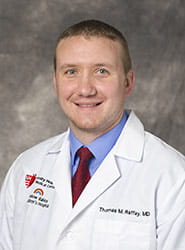
Thomas Raffay, MD
Thomas Michael Raffay, MD, FAAP, is a physician-scientist whose work bridges laboratory discovery and patient care. His research focuses on understanding the mechanisms of lung injury and abnormal lung development in premature infants and translating these findings into novel treatments for bronchopulmonary dysplasia (BPD), asthma, pulmonary hypertension, and other cardiopulmonary diseases. His NIH-funded research combines basic science, translational investigation, and clinical studies to advance therapies that improve respiratory outcomes from infancy through adulthood.