


Advancing Cancer Research Through Pathology, Immunotherapy and Precision Medicine
At University Hospitals, the Department of Pathology is at the forefront of cancer research, bringing together leading scientists, clinicians and translational experts who are working to uncover the biological mechanisms that drive cancer and turn those discoveries into life-saving therapies. From advancing cell-based treatments and immunotherapies to developing early detection tools and personalized diagnostics, our researchers are redefining how cancer is prevented, detected and treated across multiple disease types.
Our work spans the full spectrum of cancer science from understanding how the immune system interacts with cancer cells, to investigating the genetic and molecular pathways that drive tumor growth, metastasis and treatment resistance. With access to state-of-the-art biorepositories, clinical cellular therapy facilities, and cutting-edge genomic technologies, our teams are accelerating the development of highly targeted, precision-based treatments that improve survival and quality of life for patients.
Hematopoietic Biorepository and Cellular Therapy Shared Resource
The Case Comprehensive Cancer Center Hematopoietic Biorepository and Cellular Therapy Shared (HBCT SR) is a vital part of the research infrastructure supporting investigators at University Hospitals. This resource provides state-of-the-art facilities and expertise for the collection, processing, storage and analysis of blood, bone marrow and umbilical cord samples. It also operates a clinical cellular therapy facility, Wesley Center for Immunotherapy, enabling the production of high-quality, clinical-grade cell products used in both research and patient care.
A key role of the center is to advance cell-based therapies for cancer, supporting every stage of discovery, from early research through first-in-human clinical trials. Researchers rely on this resource to develop and implement cellular therapy clinical trials, access high-quality, well-annotated blood and bone marrow samples, and specialize in hematopoietic cell-based testing and expertise.
Through its commitment to innovation, quality and collaboration, the HBCT SR empowers scientists and clinicians to translate laboratory discoveries into new, life-changing treatments for patients with cancer and other diseases.

Empowering Natural Killer Cells to Target and Destroy Cancer
University Hospitals pathology researchers are studying how to harness Natural Killer (NK) cells as a cancer treatment. They are testing small chemical compounds to identify those that enhance NK cell activity and improve their ability to destroy cancer cells. The most promising compounds are then evaluated in laboratory and animal models to better understand their mechanisms. The ultimate goal is to develop new drugs or strategies that strengthen NK cell therapy and improve outcomes for patients with cancer.
Harnessing the Power of the Immune System to Fight Cancer
Our researchers at University Hospitals are dedicated to transforming how to diagnose and treat cancer by studying the powerful connection between the immune system and cancer cells. They are working to understand and stop how cancer hides from the immune system. By uncovering the genetic and molecular “tricks” that cancer uses to evade detection, we’re developing smarter, more effective immune-based treatments that help the body’s natural defenses recognize and destroy cancer cells.
Our team of multidisciplinary experts are pioneering new therapies such as CAR T-cell treatments, cancer vaccines, and immune-modulating drugs. Our scientists are also advancing stem cell transplant research and running clinical trials that bring these innovations directly to patients.
Breakthroughs from our team have already changed cancer care leading to new discoveries in genetic mutations that affect how patients respond to treatment, and developing faster, more personalized cell therapies for leukemia, lymphoma and other cancers.
Biotech Collaboration for Head and Neck Cancer Research
UH researchers are partnering with TScan Therapeutics to identify novel tumor-specific targets in head and neck cancer using advanced genomic and computational analysis. This collaboration integrates biospecimen research, antigen discovery, and cellular immunotherapy development to accelerate the translation of laboratory findings into next-generation cancer treatments.
Advancing Early Detection of Esophageal Cancer
Pathology researchers, in collaboration with researchers from the Department of Medicine at University Hospitals, are leading a groundbreaking project to reduce deaths from esophageal adenocarcinoma by transforming how its precursor condition, Barrett’s esophagus (BE), is detected and monitored. A team of researchers are pioneering two major innovations including a non-endoscopic screening and biomarker assessment of dysplasia molecular technology.
The non-endoscopic screening is a swallowable balloon device paired with a methylated DNA biomarker test can detect BE in a quick office visit without the need for an invasive endoscopy. This approach could expand screening to people without reflux symptoms (GERD), a population that accounts for up to 40% of EAC cases but is currently overlooked in screening guidelines.
A novel genomic and AI-based method, known as biomarker assessment of dysplasia, detects early genetic changes that signal BE progression toward cancer. This technique can identify patients at highest risk years before traditional methods, potentially enabling earlier intervention and prevention.
Through these advances, UH investigators aim to establish faster, safer and more precise methods to identify and monitor patients at risk, ultimately preventing esophageal cancer before it develops.
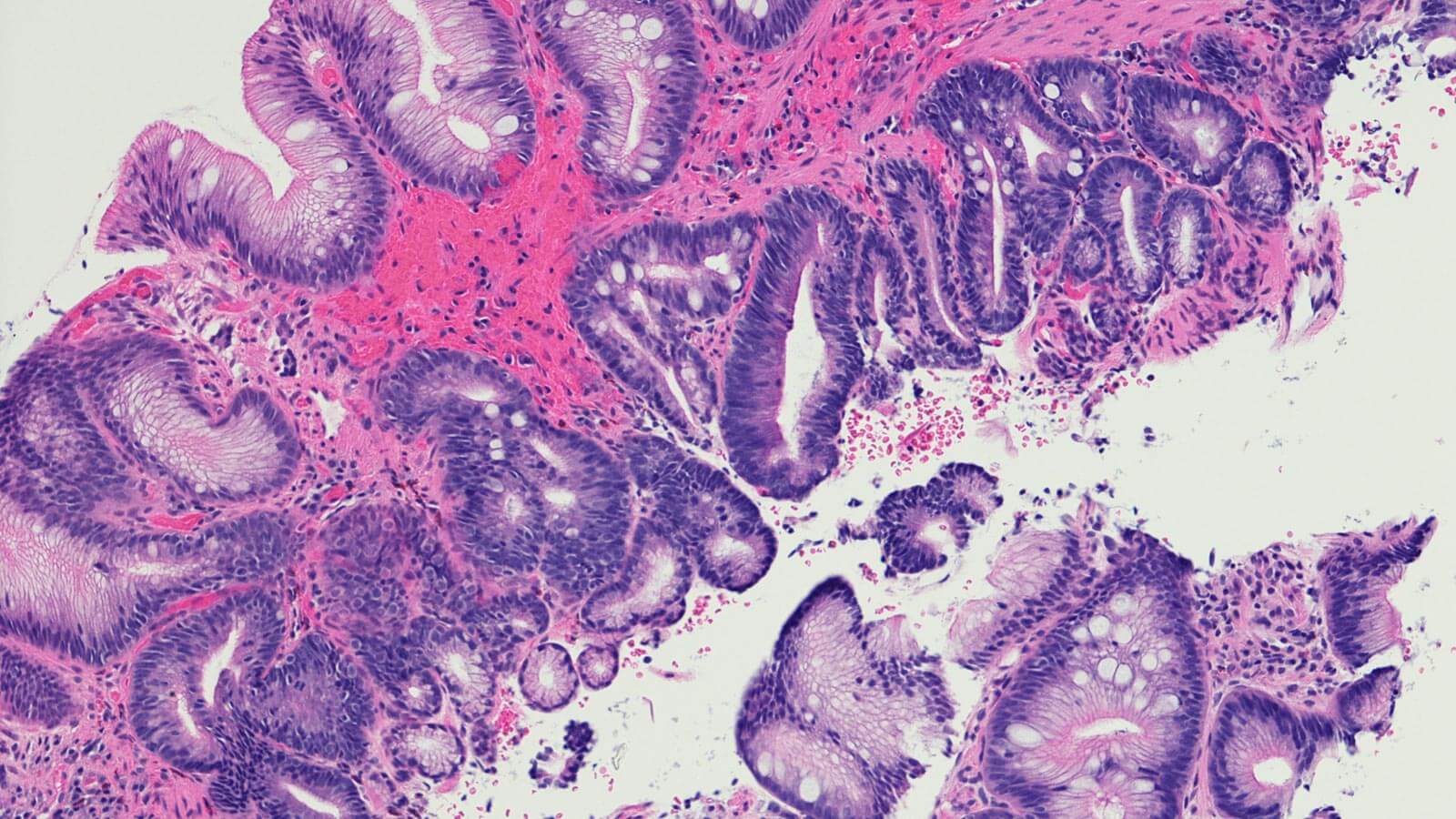
Validating Biomarkers to Personalize Care for Barrett’s Esophagus
University Hospitals research is advancing molecular approaches to improve risk prediction and clinical management for patients with Barrett’s esophagus (BE), a precancerous condition that can progress to esophageal adenocarcinoma (EAC). UH researchers focus on identifying and validating molecular biomarkers that more accurately distinguish patients at high versus low risk for disease progression, enabling more personalized surveillance and treatment strategies.
Building on their prior breakthrough in biomarker assessment of dysplasia technology, this research applies next‑generation DNA sequencing to detect chromosomal alterations associated with cancer development. These approaches aim to identify patients with low‑risk BE who may safely avoid unnecessary endoscopic eradication therapy, while ensuring timely intervention for those at increased risk. UH research also examines molecular markers that indicate whether BE has been fully eradicated following treatment, with the goal of reducing reliance on frequent surveillance procedures.
Through national collaborations and access to well‑characterized patient samples, this research area seeks to refine BE management, minimize patient risk and support molecularly informed decision‑making to prevent the development of esophageal cancer.
Understanding and Targeting Metastatic Triple Negative Breast Cancer
Pathology researchers at University Hospitals are investigating why triple-negative breast cancer is one of the most aggressive forms of the disease, often metastasizing and recurring after treatment, and how to prevent it. Their work focuses on two key factors: the mechanisms that drive cancer cell growth and change, and the behavior of the immune system within the tumor microenvironment.
Two signaling molecules, Oncostatin M (OSM) and Interferon-beta (IFNB), play opposing roles in this process. OSM promotes tumor aggressiveness and treatment resistance, while IFNB enhances the immune system’s ability to fight cancer. Researchers have found that overactive OSM triggers pathways that strengthen cancer cells and enable tumors to evade immune detection. Restoring IFNB activity can help reverse these effects, making cancer cells less invasive and more responsive to treatment.
This research aims to better understand how these signaling pathways interact and to develop therapies that rebalance them, potentially preventing relapse and improving outcomes for patients with metastatic triple-negative breast cancer.
Exploring Biological Drivers of Cervical Cancer Disparities
Researchers at University Hospitals is conducting a research study to investigate how microbial imbalance in the female genital tract, more commonly observed in African American women, may promote Human Papilloma Virus persistence, chronic inflammation and progression to cervical cancer. Using advanced technologies such as metagenomics, metabolomics and single-cell sequencing, the study aims to uncover the molecular mechanisms that influence disease outcomes.
Signet Ring Cell Carcinoma Research
University Hospitals Seidman Cancer Center is leading efforts to better understand this rare and aggressive cancer through a unique biorepository developed over more than 25 years, collecting specimens from patients nationwide and internationally. Researchers are studying the molecular and genomic drivers of signet ring cell carcinoma, developing laboratory models to test targeted therapies and immunotherapies, and laying the groundwork for future clinical trials aimed at improving outcomes for patients.
