


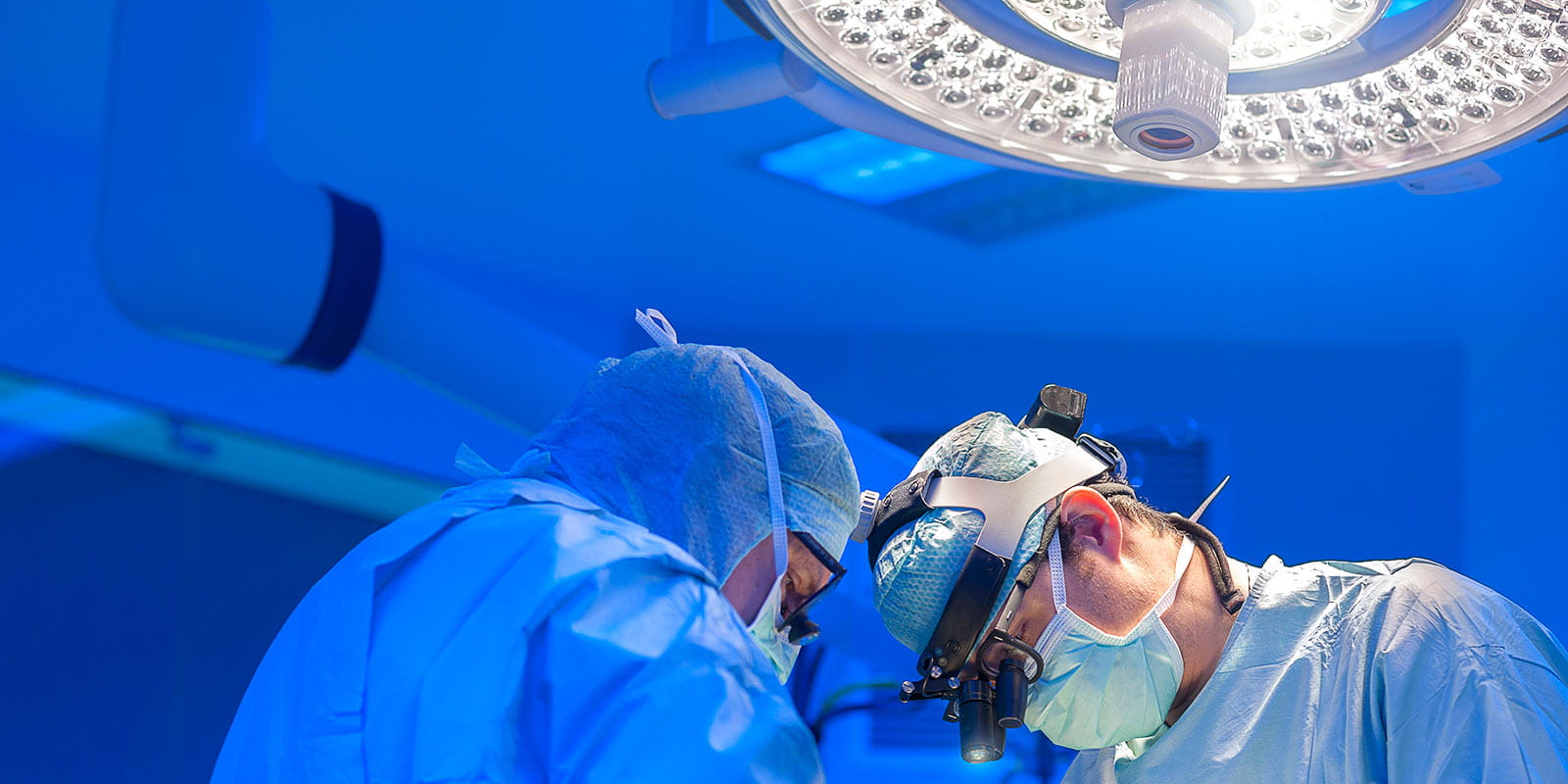
Renowned Heart Surgery Program with Excellent Patient Outcomes
The top-rated cardiac surgery team at University Hospitals Harrington Heart & Vascular Institute provides the highest level of care for all conditions affecting the heart, coronary arteries, heart valves, aorta and great vessels. We combine traditional procedures with the latest advances in surgical precision to customize treatment for even the most challenging heart conditions.

Make an Appointment
Call 216-844-4004 to schedule a consult with one of our cardiac surgeons.

Find a Surgeon
Find a Cardiac SurgeonCardiac Surgeons Partner with Patients for the Best Care
Heart surgery can be overwhelming for many patients and their families. We recognize this can be a challenging time, which is why our surgeons dedicate time to meet with each patient and their family during their initial consult and prior to surgery. We want to empower our patients with all the information they need to make informed decisions about their care.
Based at University Hospitals Cleveland Medical Center, a tertiary and quaternary campus, our cardiac surgery program is distinguished by its exceptional clinical quality and patient outcomes. We offer the complete range of diagnostic and treatment options, including the latest minimally invasive and open surgical interventions of any complexity.
The same top-rated cardiac surgeons from our main campus are also embedded throughout our network of community hospitals. This unique integration allows us to deliver comprehensive, personalized care tailored to the patient’s needs and ensures the highest caliber of care in every one of our cardiac surgery locations.
Comprehensive cardiac surgical expertise, from routine to the most complex procedures
6 cardiac surgery locations across Northern Ohio, supporting greater patient access to advanced care options
1,600+ cardiac surgery procedures performed annually
Virtual consults and second opinion service
Highest 3-star rating for CABG Overall Quality by Society of Thoracic Surgeons
Gold level ELSO Award for Excellence in Life Support awarded to ECMO program
Centers for Medicare & Medicaid Services (CMS) certified site for heart and lung transplantation at UH Cleveland Medical Center
Frequently Asked Heart Surgery Questions
- Do I need open-heart surgery or can it be done minimally invasively?
-
This will depend on a lot of things, including what your condition is and what type of operation you need. There are two main types of operations, surgeries for coronary artery disease and surgeries for valvular disease. For most patients who need coronary bypass surgery, open-heart surgery is necessary. However, for some patients with only one or two blockages, surgery can be done minimally invasively through a small incision, usually on the left side between the fourth and the fifth ribs. Talk to your doctor about what you need and what the options are. It's also possible that your surgeon or your hospital does not offer minimally invasive surgery. In that case, you should ask to be referred to somebody who offers it. It's an important discussion to have to explore all your options.
- What are the risks of open-heart surgery?
-
The risk of dying or having a stroke with open-heart surgery are relatively low, typically in the range of 1 to 3 percent for most patients. The majority of relatively healthy patients have a 1 percent or less risk of dying or having a stroke. Minor complications include things such as bleeding, infections, pneumonia, blood clots and atrial fibrillation, or an irregular heartbeat. All of these things are treatable through medications or other means. They are usually short term and will resolve with proper treatment.
- Will I need an on-pump or off-pump heart surgery procedure?
-
Most of the time when patients have heart surgery, surgeons use a heart-lung machine or cardiopulmonary bypass. But there are some patients, especially those that need coronary bypass surgery, where the operation can be performed without the use of a heart-lung machine, or off-pump. In that type of procedure, the heart continues to beat throughout the procedure and the surgery team can use devices to immobilize certain parts of the heart. That way they don't have to stop the heart or the lungs during surgery. You can talk to your cardiac surgeon about whether off-pump surgery is appropriate for you.
- If a vein is taken from a leg for heart surgery, what replaces it?
-
We usually take an artery from the chest or from the arm, or a vein from the leg. Anytime we use one of those vessels, we do so because there's another vessel there that can take its place, making it somewhat redundant. Typically, when we take those veins, we use a very small incision. Most patients will never notice that that vein is missing once they recover.
- When can I resume normal activities after heart surgery?
-
It depends on how well you’re recovering and on the type of operation that you've had. If you had a sternal incision on your chest, typically that bone needs to heal before you get behind the wheel of a car, so about 4 to 6 weeks. If it's a less invasive operation done through the ribs, you may only 2 to 3 weeks before you can drive again. For activities like golf, you can typically start swinging a golf club 2 to 3 months after surgery. For sexual activity, we typically ask you to wait a few weeks to make sure you’re feeling well and healthy enough and not putting yourself at risk. The typical period of rest before resuming most light activities such as gardening or household chores is 4 to 6 weeks. This allows time for the bone to heal and will be relatively safe for most patients.
- What will happen if I delay or postpone open heart surgery?
-
There are usually two reasons that we recommend open heart surgery: to help you live longer or to help you have a better quality of life. If it's to help you live longer, it really depends on what the problem is. If you have a 90 percent blockage in the main artery of your heart, the data says you're unlikely to be alive within the next one to two years. If you delay surgery for a long time, you are increasing your risk of dying sooner. If your operation is to improve your quality of life, it may not affect your survival but it will impact the things that you're able to do and the enjoyment that you get out of life. In some cases, if you wait too long the disease may become more advanced, making the operation more difficult, putting you at higher risk and making recovery take longer. Before you delay any surgery, make sure that you have that conversation with your physician so you understand the risks of having the surgery versus the risks of delaying it.
Patient Stories
Read inspirational stories of people who chose our cardiac surgery team for their care.
Support Groups
We offer support groups to help patients and families connect with others going through similar experiences, helping one another through the process of recovery and healing.
Clinical Trials
Our physician-investigators focus on ongoing clinical research as they translate medical discoveries into successful action steps for improved patient care.
Make an Appointment
For more information, or to schedule an appointment with one of our heart surgeons, call 216-844-4004.
Find a Cardiac Surgeon