
Blood Banking & Transfusion Medicine Fellowship at University Hospitals Cleveland, OH
University Hospitals Cleveland Medical Center, in affiliation with Case Western Reserve University School of Medicine, offers a one-year ACGME-accredited fellowship in blood banking and transfusion medicine. The program is designed for pathology residents and physicians who want hands-on, clinically integrated training in transfusion medicine, from complex trauma transfusion support to cellular therapy and apheresis.
Quick Facts
- Program name: Case Western Reserve University/University Hospitals Cleveland Medical Center Blood Bank/Transfusion Medicine Fellowship Program
- Sponsoring institution: UH Cleveland Medical Center
- Accreditation: ACGME-accredited | ACGME Program Number: 3053830094
- Program length: One year | Positions: One fellow per year
- Application: Email Application | Match: Rolling, non-match application process
One-Year Training in Transfusion Medicine (Blood Banking)
UH Blood Banking & Transfusion Medicine fellows train within one of the region's busiest transfusion services, consulting directly with treating physicians across the health system on a regular basis, a level of clinical contact that sets transfusion medicine apart from other pathology subspecialties.
The one-year program is built around the full scope of transfusion medicine practice. Training includes rotations in the Cleveland Cord Bank, an off-site rotation not offered by every transfusion medicine fellowship, along with the stem cell collection service, the HLA laboratory and the American Red Cross. Graduates are prepared for academic transfusion medicine careers as well as roles in industry, including blood centers, plasma centers and blood suppliers.
ACGME Accreditation and Application Process
UH Cleveland Medical Center's Blood Banking & Transfusion Medicine Fellowship Program is ACGME-accredited (Program Number 3053830094). The program does not participate in ERAS or the NRMP Match. Instead, it follows a rolling, non-match application process, with candidates encouraged to apply as early as one to two years ahead of their intended start date. Applications are due by January 31 of the year the fellowship begins. Because the program follows a rolling admissions process, candidates are encouraged to apply as early as one to two years in advance.
Why Choose UH for Transfusion Medicine Training?
Direct Clinical Exposure
The only pathology subspecialty with direct patient-facing responsibilities. Work closely with treating physicians as part of the care team.
Level 1 Trauma Exposure
Train at a Level 1 trauma center for adult and pediatric patients, managing complex transfusion cases from day one.
Comprehensive Rotations
Rotate through the Cleveland Cord Bank, stem cell collection and the HLA lab, an offering not every transfusion medicine fellowship provides.
High-Volume Apheresis Experience
Gain hands-on apheresis experience with one of the region's largest sickle cell populations.
Flexible, Rolling Admissions
No Match required. Apply up to two years ahead on a rolling timeline built around your schedule.
Faculty Mentorship & Culture
Train with a dedicated faculty in an open, flat-structured program where questions and mentorship come easy.
Nationally Recognized Training Environment
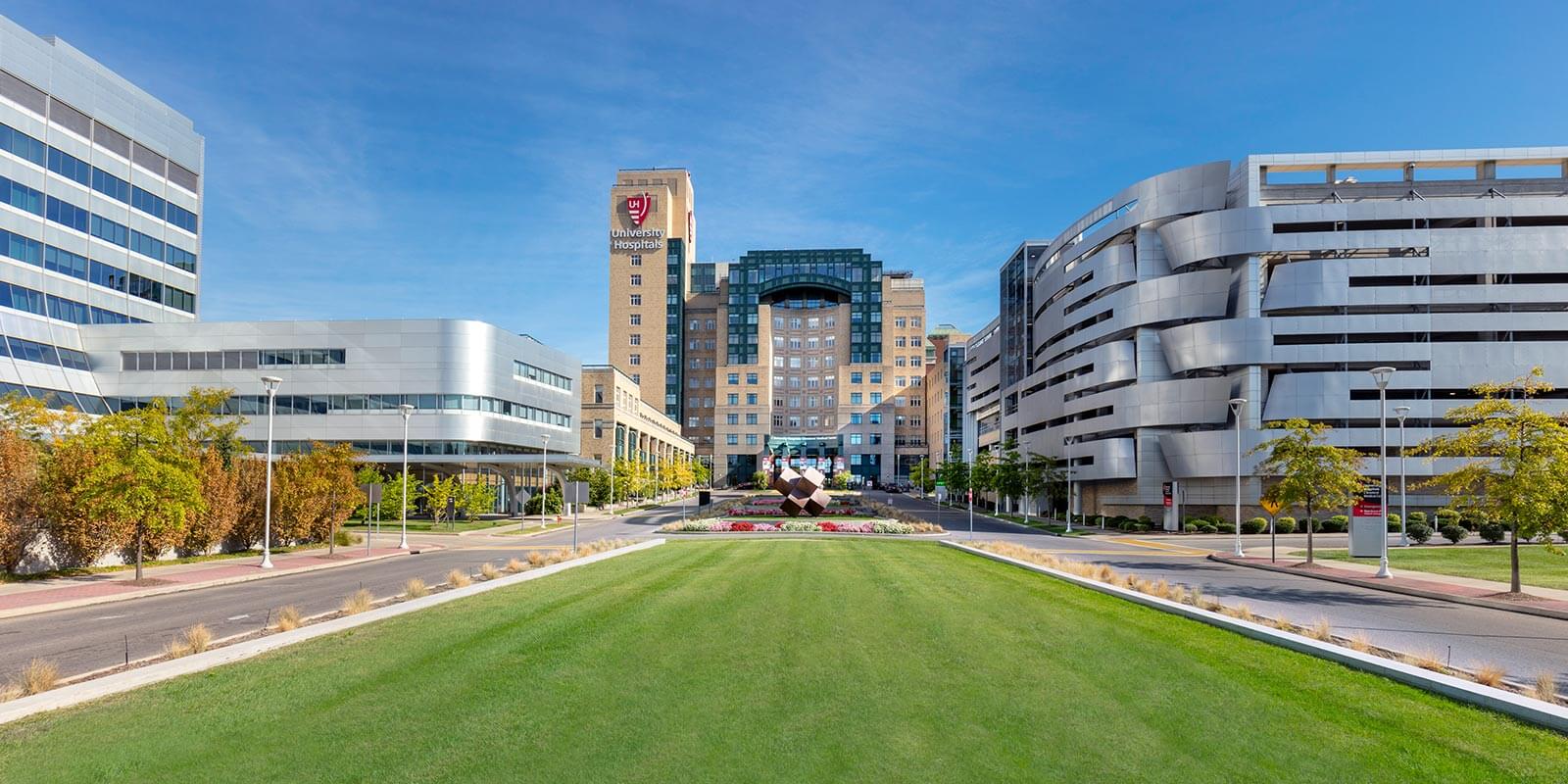
As a Level 1 trauma center serving adult and pediatric patients, UH exposes fellows to complex, high-acuity transfusion cases across a large and diverse patient population. The program maintains one of the region's most active apheresis services, supporting a substantial sickle cell population along with various neurological and transplant-related diagnoses. Combined with rotations spanning cord blood banking, stem cell collection and HLA testing, fellows graduate with a breadth of hands-on experience that positions them competitively for both academic and industry careers nationally.
Clinical Volume, Mentorship and Academic Development
Fellows train alongside a dedicated transfusion medicine faculty of 4 to 4.5 full-time physicians, supported by a broader collaborative faculty group spanning perioperative blood management and anesthesia, stem cell services and microbiology. The program's culture is intentionally flat and collaborative. Fellows are encouraged to bring questions and concerns directly to faculty and attending physicians, an open structure that supports both clinical confidence and academic growth. Fellows also have opportunities to pursue research within transfusion medicine and related areas.
Curriculum and Training
The core of the fellowship takes place through the Transfusion Medicine Services rotation at UH's primary site, a Level 1 trauma center for both adult and pediatric patients. Fellows gain graded, hands-on responsibility across the clinical, technical and administrative aspects of a hospital-based transfusion medicine service, training across a uniquely broad set of clinical programs in one location: therapeutic apheresis, high-risk obstetrics and gynecology, neonatal intensive care, solid organ and hematopoietic progenitor cell transplant, and dedicated Sickle Cell and Hemophilia Treatment Centers for both adult and pediatric populations.
The curriculum is structured around the same core content areas assessed on the ASCP/AABB Transfusion Medicine In-Service Examination and the pathology Board Exam, ensuring fellows are prepared for both certification and independent practice.
Subspecialty Training Opportunities
Fellows rotate through every major area of transfusion medicine practice, building expertise well beyond the hospital blood bank.
- Hematopoietic Stem Cell Transplant (HST)
-
Fellows gain hands-on experience across the full lifecycle of cellular therapy products, from procurement and processing to cryopreservation, storage and infusion, including both peripheral blood-derived stem cells and bone marrow. Time on the inpatient BMT service adds direct clinical exposure to transplant patient management.
- Histocompatibility (HIS)
-
Fellows gain expertise in HLA testing and its role in transfusion management, including consultative work on HLA-matched platelets, platelet refractoriness and HLA alloimmunization, as well as the role of histocompatibility in bone marrow and solid organ transplantation.
- Regional Blood Center & Immunohematology Reference Lab, American Red Cross
-
Fellows gain hands-on experience in blood donor center operations and immunohematology reference laboratory testing, building skills that progress across defined competency levels throughout the rotation.
- Cleveland Cord Blood Center
-
Fellows gain hands-on experience in cord blood banking, from quality practices and laboratory processing to understanding how high-quality placental and umbilical cord blood units are produced for patients with hematopoietic and immunologic disorders. This is one of the program's signature offerings, an off-site rotation not every transfusion medicine fellowship provides.
- Coagulation
-
Fellows gain experience diagnosing and managing hemostatic disorders, including laboratory coagulation testing, consultative coagulation services, and teaching rounds with the Transfusion Medicine Service.
- Molecular
-
Fellows gain exposure to molecular testing techniques and their application in transfusion medicine, along with the accreditation standards that govern molecular laboratory practice.
- Microbiology
-
Fellows gain exposure to clinical microbiology laboratory practices as they relate to blood banking and transfusion medicine.
- Perioperative Blood Management
-
Fellows are exposed to hospital-based perioperative blood management strategies, including blood salvage techniques, from clinical, technical and quality management perspectives.
- Elective
-
In the second half of the fellowship year, fellows pursue an individualized rotation in an area of blood banking or transfusion medicine that matches their own interests, with the option to complete elective time at outside institutions with advance coordination.

Research Opportunities
Research Woven Into Clinical Training
Rather than a separate research track, research opportunities are built into the fellowship's clinical rotations. Fellows interested in research can pursue projects in coagulation, stem cell transplantation, histocompatibility, molecular testing and microbiology, based on individual interest, with dedicated elective time in the second half of the year available for more focused scholarly work.
Research Areas in Transfusion Medicine
Fellows have exposure to research in regenerative medicine and cellular therapy, including work related to autologous dendritic cell vaccines, through the Hematopoietic Stem Cell Transplant rotation.
Training in Cleveland's Blood Banking Community
Fellows benefit from training in a city that is itself a hub for transfusion medicine. UH's affiliation with the Cleveland Cord Bank and its rotation through the American Red Cross put fellows in direct contact with the region's blood supply infrastructure, not just the hospital side of transfusion medicine. Combined with UH's academic partnership with Case Western Reserve University School of Medicine, fellows train inside a network that extends well beyond a single hospital's blood bank.

Living in Cleveland During Fellowship
Cleveland's cost of living gives fellows room to build a life during training that a coastal or major metro fellowship often can't. Lake Erie and the Metroparks are minutes from most neighborhoods, and the city's food, arts and sports scenes have earned it a reputation as one of the Midwest's most underrated places to live. For fellows relocating with a partner or family, that combination of affordability and access tends to matter as much as the training itself.
Faculty Mentorship and Trainee Support
Dedicated Faculty Mentorship
Mentorship happens across every rotation, not just in a single continuity setting. Because the faculty group spans transfusion medicine, perioperative blood management, stem cell services and microbiology, fellows build relationships with attendings across each subspecialty area they rotate through, rather than working under one supervisor for the year. That structure gives fellows multiple faculty perspectives on complex cases and multiple people invested in their development by the time they graduate.
Support for Career Development
Transfusion medicine offers fellows a wide range of career paths, and the job market for graduates is strong. Fellows are prepared for academic transfusion medicine careers as well as roles in industry, including blood centers, plasma centers and blood suppliers such as the American Red Cross and reference laboratories.
How to Apply to the Blood Banking & Transfusion Medicine Fellowship
The Blood Banking & Transfusion Medicine Fellowship does not participate in ERAS or the NRMP Match. Applications are due by January 31 of the year the fellowship begins. Because the program follows a rolling admissions process, candidates are encouraged to apply as early as one to two years in advance.
Frequently Asked Questions About the Fellowship
- What makes UH's program different from other transfusion medicine fellowships?
-
Fellows train at a Level 1 trauma center for both adult and pediatric patients with a large sickle cell population, giving them substantial hands-on apheresis experience. The program also includes a Cleveland Cord Blood Center rotation, which not every transfusion medicine fellowship offers.
- What can I do with a transfusion medicine fellowship?
-
Transfusion medicine is the only clinically facing subspecialty in pathology. Graduates pursue academic careers as well as roles in industry, including blood centers, plasma centers and blood suppliers such as the American Red Cross and reference laboratories.
- Is the UH Blood Banking & Transfusion Medicine Fellowship ACGME-accredited?
-
Yes. University Hospitals Cleveland Medical Center's Transfusion Medicine Fellowship Program is ACGME-accredited under Program Number 3053830094.
- Does the Fellowship participate in ERAS?
-
No. The program does not participate in ERAS. Applicants apply directly to the Department of Pathology by email.
- Does the program participate in the NRMP Match?
-
No. The program follows a rolling, non-match admissions process. Candidates can apply as early as one to two years ahead of their intended start date.
- How long is the Blood Banking & Transfusion Medicine Fellowship at UH?
-
The fellowship is one year and accepts one fellow per year.
- When is the application deadline?
-
Applications are due by January 31 of the year the fellowship begins. Because the program follows a rolling admissions process, candidates are encouraged to apply as early as one to two years in advance.
- What rotations are included in the fellowship?
-
Fellows rotate through Transfusion Medicine Services, the Cleveland Cord Blood Center, Hematopoietic Stem Cell Transplant, Histocompatibility, the Regional Blood Center and Immunohematology Reference Lab with the American Red Cross, Coagulation, Molecular, Microbiology, and Perioperative Blood Management, along with elective time in the second half of the year.
- Does UH accept international applicants for this fellowship?
-
Yes. The program welcomes international applicants. Visa-related requirements are outlined on UH's Graduate Medical Education site.
- Where is the Blood Banking & Transfusion Medicine Fellowship located?
-
The fellowship is based in Cleveland, Ohio, at University Hospitals Cleveland Medical Center, in affiliation with Case Western Reserve University School of Medicine.

Life in Cleveland Has So Much to Offer
Whether you are interested in exploring the rich cultural history of its neighborhoods or eating at one of its many award-winning eateries, Cleveland has something for everyone.